
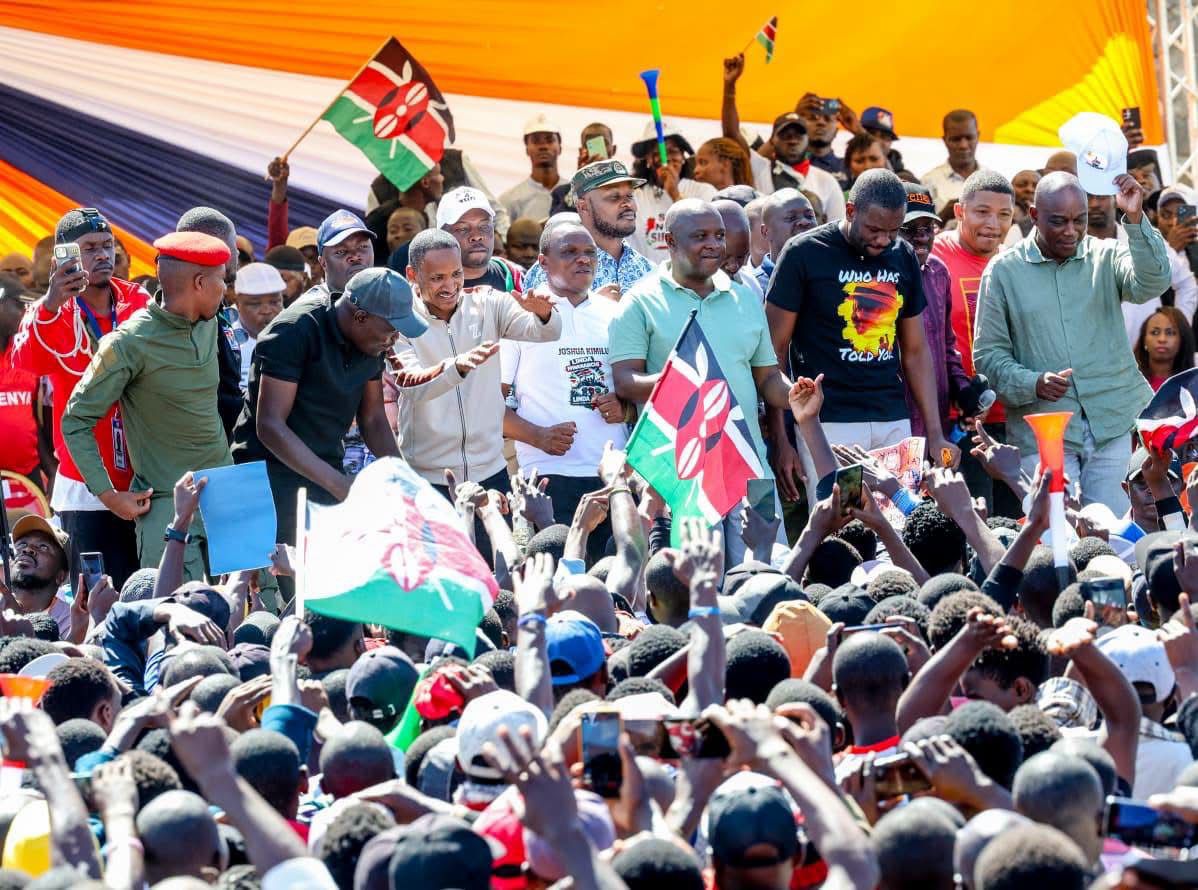
Kenya has perfected the art of the political wave. We do not vote; we surf. Every election cycle, a new tide rises from the rallies, sweeps across television screens, dominates WhatsApp groups and carries the country in one direction.
Then the wave crashes, the noise dies and we find ourselves staring at the same potholes, the same dry taps, the same jobless youth we were shouting about five years earlier.
If 2027 becomes another referendum on waves, we will have learned nothing. The stakes are too high for us to be carried away again.
Waves are intoxicating because they are simple. They reduce complex national questions to a chant. In 2002, the wave was about ending an era. In 2013 it was generational change. In 2022 it was class anger dressed as economic policy.
Each wave handed someone the keys to State House. But ask the mother in Bumburia walking 10km for water if the wave filled her jerrican. Ask the graduate in Kisumu riding boda boda with a degree in his pocket if the wave paid his Helb loan. Ask the trader in Garissa if the wave lowered the cost of fuel to move her goods.
A wave does not sink a borehole. A wave does not stock a dispensary. A wave does not pay community health volunteers. A wave only promises. Development delivers.
That is why 2027 must be decided on the development track. Not on manifestos, because paper has never refused ink. Not on pledges, because microphones have never rejected a lie. On evidence. On what can be touched, counted and verified.
And that evidence does not sit in Nairobi alone. Devolution gave us 47 governments, not one. If we are serious about a development audit, we must start in the counties.
The national government can build the Standard Gauge Railway, yes. But it is the county government that decides whether the dispensary near the SGR station has Panadol.
It is the county that decides if the ECDE classroom has a teacher or just a blackboard. It is the county that collects garbage, licenses markets and maintains the feeder road that takes tomatoes from the farm to the tarmac.
Look at the last decade. Some counties turned devolution into a revolution. You can drive on tarmac to villages that had never seen a car before. You can find working maternity wings where mothers once gave birth on floors.
You can see dairy coolers, subsidised tractors and digitised revenue systems that doubled collections without raising taxes. That is development. It is not sexy. It will not trend. But it keeps a child in school and a patient alive.
Then look at other counties. Twelve years of devolution and the only thing that has devolved is theft. The flagship project is the governor’s mansion. The youth fund became a relatives’ fund.
The only thing being drilled is a fresh scandal every quarter. They blame Nairobi, they blame the weather, they blame the former regime. But the constitution did not devolve excuses. It devolved money, functions, and power.
So, when 2027 comes, the question cannot just be “who should be president?” It must be “which governor deserves a second term? Which senator actually oversaw counties instead of overseeing Instagram? Which MCA passed a single law that changed lives? Which woman rep fought for more than cameras?”
Because the truth is, your daily life is run by your county. If your child studies under a tree, that is not State House. That is county hall. If your market has no toilets, that is not Harambee House. That is your MCAs who approved a budget with no sanitation line. If drugs are stolen at the county hospital, the thief did not come from Nairobi. He sits in your county finance office.
Waves hide these failures. A wave tells you your suffering is because of one tribe, one family, one “system.” It gives you an enemy to hate so you do not ask for an audit. It gives you a villain in the capital so you do not see the villain on your county payroll. And when the wave passes, the MCAs who never asked a question will be reelected, the governors who built nothing will become senators and the senator who slept through oversight will become governor. The cycle continues because we voted for the tide, not the track record.
2027 is our chance to break that cycle. Demand the development file. Ask your governor how many kilometres of road were done, at what cost and where they are. Ask why absorption of development funds was 31 per cent when recurrent was 99 per cent. Ask why the county assembly’s main achievement was passing a supplementary budget to buy themselves cars. Ask your MP why the NG-CDF built gates instead of labs.
Development is boring. It is reports, not rhetoric. It is percentage points in school retention, not points scored in a rally. It is a piped water scheme in Makueni that no one will compose a song about, but that means a girl child now spends evenings doing homework instead of fetching water.
It is a fresh produce market in Karatina with cold rooms, so farmers stop feeding half their harvest to the sun. It is a county aggregation park in Busia that actually aggregates something.
Waves will still come in 2027. They are already being manufactured in boardrooms. There will be a new enemy, a new slogan, a new uniform. There will be money, music and anger. The temptation will be to join, to belong, to be on the “winning side.”
But the only side that matters is the side where water flows, where drugs are available, where bursaries are not political tools, where your taxes become services. That side is not chosen by wave. It is chosen by track record.
If we elect waves, we will elect drama. If we elect development, we will elect dignity. The ballot in 2027 is not between personalities. It is between noise and results, between performance and performance art, between the county that works and the county that works you.
Choose what you can point at. The rest is just wind.
Comments 0
Sign in to join the conversation
Sign In Create AccountNo comments yet. Be the first to share your thoughts!