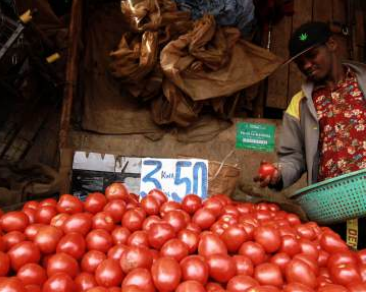
The soaring cost of tomatoes and onions is piling fresh pressure on Kenyan households, with traders warning of more price hikes in the coming weeks.
From homes in Nairobi estates to roadside kiosks and open-air markets, consumers are being forced to reduce purchases, adjust meal portions and stretch already strained household budgets in order to afford basic food items.
Tomatoes and onions are essential ingredients used in almost every meal. But in recent weeks, prices have sharply risen.
Beth Ndinda, a mother of four living in Pipeline Estate in Nairobi, says she has had to significantly reorganise her family budget to keep up with the rising cost of food.
She recalls that just two months ago, tomatoes worth Sh200 could comfortably sustain her family for nearly two weeks. Today, the same amount barely lasts a week.
“I used to buy about 20 tomatoes for Sh200 and they would serve my family for close to two weeks. Now I spend about Sh50 on tomatoes for one meal, and I cook at least twice a day. That means I spend nearly Sh100 daily because the tomatoes are much smaller,” she says.
According to Ndinda, even onions have become expensive. A kilogram that previously sold for between Sh60 and Sh80 now costs between Sh130 and Sh140.
“You would easily get small onions at Sh5 and that was enough for one meal depending on the family size. Now onions selling at Sh5 are either too tiny or unavailable, and even those going for Sh10 are still small,” she says.
The rising prices have forced her to cut down on other household purchases and change the way she shops.
“Everything has gone up, from fruits, cereals, tomatoes and onions to items in supermarkets. Sometimes I buy things in small quantities throughout the month because I cannot afford one big shopping trip,” she says.
To ease the burden, Ndinda says she has resorted to buying in bulk during visits to her rural home in Kitui.
The situation is equally difficult for traders, many of whom say they are struggling to retain customers as wholesale prices continue to rise.
Lornah Achieng, who runs a grocery kiosk in Ruai, says a crate of tomatoes that sold wholesale at between Sh1,500 and Sh2,000 barely a month ago now costs Sh4,500.
She says tomato prices have not reached such levels in recent years. There are fears prices could reach Sh5,000 per crate.
“I used to sell four or five medium-sized tomatoes for Sh50. Now I sell one tomato at Sh10 regardless of the size because getting stock has become difficult,” she says.
Onion prices have also doubled, with a kilogram now going for Sh100 on wholesale and retailing at between Sh130 and Sh140.
Other food items have not been spared. She says melons that previously sold for between Sh20 and Sh35 per kilogram now retail at about Sh50.
Agricultural economist Timoty Njagi attributes the increase in prices to seasonal shortages and rising fuel costs.
He explains that every crop experiences periods of high and low harvests, which directly affect supply and demand in the market.
During the long rainy season, he says, tomatoes are often affected by excessive moisture, reducing production and limiting supply.
“Where supply is low, prices automatically go up. This affects many commodities including maize, milk, tomatoes, onions and eggs,” Njagi says.
He adds that the rising cost of fuel has worsened the situation by increasing transport costs across the supply chain.
“The cost of moving commodities from farms to markets has gone up significantly. Traders are spending much more on transport than they were a few weeks ago,” he explains.
Njagi warns that consumers should prepare for even higher prices in the coming weeks because fuel costs are likely to continue pushing up the cost of goods even when supply improves.
He notes that the high price of tomatoes could also drive more households towards alternatives such as tomato paste as families look for cheaper ways to manage costs.