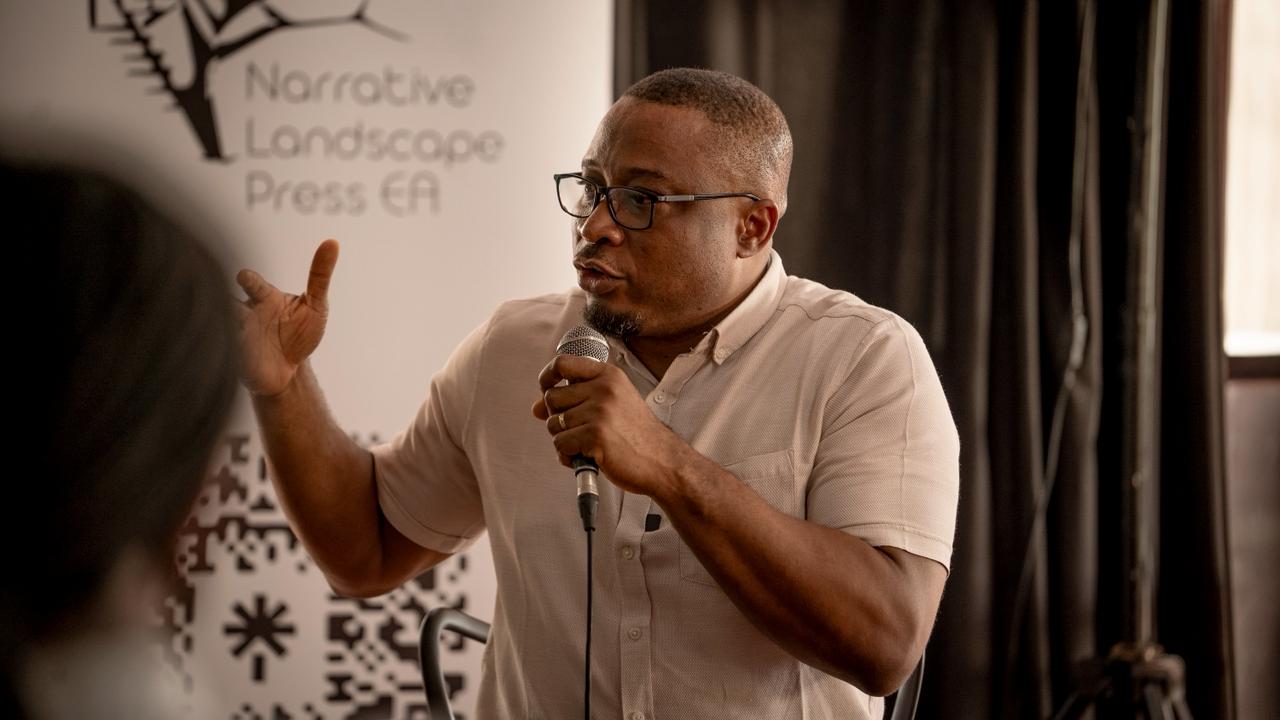
After more than a decade away from publishing books, Nigerian writer and medical doctor Eghosa Imasuen found his way back to writing through an unlikely source: Entrepreneurship.
His latest book, The Challengers, marks his first published work in more than 10 years and his first foray into narrative nonfiction.
The book explores the rise of a group of Nigerian entrepreneurs who built a billion-naira company together while challenging conventional ideas about ownership, leadership and collaboration in African business.
For Imasuen, however, the story was also deeply personal.
“For me, it was generational. I was trying to examine how businesses evolve. There were multiple planes of thinking. I was also looking at Nigeria’s post-civil war generation and how broad-based shareholding structures work,” he spoke on Thursday during the book preview in Nairobi.
The project emerged at the intersection of several personal reflections, around the same time he became acquainted with the founders featured in the book, Imasuen was also thinking about his own family’s business history and the lessons that shaped his understanding of entrepreneurship.
“It was from that entire mix that the idea came. I hadn’t written in a while, and I felt this was a story I wanted and perhaps needed, to tell. Maybe my idea of fiction was really about telling true stories using the skills I learned from fiction.”
Imasuen first gained recognition through his novels To Saint Patrick in 2008 and Fine Boys in 2012. His work has also appeared in publications including Farafina Magazine and Stranger’s Guide.
Beyond writing, he has remained active within African literary spaces, including serving as a facilitator at Chimamanda Adichie Annual Writing Workshop and as lead partner at the CANEX Book Factory under the Creative Africa Nexus initiative supported by Afreximbank.
But after Fine Boys, there was a long silence.
That silence, he explained, only ended after years of conversations, friendships and observations around a new generation of Nigerian founders building collaborative businesses in ways that differed sharply from earlier models of entrepreneurship.
“My father was among the first indigenous engineers in Nigeria. He left in his late twenties and went into business transport and oil services and built quite an empire in Nigeria’s Niger Delta, where I grew up.”
Watching his father succeed in business inspired him, but also exposed him to the weaknesses of older entrepreneurial models.
“I was raised in an entrepreneur’s home, not just a trader’s home. But I also saw the issues that this new generation, I hope, are able to resolve. They were alone and quite individualistic in my father’s time. I learned that while you can go faster alone, you go further with more people,” he said.
That idea, collective entrepreneurship instead of individual dominance, eventually became one of the central themes of The Challengers.
Imasuen explained that there was no single dramatic moment that convinced him to write it. Instead, the story slowly emerged through years of informal interactions and overlapping personal histories.
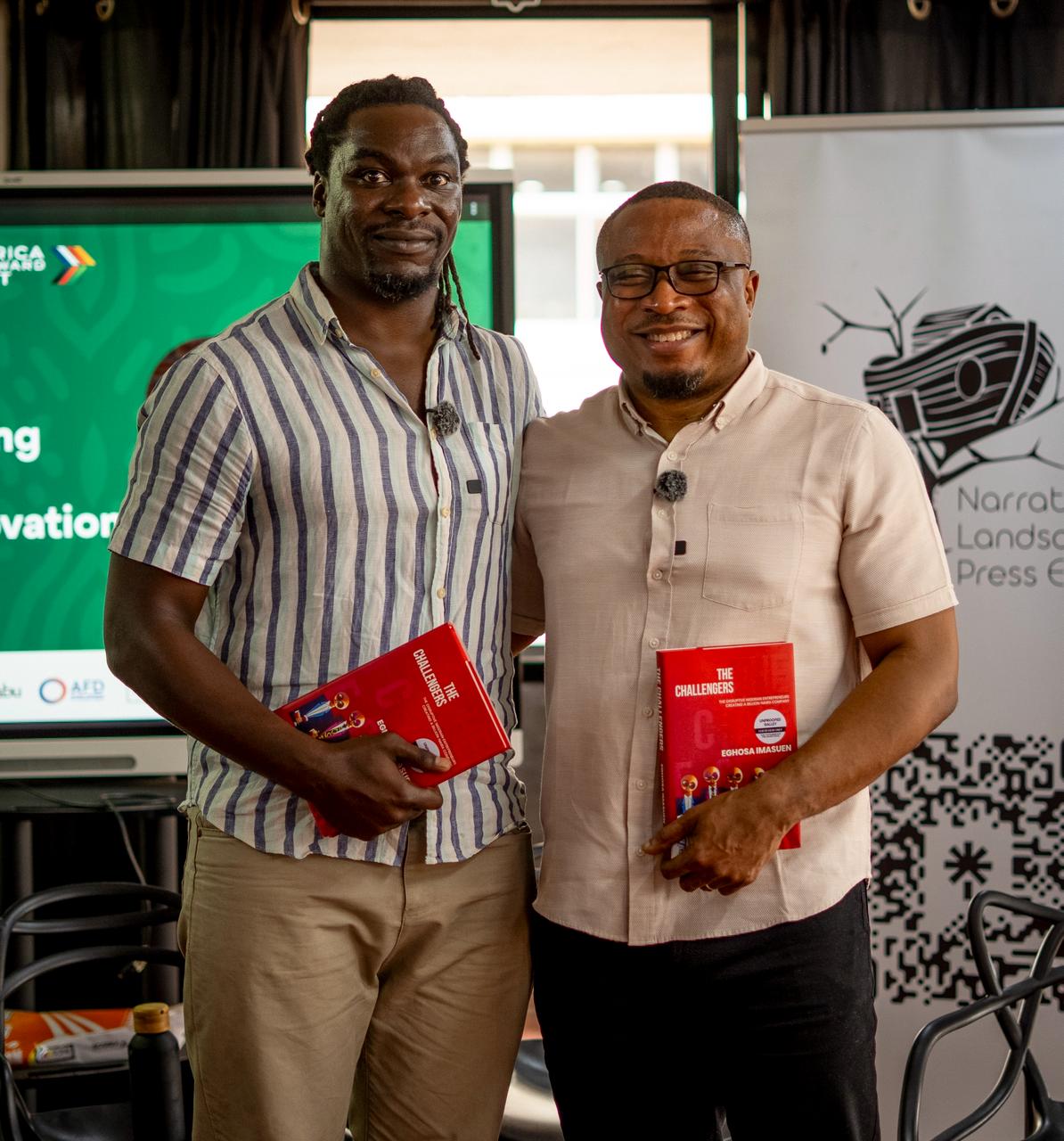 Nigerian writer and medical doctor Eghosa Imasuen and Michael Onsando during the preview of The Challengers book in Nairobi on May 7, 2026 / MOSES MWANGI
One turning point came while interviewing one of the figures who appears in the book. During the conversation, Imasuen discovered that he had actually sent an email back in 2010 while trying to raise funding for a bank linked to his family.
The relationships eventually deepened into extended conversations with the founders of the company at the center of the narrative.
Imasuen said those conversations gradually revealed a larger story about collaboration, innovation and survival within Nigeria’s difficult business environment.
“So the decision to tell the story didn’t come from one dramatic moment. It came from years of conversations, friendships, observations, hearing stories about ‘those boys’ and what they were building. And after more than a decade without writing a book, this project brought the creative energy back for me.”
Imasuen designed interview schedules, identified key figures to speak with and conducted multiple rounds of interviews.
What he initially thought would take four months eventually stretched into eight months because of scheduling difficulties and the complexity of piecing together multiple perspectives.
He also found himself adapting to the realities of modern transcription technology.
“Even the interviews themselves became lessons, especially learning not to mumble so Microsoft auto transcribe could understand Nigerian accents properly,” he said.
Eventually, his wife joined the process as a transcriber during the second half of the project because she better understood the cultural references and generational context being discussed.
Imasuen described himself as a “champion procrastinator” who spent long periods listening repeatedly to interview transcripts before finally mapping out the chapters and narrative structure.
“In the second round of interviews, the subjects were effectively writing their own point-of-view chapters through their conversations with me,” he explained.
Unlike fiction, where writers invent characters and conflicts, The Challengers required him to identify the forces shaping the lives of real people.
Those forces included the 2008 financial crisis, tribalism, regulation and generational change within Nigerian business culture.
One of the book’s most memorable episodes involves early regulatory inspections of a digital banking operations.
Regulators struggled to understand concepts like cloud-based systems and digital banking infrastructure because they expected traditional banking models built around physical cash handling and banking halls.
At one point, when inspectors repeatedly demanded to see the company’s server, founder reportedly pointed at an office power inverter and told them: “That is our server.”
For Imasuen, moments like these captured the broader tension between innovation and institutional systems struggling to catch up.
Ultimately, though, The Challengers became more than a book about business. It became the project that reconnected him with writing after more than 10 years away from publishing.
“I’ve always believed in tricking your reader into an education,” he said.
“There’s no fixed lesson people must learn from it, enjoy it first. And if it changes you in some way, then I’m happy.”
The book is set to be released in two weeks.
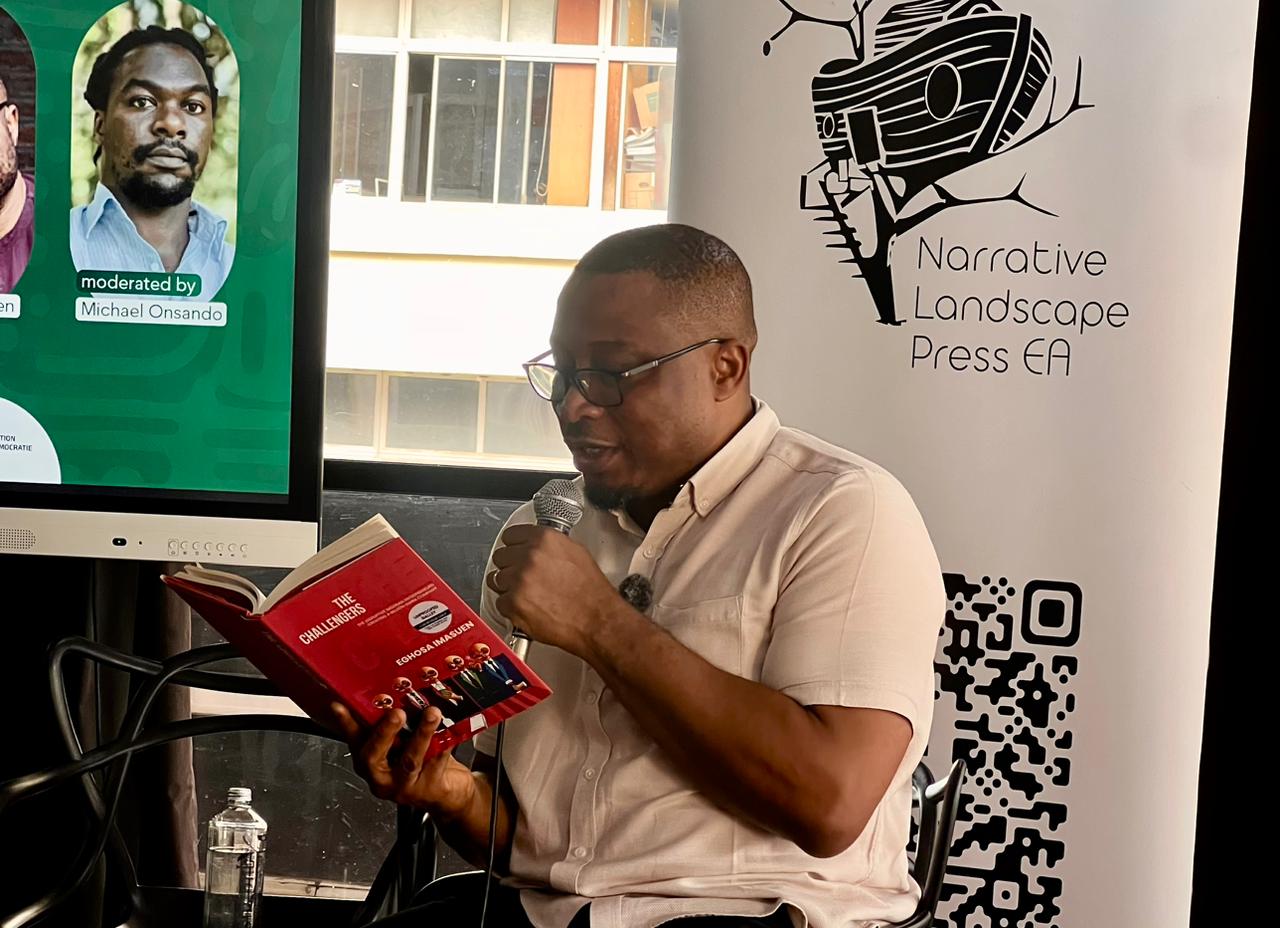 Nigerian writer and medical doctor Eghosa Imasuen speaking during the preview of his new book The Challengers in Nairobi on May 7, 2026 / MOSES MWANGI