The High Court has set May 28, 2026, as the judgment date in a constitutional petition challenging the criminalisation of cannabis in the country.
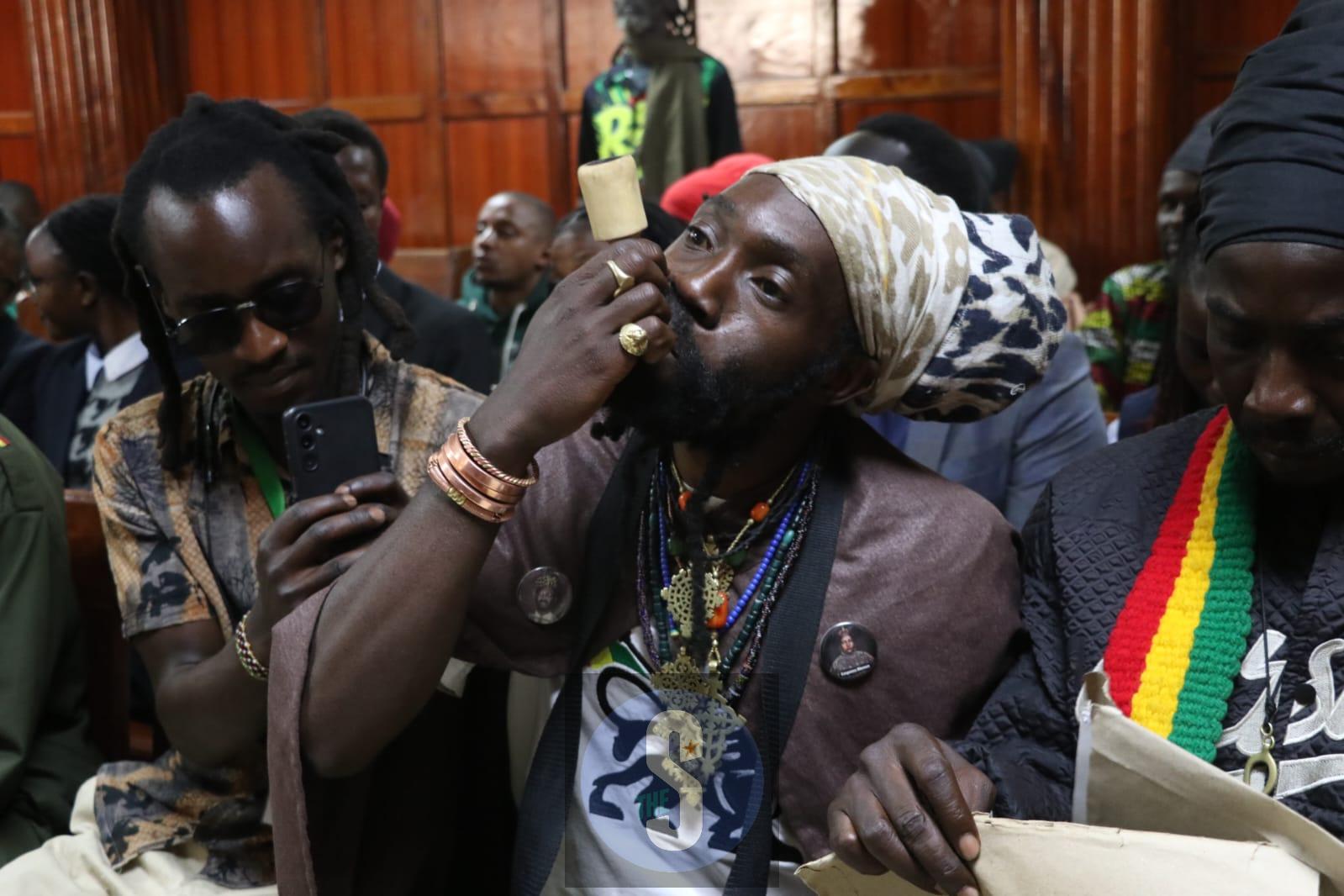
In their now the Rastafari Society of Kenya, challenges sections 3, 5 and 6 of the Narcotic Drugs and Psychotropic Substances Control Act, which criminalise the possession, use and cultivation of cannabis.
At the centre of the dispute is whether Parliament, in enacting the law, exceeded constitutional limits by imposing what the petitioners describe as a blanket prohibition that violates privacy and freedom of religion.
During Friday’s hearing before High Court judge Bahati Mwamuye, lawyers representing the Rastafarians argued that the provisions are overly broad because they fail to distinguish between public and private cannabis use.
They submitted that the law effectively criminalises private conduct, including possession and cultivation for personal consumption, thereby placing Rastafarians in what they termed a constitutional dilemma between practising their faith and complying with the law.
Lawyer Shadrack Wambui argued that while Parliament has power to legislate in public interest, such authority must still operate within constitutional boundaries and cannot unjustifiably limit protected rights.
He told the court that the current law intrudes into the “most intimate sphere” of private life and conscience, including adult choices that do not harm others.
The petitioners further urged the court to issue structural orders directing the Attorney General and relevant state agencies to consider reforms or religious accommodation within the narcotics law.
The argument triggered questions from the bench on whether the High Court could direct legislative reform or whether such powers belong exclusively to Parliament.
Justice Mwamuye also raised a notable hypothetical question to the State, asking whether Parliament could, in principle, ban unleavened bread, in testing the limits of legislative authority where religious practices are involved.
The analogy emerged as the court examined whether laws of general application can still become unconstitutional if they interfere with constitutionally protected religious beliefs and practices.
In response, State counsel Christopher Marwa strongly defended Parliament’s role, arguing that laws derive legitimacy from public participation and democratic processes.
“It must have legitimacy from the people. A Bill should be subjected to members of the public to give them an opportunity to be educated on the same and agree whether it is harmful to the public or not,” he submitted.
Marwa maintained that the cannabis law is neutral and applies equally to all Kenyans, arguing that Parliament enacted the provisions to address trafficking, abuse and public health concerns rather than target Rastafarians or any religious group.
He cautioned the court against what he termed judicial overreach, arguing that granting the orders sought would amount to the judiciary usurping Parliament’s legislative mandate.
The State further argued that any reconsideration of cannabis regulation should be undertaken through parliamentary processes, public debate and submission of memoranda by citizens, rather than through court declarations.
Lawyer Kidakwa, appearing for NACADA, also defended Parliament, arguing that public participation was conducted before the law was enacted.
However, the petitioners insisted that courts are constitutionally empowered to intervene where legislation violates rights, arguing that the judiciary is not helpless where Parliament fails to adequately protect minorities and marginalised groups.
The judgment is now expected to determine not only the constitutionality of Kenya’s cannabis laws, but also the extent to which courts can influence or direct legislative reform where constitutional rights are alleged to have been infringed.



Comments 0
Sign in to join the conversation
Sign In Create AccountNo comments yet. Be the first to share your thoughts!