Canada has raised concern over growing attacks on independent journalism and the spread of disinformation, as journalists, diplomats and media rights organisations gathered in Nairobi to mark World Press Freedom Day 2026.
The event, hosted at the Canadian Official Residence in Nairobi, was held under this year’s theme, “Shaping a Future of Peace: The Role of Journalism in a New World Order.”
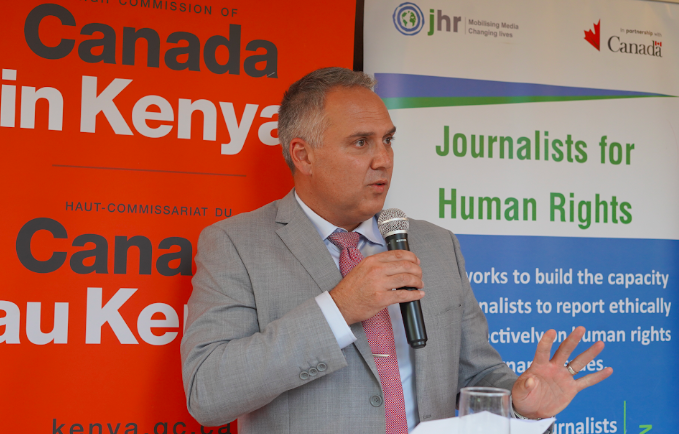
Speaking during the discussion on Thursday evening, Canada’s High Commissioner to Kenya, Joshua Tabah, said a free and independent press remains essential in safeguarding democracy, accountability and social stability.
“We know that free and independent journalism is under attack,” Tabah said.
“In virtually every corner of the world, journalists and their commitment to truth is under attack from the powerful and the corrupt.”
The envoy said the rapid spread of misinformation, fuelled by conflict, political instability and advances in artificial intelligence, was creating an increasingly dangerous global information environment.
“This year’s theme is urgent as the world grapples with an increasingly complex global information environment shaped by conflict, economic challenges and rapidly evolving artificial intelligence technologies,” he said.
Tabah accused those targeting vulnerable Kenyan youth with false overseas job offers linked to the war in Ukraine.
“Through deliberate lies and misleading information, actors have targeted vulnerable young Kenyans through coordinated misinformation campaigns, luring individuals abroad with deceptive job offers,” he said.
“This is a human trafficking pipeline to send Kenyans and other Africans to the frontlines as war fodder in their illegal invasion of Ukraine.”
According to the High Commissioner, reports indicate that more than 1,000 Kenyans may have been recruited through the scheme.
He praised Kenyan journalists for exposing the alleged operations and helping alert families and institutions to the risks.
“Only a free and independent media can be relied on to play a critical role shining a spotlight on the truth, raising awareness, and protecting vulnerable populations,” Tabah said.
The diplomat also highlighted growing financial pressures facing newsrooms globally, saying changing media business models had left many independent outlets struggling to survive.
“Global shifts in media business models have left many independent journalism institutions in a financially precarious position,” he said.
Despite the challenges, Tabah described Kenya as a regional example of media freedom that should be protected and strengthened.
“Kenya already is a model for press freedom in the region, but we think that needs to be preserved, encouraged and nurtured,” he said.
He said Canada has been responding to requests from local media organisations seeking capacity building and institutional support through partnerships with organisations such as Journalists for Human Rights.
“We look for partners that might be able to help, and Journalists for Human Rights is one of those partners,” he said.
Tabah said Canada’s goal was not to influence local media agendas but to support local organisations working to strengthen journalism and civic engagement.
“Media freedom is essential. It’s essential for democracy. It’s essential for accountability. It’s essential for good government,” he said.
“And we all have a role in society to protect media freedoms.”
Director of African Programs at Journalists for Human Rights, Mustapha Dumbuya, said journalists deserved recognition for continuing to hold leaders accountable despite operating in increasingly hostile environments.
“It’s worth a celebration because despite the challenges, journalists continue trying to hold power to account,” Dumbuya said.
“And JHR is trying to provide the tools to help them hold power to account.”
He noted that while some countries still provide relatively safe spaces for journalism, others remain dangerous for reporters and media workers.
“In some places it is safer to practise journalism, but in countries like South Sudan and Mali, it is almost a crime to be a journalist because you are considered an enemy of the people,” he said.
Dumbuya added that Canadian support had helped strengthen media freedom and civic spaces across the region.
“Through Canada’s support, we have been working with journalists and strengthening civic spaces,” he said.
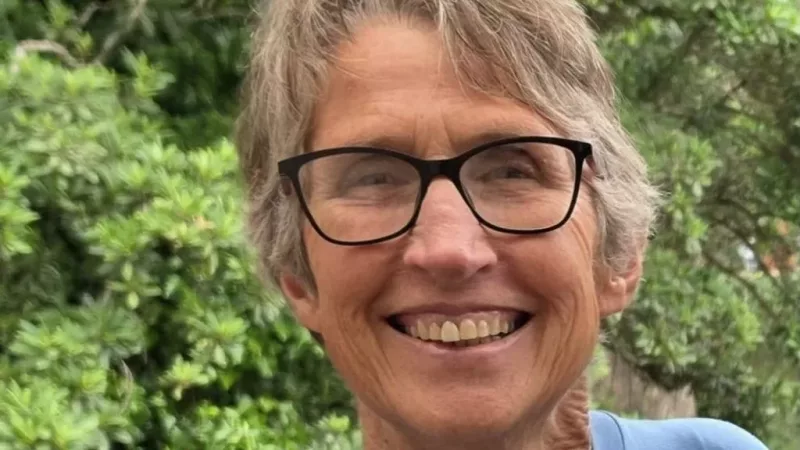
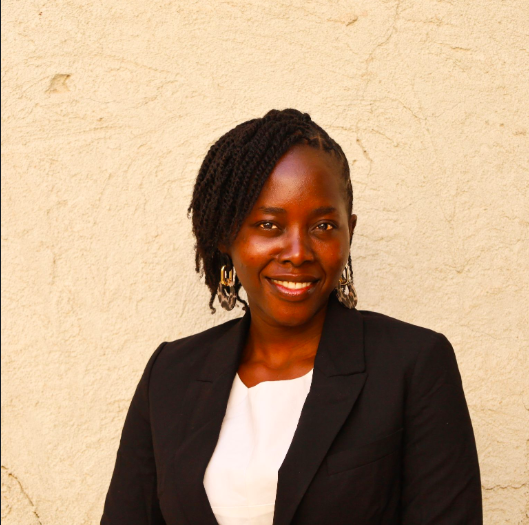
Acting Country Project Manager at Journalists for Human Rights Kenya, Mercy Njoroge said partnerships supported by the Canadian government have helped strengthen independent journalism and human rights reporting in Kenya over the past five years.
“Through partnership with Canada, JHR has been actively working with journalists in Kenya since 2019 to strengthen independent journalism, promote human rights reporting and support media development through training, mentorship and story-production bursaries,” she said.
Njoroge said the programmes focused on ethical and solutions-oriented journalism, with training covering governance, gender equality, health, climate change, youth empowerment and human rights reporting.
She added the organisation had also promoted gender-sensitive reporting projects aimed at amplifying women’s voices and highlighting issues such as gender-based violence, reproductive health and women’s political participation.
“With support from the Canadian government, we have achieved great milestones in Kenya and we continue to work with our partners to strengthen press freedom and improve access to reliable information,” she said.
“As we commemorate this year’s World Press Freedom Day, let us continue working together to strengthen independent media, defend press freedom, and build societies rooted in truth, transparency and respect for human rights.”