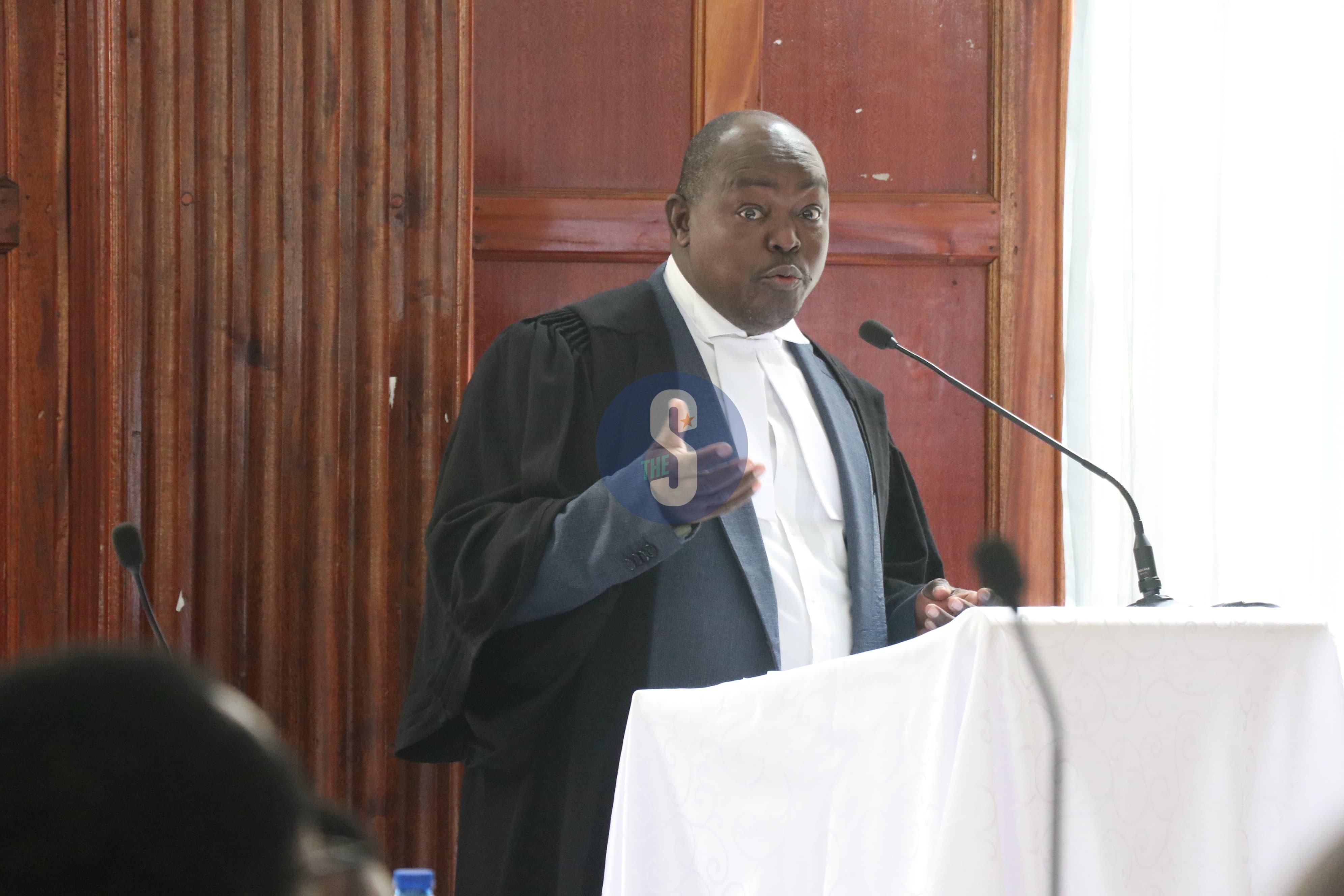
 Lawyer Kibe Mungai speaking during the hearing of the constitutional petition of former deputy president Rigathi Gachagua at Milimani law courts, Nairobi on May 7, 2026/LEAH MUKANGAI
A lawyer representing petitioners challenging the impeachment of former Deputy President Rigathi Gachagua has told a three-judge bench that not all theft claims rise to the level of an impeachable offence.
Lawyer Kibe Mungai argued before the court that impeachment should be reserved for serious constitutional violations.
He said ordinary criminal allegations should instead be handled through the normal justice system.
Making submissions in the ongoing Thursday hearing challenging Gachagua’s impeachment, Mungai distinguished between ordinary criminal offences under the Penal Code and conduct that meets the constitutional threshold for removal from office.
“If a president steals a billion, you cannot take him to Milimani, you wait until he leaves office,” Mungai submitted, while referring to immunity provisions available to holders of high office.
He argued that theft under the Penal Code remains an ordinary offence that can be prosecuted before a chief magistrate’s court and does not automatically translate into an impeachable offence.
“At what stage would theft translate to impeachment? Mere theft would not be impeachment,” he told the bench.
According to the lawyer, impeachment only arises where the scale of the alleged misconduct and the resulting public harm become so severe that they affect the broader society or undermine constitutional governance.
Mungai illustrated his argument using a hypothetical example involving the theft of funds allocated for free primary education.
“If one were to steal all budget for free primary school, that’s not theft, it’s impeachment because it would mean thousands and millions of Kenyan students would not go to school,” he argued.
He maintained that the nature and magnitude of harm are central considerations in determining whether allegations against a state officer rise to the level required for impeachment.
The submissions were made before a three-judge bench hearing consolidated petitions challenging the process and legality of Gachagua’s impeachment.
The petitions question whether the constitutional threshold required for impeachment was met and whether the process undertaken by Parliament complied with constitutional safeguards.
The former Deputy President is seeking compensation equivalent to the remainder of his term rather than reinstatement.
Gachagua was impeached in October 2024 after both the National Assembly and the Senate voted to remove him from office.
The move came following a series of allegations linked to abuse of office, and conduct deemed contrary to constitutional expectations.
Gachagua, however, maintains that the impeachment process conducted by Parliament was unconstitutional and irregular, and failed to meet legal standards required under Article 151 of the constitution.
The hearing continues before the bench.