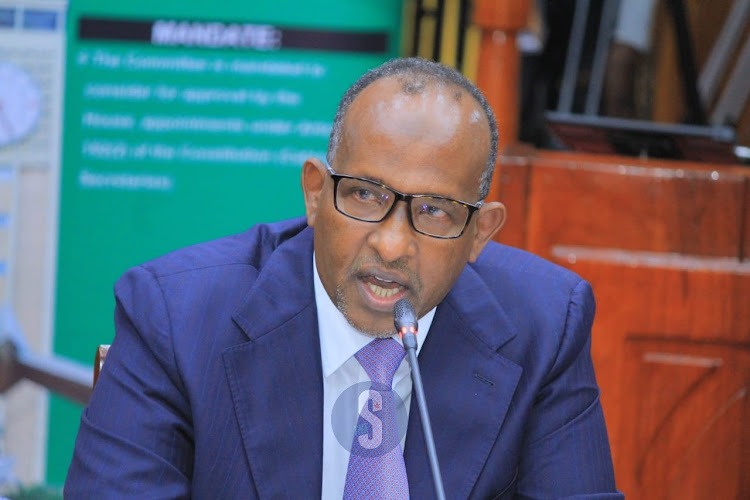
 Health CS Aden Duale / FILE
The Ministry of Health has dismissed reports alleging that blood donated by Kenyans is being exported abroad, terming the claims misleading and based on misinterpretation of international trade data.
In a statement issued on Thursday, Health Cabinet Secretary Aden Duale said reports circulating online and on social media had wrongly interpreted information published on the World Integrated Trade Solutions platform regarding Kenya’s exports under the category “human and animal blood”.
Duale clarified that the classification is a broad international customs category covering a wide range of medical, pharmaceutical and laboratory products, including vaccines, microbial cultures, toxins, antisera and other biological materials.
“The referenced category of ‘Human and animal blood’ in the report is a universal trade classification that includes, among other substances, vaccines, toxins, antisera and other blood-derived products, microbial cultures and similar products,” Duale said.
He emphasised that the classification does not include donated blood collected for transfusion services within the country.
The clarification follows online claims suggesting that blood donated by Kenyans was being exported to foreign countries for commercial purposes.
According to the ministry, some of the figures reflected in the trade data relate to multinational companies operating regional supply and logistics hubs in Kenya, which import and later redistribute medical and laboratory products across the East African region.
“The statistics in the report include a wide range of imported products by multinational companies operating regional supply and logistics hubs based in Kenya that subsequently redistribute some of these products within the East African region,” Duale stated.
The ministry further maintained that Kenya does not export donated blood or blood components for the manufacture of blood-derived products abroad.
“The Ministry of Health does not export any donated blood or components of blood for purposes of manufacturing blood-derived products in a foreign country,” he said.
Duale also noted that Kenya currently does not manufacture plasma-derived products such as clotting factors, albumin and immunoglobulins, nor does it undertake plasma fractionation.
As a result, the country imports such specialised blood products from internationally accredited manufacturers for use in hospitals and laboratories.
“Kenya does not manufacture antisera used in blood grouping and laboratory diagnostics or plasma-derived blood products. Consequently, all such blood products used within the country are imported,” he added.
The ministry urged the public to verify health-related information through official channels to avoid spreading misinformation that could undermine confidence in the country’s healthcare system and blood donation programmes.
Duale warned that the government would work with relevant investigative agencies to pursue individuals found to be spreading false or misleading health information.
“The Ministry of Health will work with relevant investigative agencies to seek and apprehend persons peddling and publishing misleading health information to the Kenyan public under existing laws,” he said.
Kenya has, in recent years, continued to encourage voluntary blood donation to support emergency care, surgeries, maternal health services and treatment for patients with chronic illnesses requiring transfusions.
The ministry said it remains committed to strengthening the national blood system to ensure access to safe and quality-assured health services.