Parliament has decried systematic neglect of the country’s correctional facilities, warning of a crisis if budgetary allocations are not reviewed.
Members of the National Assembly’s Constitutional Implementation Oversight Committee (CIOC) have raised a red flag over the untenable budgetary allocations to the country’s prisons, calling for a review of the existing funding model.
The revelations emerged during an inspection of Nakuru Main and Nakuru Women’s Prisons.
The lawmakers were confronted with financial records painting a grim picture of a system expected to perform miracles on a shoestring budget.
Despite the Rift Valley region hosting 17,663 inmates, the committee discovered that essential service categories have been allocated amounts that are barely enough to sustain a single household.
For instance, the entire vote head for telephone, telex, facsimile and mobile phone services was allocated Sh2,115 in the second quarter of the current financial year.
The allocation is meant to cover coordination for the entire region.
"This is not just underfunding; it is a total breakdown of logic. How do you manage a population of over 17,000 people and coordinate security across a region with Sh2,000?” posed session chairperson and Mwingi West MP Charles Nguna.
“This amount wouldn't even cover the airtime for a single administrator for a month, yet it is expected to serve the entire facility.”
The documents submitted to the committee revealed a further starvation of other essential services in the same quarter.
These include catering services, which have been allocated Sh520, general office supplies allocated Sh1,200, and sanitary and cleaning materials allocated Sh981.
Others are computer and printer accessories allocated Sh806 and non-pharmaceutical medical items allocated Sh2,175.
The committee observed that while the facility requires about Sh62 million annually to cover the Social Health Authority (SHA) contributions for inmates, the current allocation for medical expenses stands at a mere Sh76,000.
The funding gap, the committee observed, has left sick inmates stranded in hospitals, with healthcare facilities demanding SHIF registration for the admission of sick inmates, a process that is currently impossible for many prisoners who lack the required ID cards and mobile phone numbers.
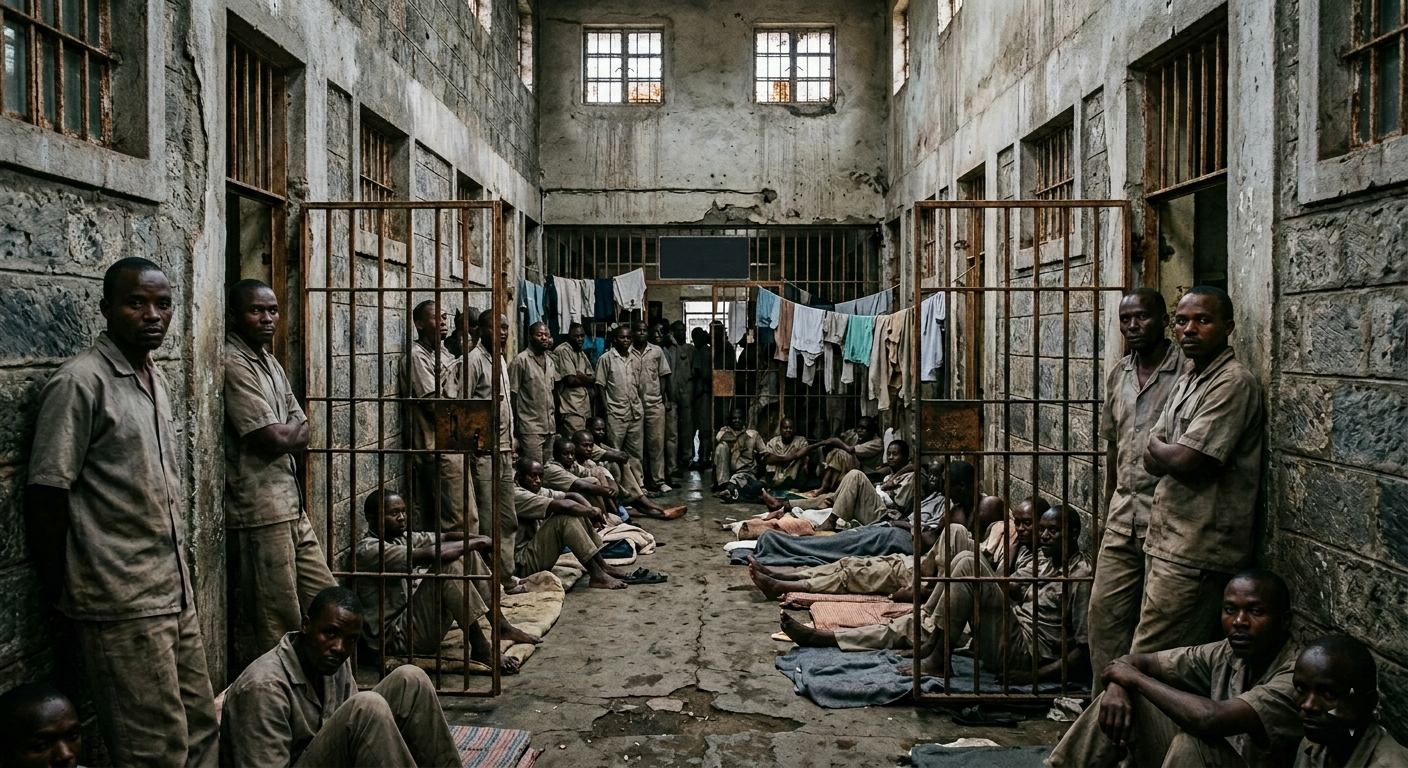
The inspection also revealed that Nakuru Main Prison, with a capacity for 800 inmates, currently houses 1,864.
In another shocking revelation, a single toilet is shared by at least 150 men.
"We have been budgeting for programmes that we do not effectively oversee," Nguna admitted.
"We want to make strong recommendations for better funding. We will not undertake these visits just to tick boxes."
The committee also pledged to push for the repeal of the colonial-era Prisons Act (Cap 90) and engage the National Treasury to ensure that budget allocations reflect the actual cost of providing humane rehabilitation.
Embakasi Central MP Benjamin Gathiru suggested prison officers be considered in the Affordable Housing Programme to alleviate the housing crisis facing staff, many of whom live in insecure environments.
The committee is set to hold a joint sitting with the Cabinet secretary, Ministry of Interior and National Administration and the Attorney General on how to improve the welfare of prison officers as well as inmates.
INSTANT ANALYSIS
Members of the National Assembly’s Constitutional Implementation Oversight Committee (CIOC) have raised a red flag over the untenable budgetary allocations to the country’s prisons, calling for a review of the existing funding model. The revelations emerged during an inspection of Nakuru Main and Nakuru Women’s Prisons.