
Nairobi City County has intensified a citywide clean-up operation targeting areas long burdened by unmanaged waste, in a renewed effort to tackle one of the capital’s most persistent urban challenges.
Operating under the banner “Safisha Kanairo,” the exercise is being carried out in partnership with waste management firm Zoomlion Kenya, with teams deployed across several informal settlements and high-density neighbourhoods.
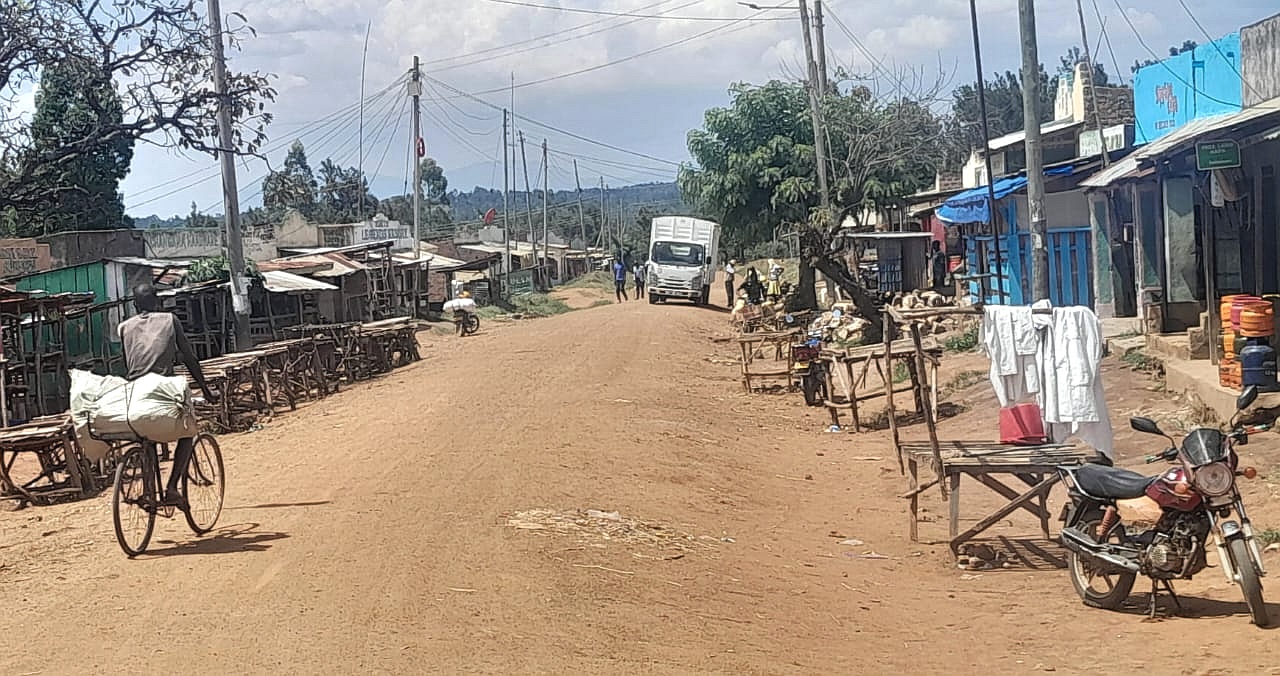
For years, areas such as Dagoretti North, Kamukunji, Starehe, Mathare, Embakasi and Kibra have grappled with chronic waste accumulation.
In some locations, garbage has built up over time to form semi-permanent dumpsites, forcing residents to live in poor sanitary conditions with limited regular waste collection.
County officials say the current intervention is an urgent and coordinated response rather than a routine clean-up, aimed at restoring basic sanitation and reopening public spaces.
Environment chief officer Hibrahim Otieno said the county has entered into a long-term contract with Zoomlion Kenya to strengthen waste management.
“We will roll out an awareness campaign to curb illegal dumping by sensitising residents in informal settlements on proper waste disposal and designated dumping sites, as part of a long-term waste management plan,” he said.
Heavy machinery, evacuation trucks and specialised waste-handling equipment have been deployed in hotspots including Borabora in Dagoretti North, Huruma Grounds in Mathare, Othaya Market in Kibra, and parts of Ruaraka and Embakasi.
Teams are clearing waste that has accumulated over years in an effort to improve living conditions and environmental safety.
Zoomlion Kenya, which is supporting the exercise, says its role goes beyond waste removal to addressing broader public health risks linked to poor sanitation.
“This is not just about cleaning streets. It is about protecting lives, restoring productivity, and investing in the future of Nairobi,” said Peter Dagadu, director of operations at Zoomlion Kenya, during operations in Ruaraka.
He said early signs of improvement are already visible in some neighbourhoods, with cleared spaces beginning to reopen for small-scale economic activity.
Public health concerns remain central to the operation.
Poor waste management in densely populated areas has been linked to outbreaks of diseases such as cholera and typhoid, with residents frequently exposed to unsafe conditions.
However, officials acknowledge that the challenge remains vast and will require sustained intervention.
They also emphasise that long-term success will depend on behavioural change among residents, particularly in waste disposal practices.
At the same time, Nairobi City County has begun upgrading waste infrastructure at the Dandora dumpsite, the city’s main disposal facility.
The site is being reorganised to handle increased waste volumes generated by ongoing clean-up activities.
Officials say the improvements are intended to reduce delays in waste offloading and improve truck turnaround times across the city’s collection system.
A material recovery facility is also under construction to enable sorting and recycling of waste. Once operational, it is expected to ease pressure on the Dandora landfill by allowing recovery of recyclable materials.
During a joint forum between Ghanaian and Kenyan stakeholders, Dandora Dumpsite chairman James Kamau said improved systems could expand employment opportunities within the waste sector.
“We have about 3,000 workers at the dumpsite,” he said, noting that while some fear job losses, better systems could create more structured employment.
He said Kenya’s waste challenge could be transformed into an economic opportunity given the number of informal and formal actors already engaged in the sector.
Some waste pickers operate within formal arrangements, but many others depend on informal collection, forming a fragile but essential livelihood system at the dumpsite.
Environmentalist Alphonse Muia said transforming Dandora will require a mix of scientific, infrastructural and policy-driven reforms.
He called for a phased approach anchored on modern landfill development, decentralised waste management systems, and scientific decomposition processes.
Muia also urged Kenya to adopt biological treatment of organic waste, noting it could be converted into organic fertiliser, aligning with the country’s agricultural strengths.
He further emphasised the need for locally adapted models rather than direct replication of foreign systems.
The clean-up initiative comes as City Hall moves to consolidate sanitation operations under a unified framework that integrates Climate Worx into routine waste management systems.
Nairobi Rivers Commission CEO Joseph Muracia said subcounty implementation committees have already been established to coordinate operations at the local level.
He said regular coordination meetings—both physical and virtual—will be held to strengthen collaboration, ensure alignment, and improve decision-making among stakeholders involved in the clean-up programme.
Overall, the initiative signals a renewed push by the county government to address long-standing sanitation challenges while laying the groundwork for a more structured and sustainable waste management system in Nairobi.
Instant analysis
Nairobi’s “Safisha Kanairo” clean-up signals a more coordinated and urgent response to the city’s deepening waste crisis, especially in informal settlements where decades of poor collection have created health hazards. The partnership with Zoomlion Kenya and upgrades at Dandora show a shift toward integrating private sector capacity and infrastructure reform. However, the scale of accumulated waste highlights structural failures in urban planning and behaviour enforcement. While immediate clearance improves visibility and public health risks, long-term success depends on sustained financing, resident compliance and decentralised waste systems. Without behavioural change and governance discipline, the gains risk being temporary and cyclical.

Comments 0
Sign in to join the conversation
Sign In Create AccountNo comments yet. Be the first to share your thoughts!