Remarks by Tanzania President Samia Suluhu calling for
coordinated regional repression of Gen Z demanding democracy have sparked sharp
criticism.
The Law Society of Kenya, opposition figures and civil
society have condemned the remarks.
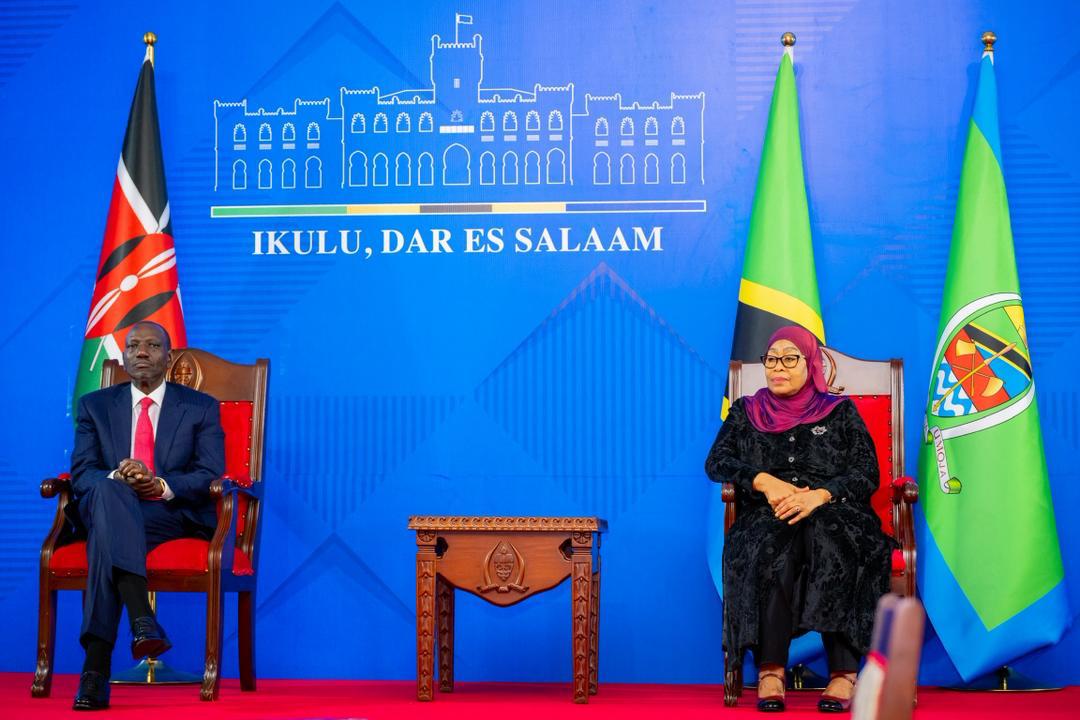
Suluhu said she had discussed with her Kenyan counterpart
William Ruto how to handle what she described as “ill-mannered Gen Z”
activists.
She suggested a joint approach to curb youth-led
demonstrations across the region.
“If they come to me, I will deal with them firmly. If they
come to you, deal firmly with them,” Suluhu said on Monday during Ruto’s state
visit in Dar es Salaam.
The remarks have ignited a political and constitutional
backlash in Kenya, where Gen Z-led movements in 2024 and 2025 have become a
defining feature of recent civic protests.
Law Society of Kenya president Charles Kanjama on Wednesday
issued a hard-hitting statement, warning that any attempt to coordinate
suppression of civic expression would violate constitutional protections.
Kanjama said Suluhu’s remarks raised “grave constitutional
and rule of law concerns within the East African Community.”
“The Constitution of Kenya is unequivocal. It guarantees
freedom of expression, association and peaceful assembly under Articles 33, 36
and 37. These are not concessions from the state; they are protected rights
that form the foundation of democratic governance,” Kanjama said.
He added that demands for accountability and transparency
could not be framed as disorder, but were an essential feature of
constitutional democracy.
Kanjama further warned against any regional alignment aimed
at limiting civic space, insisting that fundamental rights are not subject to
executive convenience.
“The Law Society of Kenya rejects any proposition that
fundamental freedoms may be curtailed through executive direction, political
convenience or regional alignment. Constitutional rights are not negotiable,”
he said.
He called instead for dialogue, not force, as the
appropriate response to youth activism, adding that the LSK would resist any
attempt to undermine civic freedoms through legal and institutional channels.
Former LSK president Faith Odhiambo also condemned the
remarks, describing them as a dangerous shift away from democratic norms.
“When two heads of state meet to discuss how to whip and
discipline citizens demanding accountability, we have crossed from democracy
into dictatorship,” Odhiambo said.
Odhiambo argued that framing Gen Z activism as misconduct
was an attack on constitutional freedoms.
“President Suluhu’s call for President Ruto to join her in
suppressing Gen Zs is a conspiracy against constitutional rights. If exercising
our constitutional right to protest makes us deserving of canes and whips, then
our leaders have forgotten who they serve,” the advocate of the High Court
said.
She insisted that Kenya’s constitution remains the ultimate
safeguard for civic expression.
Opposition figures have also joined in the condemnation of
the remarks.
Nairobi Senator Edwin Sifuna reacted to the remarks by
saying they would continue to defend democracy even if they are treated like
“naughty children.”
Former Chief Justice David Maraga also expressed concern,
warning that the rhetoric was inconsistent with democratic values and regional
cooperation.
“I am deeply disturbed by the remarks attributed to Her
Excellency President Samia Suluhu. It is regrettable that the two presidents
are reported to have discussed coordinating efforts to ‘chapa mikwazo’ the Gen
Z across Kenya and Tanzania. These remarks are abhorrent,” he said.
Maraga, who is a 2027 presidential aspirant, referenced past
allegations of cross-border abuses involving activists, urging East Africans to
remain vigilant.
“We must also not forget that our compatriot Boniface Mwangi
and Agather Atuhaire of Uganda were tortured on Tanzanian soil. The
perpetrators remain free. Citizens of East Africa must speak up,” he said.
He warned that such developments risk undermining democratic
progress in the region.
“The axis of tyranny that Presidents Suluhu and Ruto are
constructing threatens to return our region to autocracy,” he added.
Geopolitical analyst Dr Ahmed Hashi said the youth movement
had become central to Kenya’s democratic evolution.
“The Gen Z are probably more important to Kenya than any
other political formation. They are standing for a clean government. They want
a government of the people, by the people, and for the people,” Hashi said.
He contrasted their demands with current governance trends,
arguing that youth activism reflects a deeper legitimacy crisis.
Africa Policy Institute president Prof Peter Kagwanja also
criticised the remarks, framing them as generationally inconsistent.
“It’s a pity that President Suluhu would say ‘reign in the
Gen Zs’, and the Gen Zs are her grandchildren. If you are a grandmother and you
want the grandchildren killed, what is your vision of the future?” Kagwanja
posed.
He added that the role of leadership was to guide and mentor
young people rather than confront them with force.
Comments 0
Sign in to join the conversation
Sign In Create AccountNo comments yet. Be the first to share your thoughts!