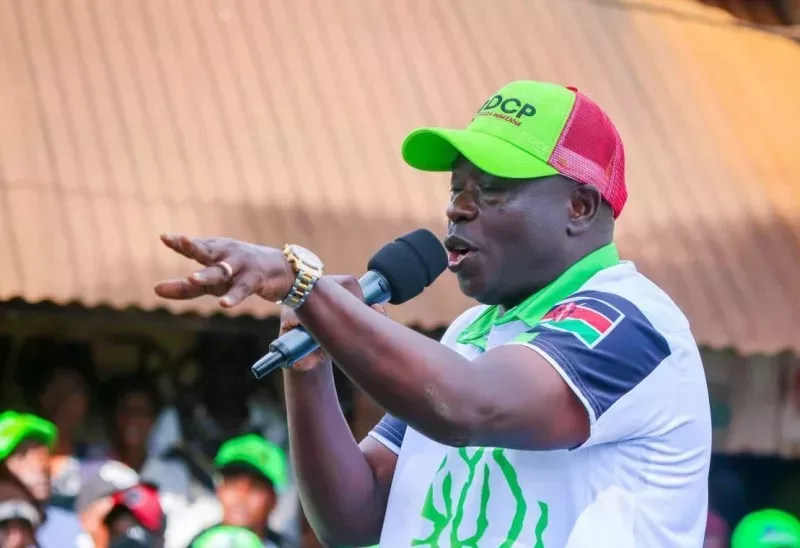
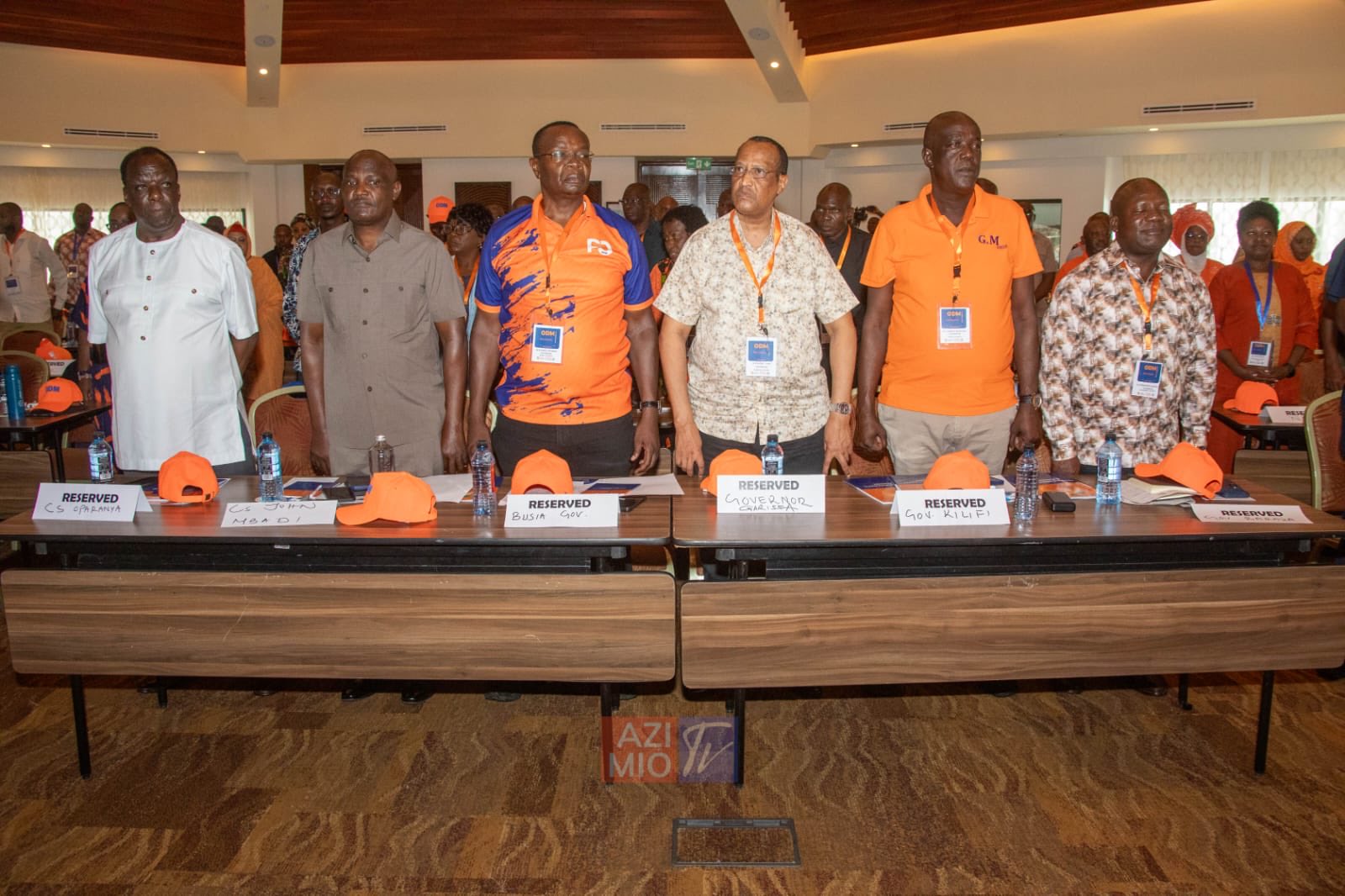
 ODM leaders during the party retreat in Mombasa on Monday, May 4, 2026. /ODM
Orange Democratic Movement party leader Oburu Oginga skipped a high-level leaders’ retreat in Mombasa but used his prepared remarks to set firm conditions on how the party should approach nominations, grassroots mobilisation and possible pre-election talks with the United Democratic Alliance.
In a speech delivered in absentia on the second day of the retreat Monday, Oburu placed the integrity of party primaries at the centre of ODM’s preparations for the next General Election, warning that flawed nominations risk internal divisions and electoral losses.
“Every contestant must be given a fair and equal opportunity to compete for any position,” he said, adding that transparent processes are the only way to prevent defections and disunity within the party.
The emphasis on credible nominations signals an early attempt by the new party leader to stabilise ODM internally following the death of founding leader Raila Odinga, whose political machinery had long held the party together.
"Soon, each one of us will return to the electorate, and as we prepare for party primaries, remember that the legacy I wish to leave behind is one founded on free, fair, and credible elections."
Closely tied to this was a renewed push for grassroots mobilisation, with Oburu stressing that ODM’s strength—and its bargaining power in any pre-election arrangement—rests on numbers.
“The strength and position of our party can only be solidified if we have the numbers,” he said, while acknowledging that voter registration in some of the party’s traditional strongholds remains low.
He urged leaders to prioritise service delivery at the constituency level rather than premature campaigning, arguing that sustained service delivery would win voter confidence and expand the party’s base ahead of the polls.
Oburu then turned to the question of potential pre-election negotiations with UDA and cautioned against rushed endorsements.
“We are yet to begin our negotiations, and I would like to request that, before we start endorsing one another, we ensure a thorough and consultative process is undertaken,” he said.
The remarks point to a deliberate strategy to avoid internal fallout during coalition-building, an area that has previously exposed fault lines within major political parties.
To reinforce this approach, Oburu underscored the need for unity, discipline and a clear chain of command within ODM, warning against conflicting public positions by party figures.
“We can only have one command centre. We cannot have multiple voices issuing conflicting ‘party positions’,” he said, adding that official communication would be channelled through the party leadership, trustees and executive structures.
Despite his absence, which he attributed to “unforeseen and unavoidable circumstances,” Oburu struck a conciliatory tone, urging leaders to engage constructively during the retreat and resolve differences amicably.
"Loyalty and dedication to the party must guide our actions. We must put an end to internal conflicts, as they do not serve our interests but instead create divisions that may become difficult to repair," Oburu said.
He also paid tribute to Raila, crediting him with building ODM into a formidable political movement and pledging to uphold that legacy.
“The journey to Canaan continues,” he said, invoking a phrase synonymous with the party’s long-standing political quest, while acknowledging the weight of expectations following the transition in leadership.
As ODM navigates a new chapter, Oburu’s message from Mombasa suggests a leadership keen on tightening internal processes, rebuilding grassroots strength and approaching coalition politics with caution—moves likely to shape the party’s trajectory heading into the next electoral cycle.