
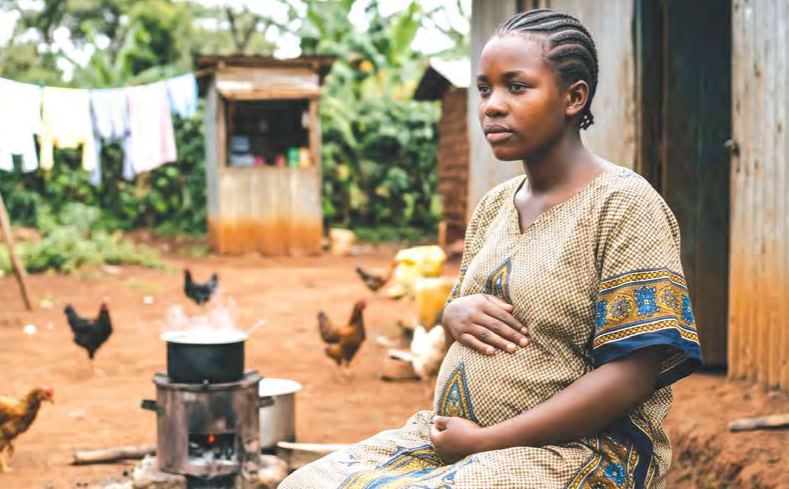
 Births to teen mothers aged 15–19 slightly increased from 11.1 per cent in 2024 to 11.5 per cent in 2025.
Mothers aged between 20 and 29 continued to account for the largest share of births in Kenya over the five-year period from 2021 to 2025, even as the country recorded an overall decline in births.
Data from the 2026 Economic Survey shows a net drop of 55,343 births during the period, from 1,200,190 in 2021 to 1,144,847 in 2025, representing a 4.6 per cent decline.
Despite this downward trend, births among women aged 20–24 and 25–29 remained consistently high.
Mothers in the 20–24 age group accounted for the highest proportion of births at 29.4 per cent, translating to 1,753,224 births over the five-year period.
They were followed by those aged 25–29, who recorded 1,501,264 births, representing 26.4 per cent of the total.
A distant third was the 30–34 age group, which accounted for 17.7 per cent of all births, with a cumulative total of 1,032,382.
Births among older age groups were significantly lower. Mothers aged 35–39 accounted for 9.9 per cent (549,944), while those aged 40–44 contributed 2.3 per cent (130,658).
Women aged 45–49 accounted for 0.2 per cent (12,612), while those aged 50 and above registered 1,097 births, effectively negligible at zero per cent.
The data released by the Kenya National Bureau of Statistics (KNBS) also highlights gaps in age reporting during delivery both in health facilities and at the community level.
Births attributed to mothers whose ages were not captured at the time of delivery stood at 196,620, accounting for 2.4 per cent of all registered births during the period under review.
Teenage mothers aged 15–19 contributed 681,428 births, accounting for 11.5 per cent of the total—an increase from 11.1 per cent recorded in 2024.
Meanwhile, births among pre-teen mothers aged below 15 accounted for 0.1 per cent, or 10,699 births.
Birth registration completeness improved to 71 per cent, with more than 97 per cent of births occurring in health facilities, indicating sustained progress in institutional deliveries.
In terms of marital status, 85.1 per cent of all births were to married mothers, while single mothers accounted for 14.7 per cent.
Births to divorced, widowed, and mothers whose marital status was not disclosed each accounted for 0.1 per cent.
Over the five-year period, more male children were born than female children, with 2,999,640 male births compared to 2,870,050 female births.
During the same period, 1,074,903 deaths were registered.
In 2025 alone, 588,338 births (51.4 per cent) were male, while 556,492 (48.6 per cent) were female, reflecting a distribution similar to that observed in 2024.
The sex ratio at birth remained unchanged at 106 males for every 100 females.
The data further shows that between 2023 and 2025, a total of 30 children were recorded as intersex, while 208 were not assigned any gender.
The number of intersex births rose from nine cases in 2024 to 17 in 2025.







Comments 0
Sign in to join the conversation
Sign In Create AccountNo comments yet. Be the first to share your thoughts!