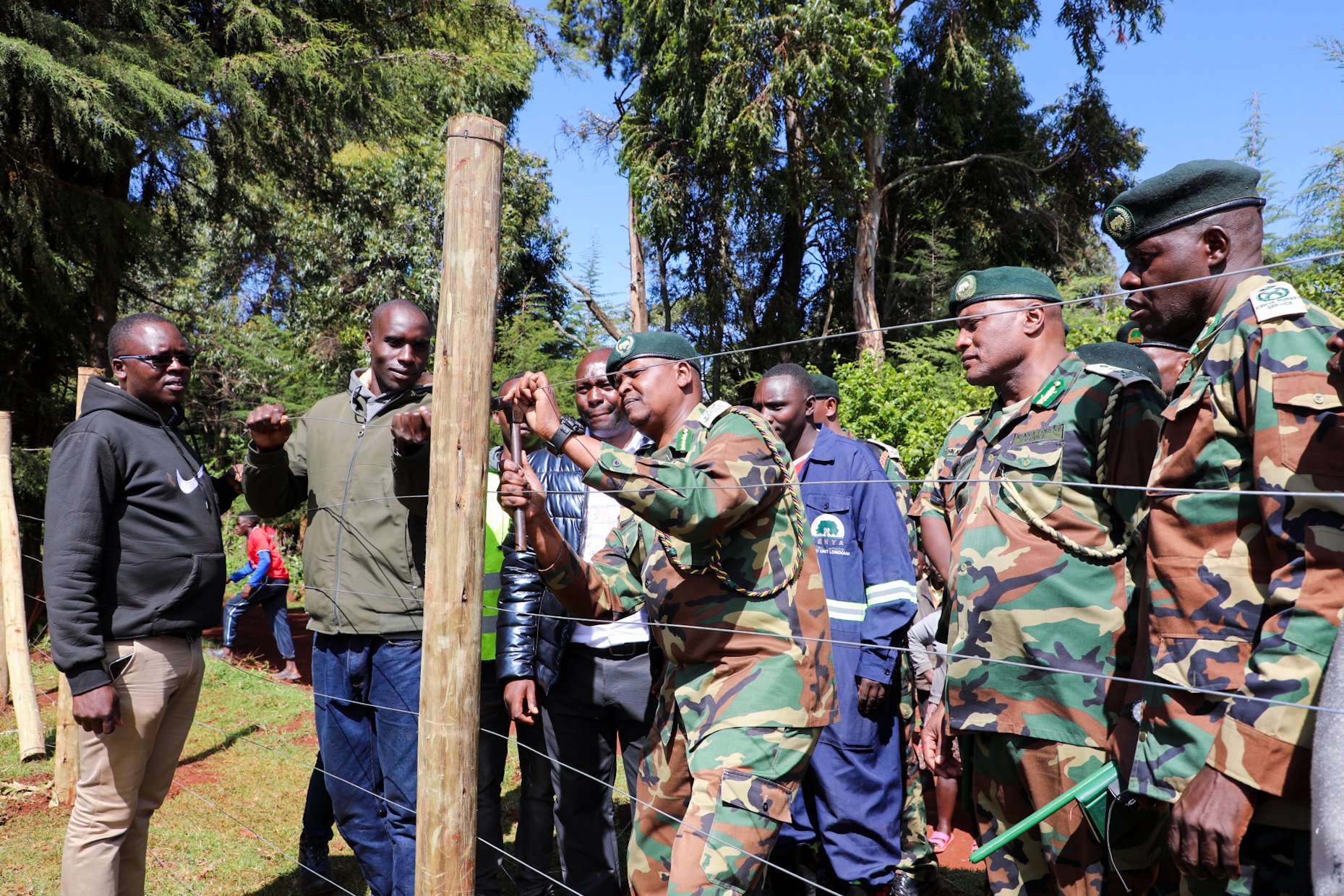
The Government has intensified efforts to protect forest ecosystems through a nationwide strategic fencing programme aimed at reducing encroachment, curbing human-wildlife conflict, and strengthening environmental conservation.
The initiative is being implemented by the Kenya Forest Service (KFS) as part of broader ecosystem restoration efforts, with focus on safeguarding key water catchment areas and improving forest regeneration.
“The Government is scaling up forest protection through strategic fencing of forest stations nationwide, an effective intervention to curb encroachment, reduce human-wildlife conflict, and support ecosystem restoration,” KFS said.
As part of the programme, KFS Chief Conservator of Forests Alex Lemarkoko commissioned the Kaptagat ecosystem fencing project and officially handed over the site to the KFS fencing unit for implementation.
The first phase of the project will cover 50 kilometres in the Kapkoi area within Sabor Forest Station in Elgeyo Marakwet County, targeting areas that have in recent years experienced pressure from human settlement and land use changes.
The fencing programme is expected to enhance biodiversity conservation by providing a secure environment for natural forest regeneration while protecting critical ecosystem services.
According to KFS, the intervention will also help strengthen water catchment protection, carbon sequestration, and soil stability, all of which are essential for climate resilience and sustainable livelihoods.
“The initiative will strengthen biodiversity conservation, support natural regeneration, and protect vital ecosystem services including water catchment, carbon sequestration, and soil stability,” the agency noted.
During community engagement sessions held alongside the commissioning, Lemarkoko urged residents living near forest areas to take an active role in conservation efforts, describing them as key partners in safeguarding the environment.
He called on communities to support government efforts by preventing illegal activities and ensuring the long-term protection of forest resources.
While addressing residents, Lemarkoko encouraged them to act as “social fences” in protecting the forest, noting that physical infrastructure alone cannot guarantee full conservation success without community involvement.
“The CCF called on residents to act as ‘social fences’ by safeguarding the forest and encouraged Kenyans to take advantage of the rains to plant trees,” KFS said.
The programme comes at a time when Kenya is stepping up climate action measures, including large-scale tree planting initiatives aimed at achieving national forest cover targets.
Strategic fencing, combined with community participation and reforestation programmes, will play a key role in restoring degraded landscapes and securing ecological balance.
The Kaptagat ecosystem project is expected to serve as a model for similar interventions in other forest stations across the country as the government continues to expand its conservation footprint.