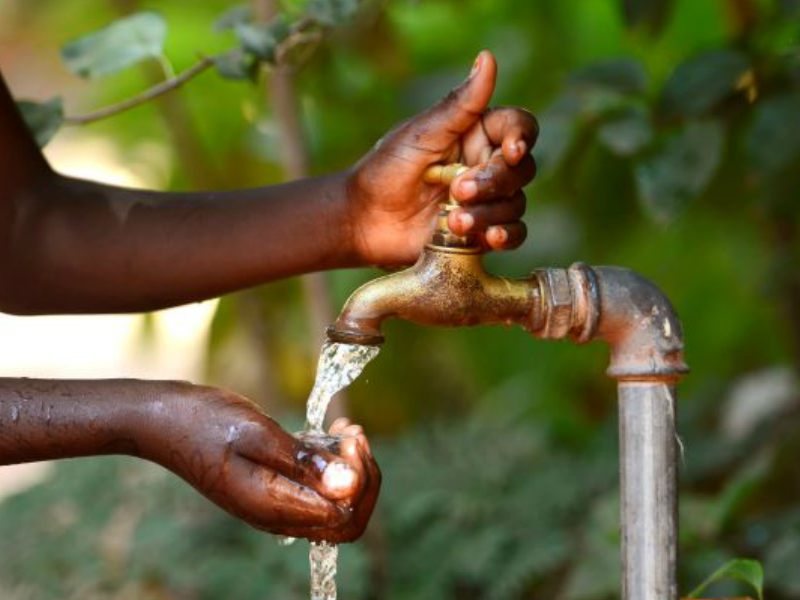
 Nairobi Water has asked residents to use available water sparingly.
Residents across 12 residential and commercial areas in Nairobi have been advised to use available water sparingly following a temporary supply interruption caused by a burst transmission pipeline at Gigiri.
In a statement on Friday, the Nairobi City Water and Sewerage Company said the NCT–Kigoro–Gigiri–Kabete transmission pipeline had suffered a major burst, disrupting water supply to all areas served from Kabete reservoirs.
The affected areas are Westlands, Lavington, Kilimani, Kileleshwa, Upper Hill, Ngong Road, Madaraka, Nairobi West, Uthiru, Karen, Kibera and Lang’ata.
Nairobi Water said repair works are currently underway, with teams from the Athi Water Works Development Agency (AWWDA) and Nairobi Water on site working to restore supply.
"Water supply is expected to resume by 6am on Saturday, May 2, 2026. Nairobi Water regrets the inconvenience caused and appreciates the patience and understanding of its customers as efforts are made to restore normal supply," the water utility company said.
To support affected customers during the interruption period, the company said water tanker services remain available for priority needs, with residents able to request and pay by dialling *260# (select option 5).
It added that water quality and public health standards will be upheld throughout the restoration process.
The disruption comes at a time when parts of the country are experiencing enhanced rainfall.
The Kenya Meteorological Department, in its weather outlook for April 22 to 28, warned of isolated heavy rainfall in several regions.
“Heavy rainfall events are expected over some parts of the Central Highlands (including Nairobi), Western Kenya, Lake Victoria Basin, Southeastern Lowlands, Central and South Rift Valley, and North-eastern Kenya,” the statement read.
Water levels in major dams have risen significantly, pointing to a more stable and sustainable water supply in the near term, even as the current disruption highlights infrastructure vulnerabilities amid the ongoing enhanced rains.