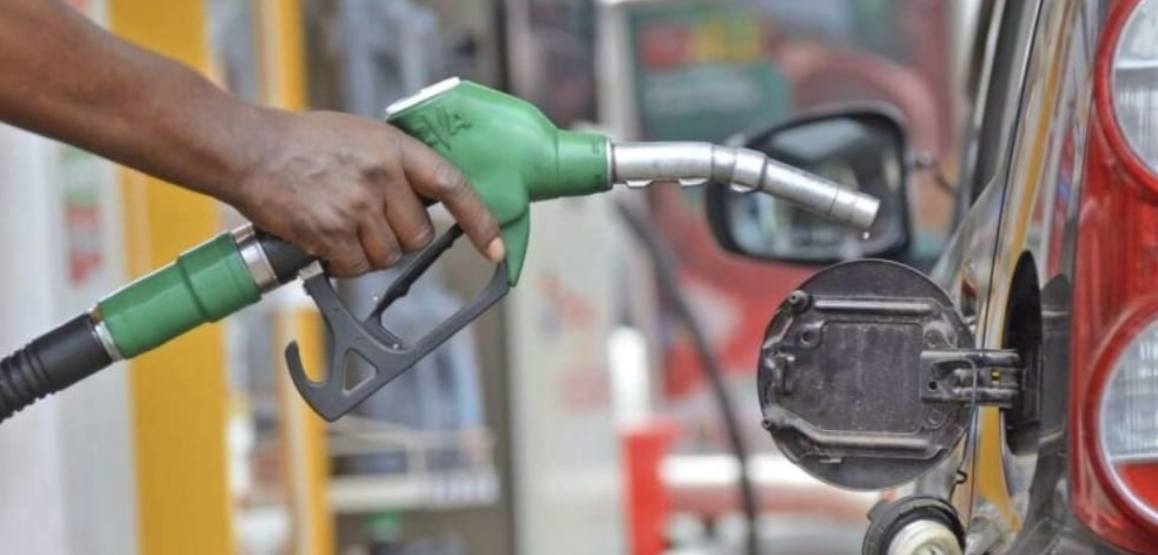
 Fuel pump
The government has temporarily relaxed fuel quality standards in a bid to avert a possible shortage as global supply chains strain under the weight of ongoing tensions in the Middle East.
In a statement on Thursday, Investments, Trade and Industry Cabinet Secretary Lee Kinyanjui said the ministry has approved a six-month waiver on sulphur limits in petrol and diesel, effectively allowing the importation of slightly lower-quality fuel.
"This measure is temporary and intended to ensure continued fuel availability and sustain economic stability during the current period of global supply disruption. It will be reviewed at the end of the six-month period, or earlier if global supply conditions improve," Kinyanjui said.
The decision follows mounting concerns from players in the petroleum sector, who have struggled to source fuel that meets Kenya’s current, stricter standards.
The challenge has been linked to disruptions in global oil supply routes, particularly around the Strait of Hormuz, a key channel through which 20 per cent of the world’s oil passes.
Kenya has been buying cleaner fuel in recent years, with lower sulphur content that is better for the environment and modern engines.
However, due to the ongoing crisis between Iran and the United States and Israel, that type of fuel has become harder to find in sufficient quantities.
To avoid running dry, Kinyanjui said the Ministry of Energy and Petroleum, under the guidance of the National Standards Council, requested to temporarily waive the sulphur parameter to the maximum limit of 50mg/kg for diesel and petrol.
Kinyanjui said the request was subjected to a comprehensive technical assessment in consultation with the Kenya Bureau of Standards and the National Standards Council.
Kinyanjui said the move was necessary to ensure the country maintains a steady fuel supply, which is critical for transport, electricity generation, manufacturing and other key sectors of the economy.
The directive means that for the next six months, fuel imported into the country can contain up to 50 milligrams of sulphur per kilogram, a level that was previously phased out as Kenya moved towards cleaner energy standards.
For ordinary consumers, the most immediate impact is that fuel will remain available at service stations, averting long queues or disruptions in transport and business operations.
There is also a possibility—though not guaranteed—that fuel prices could stabilise if supply improves.
However, the trade-off is that the fuel will be less clean. Higher sulphur content in fuel leads to increased emissions, which can worsen air quality and contribute to health problems over time, especially in urban areas.
It can also be tougher on newer vehicle engines that are designed to run on cleaner fuel, potentially increasing maintenance needs in the long run.
Environmental gains made in recent years may also temporarily stall, as the country steps back from its cleaner fuel targets.
Even so, the government has emphasised that the measure is strictly temporary and will be reviewed after six months, or earlier if global supply conditions improve.