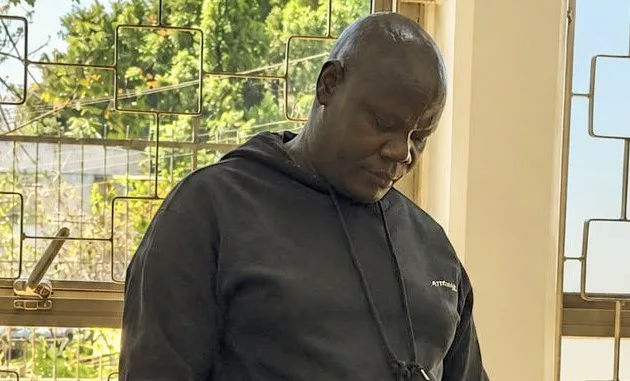
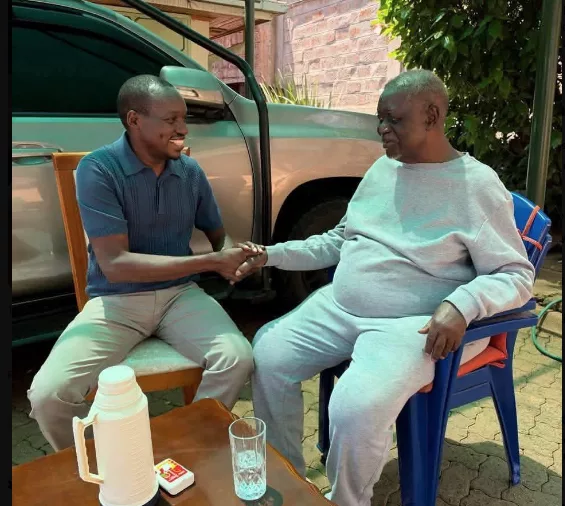
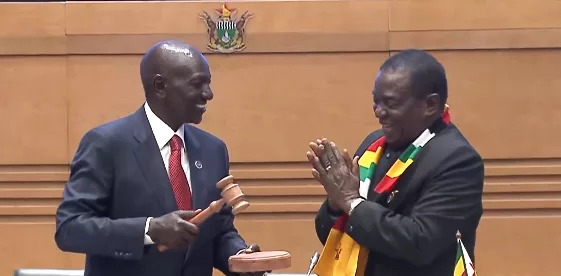
 ODM acting secretary general Catherine Omanyo receives several aspirants into the party as part of strengthening and rejuvenating the party, April 28, 2028. /ODM/X
Democracy is a system of governance in which power is vested in the people, who exercise it directly or through elected representatives.
Derived from the Greek word demokratia, meaning “people power”, it is anchored on the ability of citizens to freely participate in decision-making, most notably through voting.
At its core, democracy safeguards the rights of individuals — including minority groups — by guaranteeing them the freedom to choose their leaders without coercion, restriction or pre-determined outcomes.
It is this principle of free will, exercised within a competitive political environment, that gives elections their legitimacy.
In Kenya, that right is not merely theoretical, it is protected by a layered legal framework rooted in the constitution and reinforced by Acts of Parliament.
Article 38 guarantees every adult citizen the right to be registered as a voter, to vote by secret ballot in any election or referendum without unreasonable restrictions and to participate in the activities of a political party.
Further, the Elections Act and the Political Parties Act, 2011, provide for the nomination of candidates through party primaries, ensuring political competition begins well before the ballot is cast.
The Supreme Court, in Advisory Opinion Number 2 of 2012, underscored that elections must be viewed holistically as a process, not a single-day event.
It emphasised that party primaries are as critical as voting, tallying and the declaration of results in determining whether an election is free and fair.
This framework places significant weight on the events preceding election day. Whether as a voter, aspirant or candidate, the integrity of these preliminary stages directly shapes the credibility of the final outcome.
It is against this backdrop that the Orange Democratic Movement’s push for zoning presents a fundamental challenge to democratic principles.
Zoning, as proposed by ODM, is an arrangement in which it does not want its would be coalition partner UDA to field candidates in regions considered the opposition party's political strongholds.
The party has identified areas such as Nyanza, Western and the Coast as its traditional bases and is seeking to shield them from the United Democratic Alliance, its broad-based partner.
ODM has made zoning a non-negotiable condition in any pre-election arrangement with UDA ahead of the 2027 polls, framing it as essential to preserving its political identity and bargaining power.
“If we are going for negotiations, we are going as equal partners, not as a weaker party,” ODM national chairperson Gladys Wanga said in early April.
However, when assessed against the constitutional and legal thresholds that define democratic elections, zoning raises critical concerns.
By design, it limits political competition — a cornerstone of democracy. If one party is effectively barred from fielding candidates in certain regions, voters in those areas are deprived of the opportunity to choose from a full spectrum of political alternatives.
The result is a constrained ballot, where outcomes are shaped not by voter preference but by pre-election agreements.
This restriction directly undermines the constitutional guarantee of free choice. While voters may still cast ballots, their options would have been predetermined, weakening the essence of participatory governance.
Equally affected are political aspirants. UDA supporters and candidates seeking to contest seats in ODM-dominated regions would be effectively locked out, not through the ballot but through political negotiation.
This not only curtails their right to vie for office but also disrupts the competitive nature of party primaries, which the Supreme Court recognises as integral to credible elections.
UDA has firmly rejected the zoning proposal, maintaining that every political party has the right to field candidates across the country.
“If you believe this is your stronghold, then why are you worried? Come, campaign and win. There is no problem,” UDA secretary general Hassan Omar said while speaking in Kilifi on April 4.
Within ODM itself, the push for zoning has exposed internal contradictions, with some leaders questioning its compatibility with democratic ideals.
“When we start pushing zoning, it means that we are putting our personal interests ahead of our constituents. If I have worked for my constituents, I should not fear competition,” Suba North MP Millie Odhiambo said.
“ODM is strong and has always managed to successfully field candidates without any form of zoning. Perhaps there may be silent agreements in urban areas like Nairobi, but there has never been a need for zoning for ODM,” she added, framing it as a personal position.
Despite this dissent, the party’s leadership has remained firm, framing zoning as an existential safeguard.
“We are ready to die for zoning. There is no negotiation when it comes to zoning. We are not going to allow UDA to plant candidates in Luo Nyanza and other ODM strongholds,” Alego Usonga MP Sam Atandi said on April 6.
The insistence has already triggered tensions within the broad-based arrangement, with some ODM members threatening to exit over disagreements tied to the proposal.
On April 16, the party’s Central Committee escalated the standoff, demanding respect from their coalition partners and accusing senior UDA officials of making “unwarranted public utterances”.
“As a party that believes in its principles, ideology, and the foundation on which it was founded, we demand respect from the UDA party,” the committee said.
Speaking in Kisumu on April 6, Wanga reiterated that zoning would form part of the preconditions for engagement.
“If we are going for negotiations, we are going as equal partners, not as a weaker party,” she said.
While ODM argues that zoning is necessary to protect its political base and strengthen its negotiating position, its broader implications point to a narrowing of democratic space.
By limiting competition, constraining voter choice and excluding aspirants from contesting, zoning risks reducing elections to a managed outcome rather than a genuine exercise of the people’s will.
Democracy demands more than the act of voting — it requires an open, competitive process where voters are presented with real choices and candidates are free to contest without artificial barriers.
Any arrangement that predetermines electoral participation, even in the name of political strategy, raises fundamental questions about the integrity of that process.