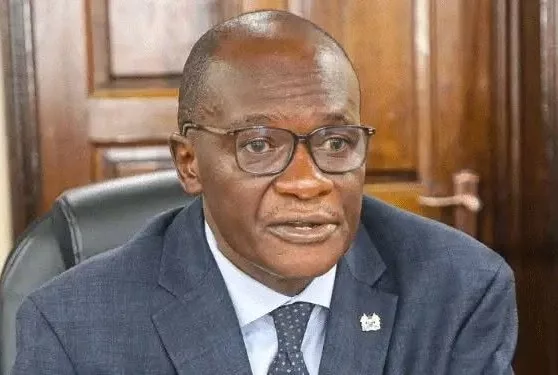
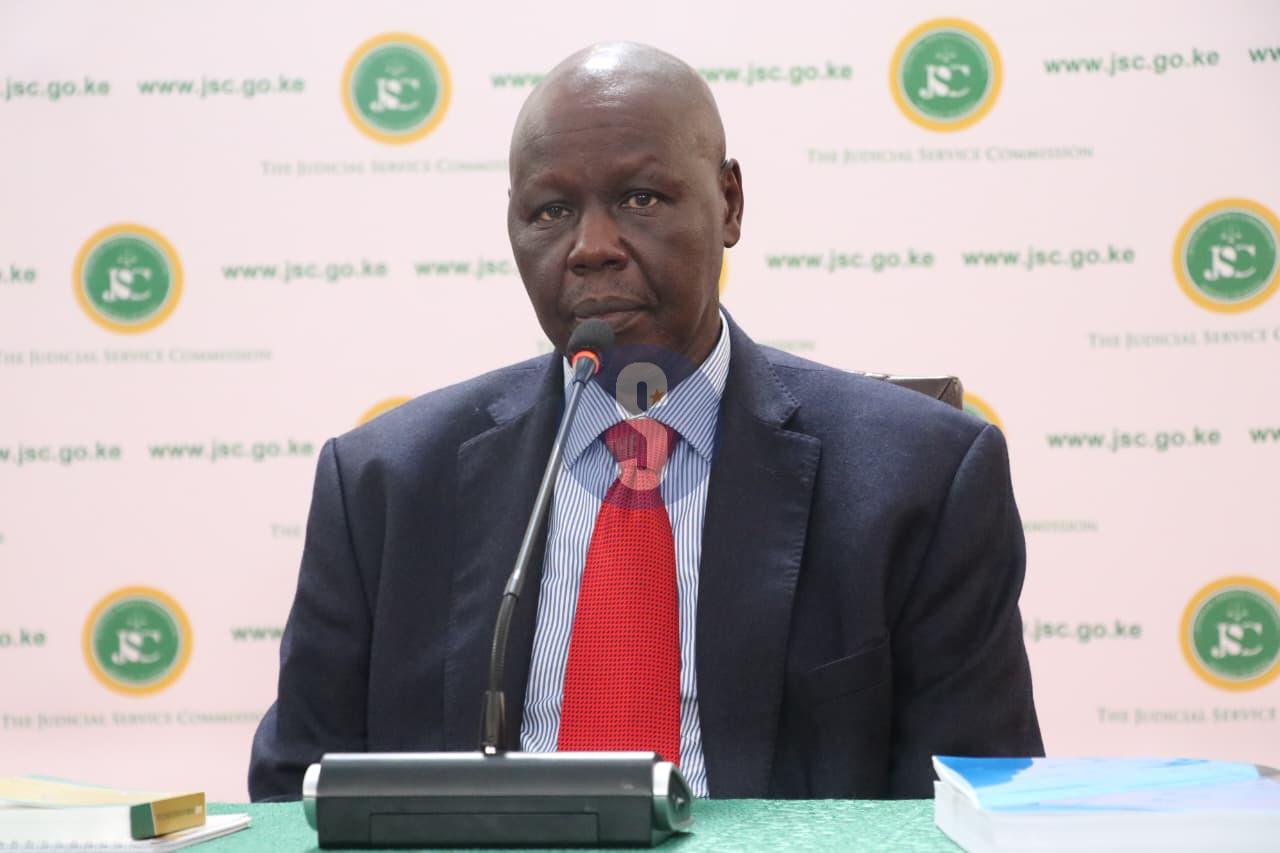
 Candidate for the position of the Supreme Court judge Joseph Kipchumba Katwa Kigen during the ongoing JSC interviews at Milimani law courts, Nairobi on April 28, 2026/LEAH MUKANGAI
Court of Appeal Judge Katwa Kigen has defended his suitability for elevation to the Supreme Court, maintaining that his past legal representation of President William Ruto would not compromise his independence on the bench.
Kigen has in the past represented Ruto as his defence team at the International Criminal Court and during the 2022 presidential petition.
Appearing before the Judicial Service Commission for interviews, Kigen addressed concerns raised by a section of Kenyans who questioned whether he would remain impartial in the event of a presidential election petition involving Ruto in 2027.
He said that while he understood the concerns, his decisions would be guided strictly by facts and the law.
“It is true I have represented him. I intend to be objective and neutral in my discharge of duties as a judge. I understand the concerns, and I cannot say they are ill-informed, but I want to assure you that I would be fair and guided strictly by facts and the law,” Kigen said.
The concerns were formally presented to the commission in a letter dated April 8, 2026. Kigen, however, said he had not seen the document before the interview but had anticipated the nature of the issues raised.
“I must also say I was aware such concerns might arise, which is why I suspected the content of the letter. However, I would have preferred to see it in advance to provide a more structured response.”
Kigen argued that his past work as an advocate should not be used to disadvantage him, noting that many judges across the judiciary have previously represented various clients before their appointment to the bench.
“To suggest that I am at a disadvantage because I represented a particular client would border on discrimination,” he said.
He urged the commission to evaluate him based on his integrity, fairness and commitment to justice, insisting that he would apply the law objectively if appointed to the apex court.
Kigen also pointed to existing legal safeguards, including recusal, as mechanisms to address any potential conflict of interest.
He noted that previous presidential petitions have been heard by a reduced bench and emphasised that the Supreme Court’s mandate extends beyond election disputes.
“There are safeguards in place. Where a conflict of interest arises, there are provisions such as recusal. Some presidential petitions have been heard without the full bench of seven judges. Moreover, the Supreme Court’s work goes beyond presidential election disputes,” he said.
“If the concern is significant, recusal remains an available option. For those reasons, I respectfully submit that this issue should not be used to my disadvantage. I am ready to address any specific concerns that may arise.”
Kigen is among candidates seeking to fill a vacancy at the Supreme Court, a process that has attracted stiff competition.
He is also among 14 Court of Appeal judges who were sworn in on January 28 at State House, Nairobi, as part of recent changes in the judiciary.