Kenya is intensifying efforts to rebalance its trade imbalance with India, as both countries move closer to advancing negotiations for a Free Trade Agreement aimed at expanding market access.
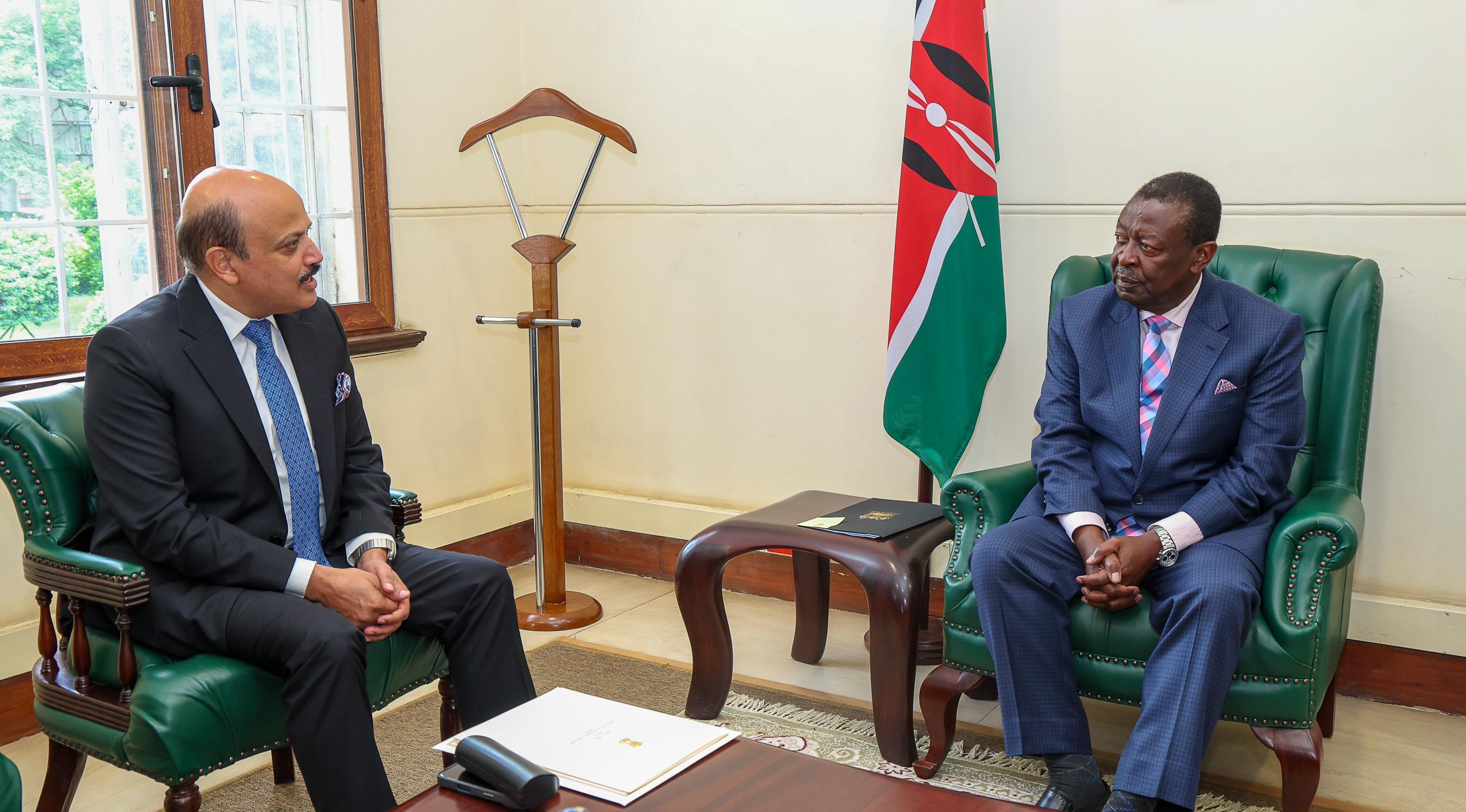
This emerged from high-level discussions between Kenyan officials and India’s Commerce Secretary, Rajesh Agarwal, during a series of bilateral engagements in Nairobi.
The meeting underscored a renewed push to deepen economic and commercial ties.
Kenya’s position, as outlined in the talks, is anchored on strengthening exports, attracting investment, and improving the competitiveness of Kenyan products in the Indian market.
The proposed FTA is expected to lower trade barriers, widen market access, and unlock new opportunities for Kenyan businesses across key sectors.
Total bilateral trade between Kenya and India is approximately $3.5 billion to $4.3 billion as of late 2025, with India being one of Kenya's largest trading partners.
Kenya runs a significant trade deficit, importing roughly $2.5 billion in goods (refined petroleum, pharmaceuticals) while exporting roughly $153 million, largely dried legumes, tea, and soda ash).
The 10th India–Kenya Joint Trade Committee meeting, co-chaired by Rajesh Agarwal and Trade PS Regina Ombam, reviewed progress achieved since the previous session and reaffirmed both countries’ commitment to a more structured and forward-looking economic partnership.
The meeting concluded with the signing of agreements towards progress across several strategic areas, including market access, trade facilitation, pharmaceuticals, agriculture, digital public infrastructure, and development cooperation.
Both sides committed to accelerating implementation of earlier decisions, strengthening institutional mechanisms, and addressing outstanding trade issues that have hindered smoother exchange between the two economies.
Discussions also covered cooperation in manufacturing, energy, including renewable energy, logistics, infrastructure planning, and capacity building.
Both delegations emphasised the need to diversify and rebalance trade flows.
The Central Board of Indirect Taxes and Customs and the Kenya Revenue Authority also signed an MoU on the exchange of pre-arrival information for goods.
The agreement, signed by CBIC member Yogendra Garg and KRA Commissioner General Dr. Lilian Nyawanda is expected to enhance customs cooperation and streamline trade processes.
The MoU is designed to enable faster clearance of goods, improve risk management systems, and facilitate smoother bilateral trade flows between Kenya and India, addressing long-standing logistical bottlenecks in cross-border commerce.
On the sidelines of the government-to-government discussions, an India–Kenya Business Forum brought together leading private sector players from both countries, including representatives of the Confederation of Indian Industry and the Kenya National Chamber of Commerce and Industry.
A separate MoU was signed between CII and KNCCI to strengthen institutional collaboration, promote business-to-business engagement, and deepen trade and investment linkages.
Senior officials, including Agarwal and PS Ombam, alongside representatives from Invest Kenya and the two chambers of commerce, emphasized the importance of closer industry collaboration in driving a more diversified and resilient economic partnership.
Private sector actors at the forum explored opportunities in manufacturing, agriculture, pharmaceuticals, infrastructure development, digital technologies, fintech, and services, identifying areas where joint ventures and investment partnerships could be expanded.
With ongoing FTA negotiations, strengthened customs cooperation, and deeper private sector engagement, both countries appear to be aligning institutional and commercial frameworks to support long-term trade expansion.