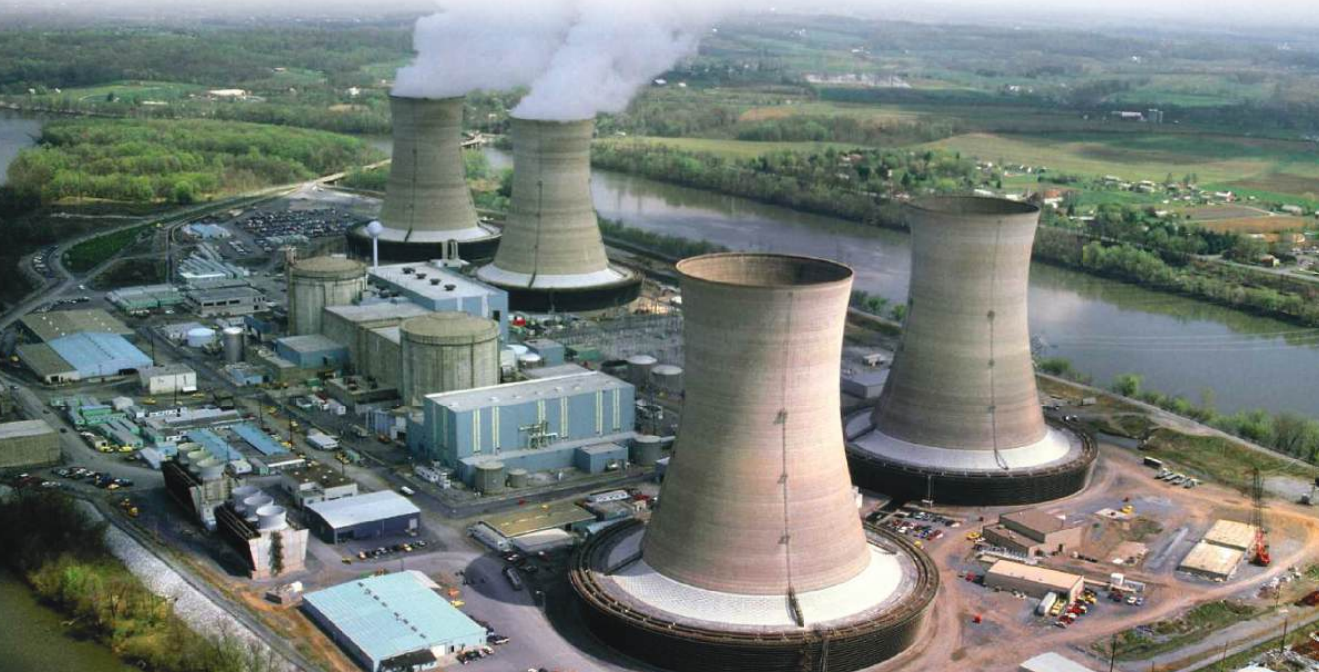
 A nuclear power plant. Kenya is set to build a Sh500 billion nuclear power plant in Siaya /HANDOUT
Kenyans are familiar with the frustrations of frequent power outages: work disruptions, missed deadlines, families going to bed hungry because flour mills are shut, food rotting in the fridge, children unable to complete homework and factory machines grinding to a halt.
That is for the lucky ones already connected to the national grid. For the many others in the dark, waiting to be connected can take years. Why? Because Kenya doesn’t have enough electricity supply. Here are the numbers.
Kenya’s electricity consumption is extremely low for a middle-income economy. The highest country in terms of electricity consumption is Norway, with 24,000 kilowatt-hours per person. The US and other industrialised countries are at 14,000kWh per capita.
Newly industrialised countries like South Korea and Malaysia have electricity consumption of between 3,000 and 7,000KW/h per capita.
“Kenya’s electricity consumption is 190kWh per capita. We are very, very far behind where we should be. The installed generation capacity of Kenya is 3,000 megawatts,” said Prof Larry Gumbe, board chairman of the Nuclear Power and Energy Agency (NuPEA).
“For our country to reach the levels of Singapore, which President William Ruto talks about, we need to produce 60,000 megawatts installed capacity - which means we must multiply what we have by 20 times.”
The government intends to increase production to 10,000MW in the next seven years.
The options the country has are hydroelectricity, geothermal, solar and wind power.
Gumbe said the remaining potential for hydropower generation is about 5,000MW, considering Kenya’s water resources. Geothermal can produce another 5,000MW, and solar and wind about 10,000MW.
“You are talking about 20,000MW from these sources; if you are lucky, 25,000MW. You will still have 40,000MW capacity left to be filled. And that’s where nuclear comes in. It can be developed between four and six years,” he said.
The potential for nuclear power is massive because it has the highest energy density. A small amount of uranium can produce a lot of power.
“A nuclear power plant only occupies about four acres. From four acres, there’s one in Japan that produces 8,000MW,” Gumbe said.
“Now, look at Kenya. Right now, the installed capacity of everything in hydro is just under 1,000MW. Geothermal is also under 1,000MW. But with nuclear, you can build one plant of 8,000MW. You can start from the smaller ones that give you 3,000MW.”
Another advantage is that nuclear power has a stable base, which means a constant electricity supply. In comparison, solar and wind are intermittent. The electricity generated must be stored, which is expensive. Besides, a lot of land is required to set up solar and wind power infrastructure.
Nuclear power is dense, reliable and cheap. One plant can last 100 years before it is decommissioned.
Kenya is now inching closer to nuclear power production. A proposed plant in Siaya will produce a minimum of 3,000MW, but the optimal is probably 6,000MW. The plant will be built in five to six years using newer technologies developed by China, Russia or US.
Initially, 28 candidate sites around the country were being investigated for possible setting up of nuclear plants. But some of the sites were eliminated because of geological issues, like being prone to earthquakes.
Plans for the proposed plant in Siaya were launched on June 26 last year at Jaramogi Oginga Odinga University of Science and Technology, with former Prime Minister Raila Odinga, a nuclear energy champion, as the chief guest.
In mid-April, NuPEA held a week-long workshop in Kisumu to engage the Siaya government on the project. A coordination office has been opened in Siaya and two more will be established in Bondo and Kisumu.
NuPEA has appointed KenGen as the owner operator, or the Nuclear Energy Programme Implementation Organisation.
“We have sent out what is called RFI, or request for information, from the big companies which build nuclear power plants around the world. We are going to open them soon,” Gumbe said.
“After that, we will send an RFP, or request for proposal, from the big companies, and then see who can partner with KenGen to build the nuclear power plant.”
NuPEA has set the latest date of groundbreaking in Siaya as March 1, 2027. The plant is expected to start producing electricity by 2034.
A nuclear power plant site covers about four acres with a zone around it of about one kilometre radius. The people living near the site are prepared for any emergencies.
NuPEA has been preparing the professionals needed to run a nuclear plant. Gumbe said about 150 technical people have been trained in the past decade.
“Some of them are working here [at NuPEA] and are on secondment abroad or in other organisations. But we have engineers and others who are working here. In terms of development of local capacity, we have just developed a postgraduate diploma in nuclear engineering with Masinde Muliro University of Science and Technology,” Gumbe said.
Qualified engineers will specialise under the programme.
The University of Nairobi’s Institute of Nuclear Science already produces experts. Others will come from the Kenya Advanced Institute of Science and Technology at Konza.
The Siaya nuclear plant will not only produce electricity but will also have a nuclear research reactor for medicine, engineering and other applications.
“When you hear that somebody has got cancer in Kenya, samples are taken to South Africa where there’s a nuclear reactor to make the diagnosis. We are hoping to have one here,” Gumbe said.
A nuclear power plant producing 1,000 to 1,200MW would cost about Sh500 billion. A nuclear research reactor will cost between Sh30 and Sh80 billion. The Siaya plant will be built as a public-private partnership.
“The nuclear moment has arrived. There are so many people willing to build it for us,” Gumbe said.
Kenya has uranium, the radioactive mineral used in nuclear power generation, but it is not yet clear how big the deposits are and the quality.
Tanzania has commercially viable uranium deposits and is ready to start mining.
Namibia has the mineral and Niger and other West African countries have been mining the mineral for years. Naturally occurring uranium is enriched to produce nuclear power.
The biggest concern about nuclear power is safety. In Kenya, some environmentalists are opposed to building nuclear plants.
Germany began phasing out nuclear power 15 years ago, following the disaster in Fukushima, Japan, on March 11, 2011. The last German nuclear power plant was taken offline in 2023.
Spain and Austria have also announced that they have permanently shut down nuclear power. Other nations that have completely phased out their nuclear programmes include Italy (1990), Kazakhstan (1999), Lithuania (2009) and Taiwan (May 2025).
The worst nuclear disaster is the Chornobyl accident in present-day Ukraine on April 26, 1986. Some 40 years later, clean-up of the site is still going on and is scheduled to be completed in 2065.
But elsewhere, nations are expanding nuclear power production. France produces 70 per cent of its electricity from nuclear power. It is building new plants.
“Britain is building new nuclear power plants. In Europe, there are many nuclear power plants being built from Russia to other nations. If you go to the Middle East, you will find many new nuclear power plants being built. China is building. I was in Shanghai last year in September for a nuclear expo. China is building about 50 new plants,” Gumbe said. The Asian giant has 58 plants and will have the most nuclear power plants in the world. The US has 94, the highest number in the world.
In Africa, only South Africa has two plants and is building two more. Some 32 countries have nuclear power programmes. The continent has 13 functional nuclear research reactors.
Kenya’s journey to nuclear energy started in 1965 when the newly independent nation joined the International Atomic Energy Agency, an intergovernmental organisation that promotes the peaceful use of nuclear energy.
In the 1980s, President Daniel Moi established the Radiation Board.
During President Mwai Kibaki’s administration, then Roads minister Raila (deceased) in 2004 proposed that Kenya should explore nuclear power to meet its growing energy needs. Later in that decade, a committee was formed in the Ministry of Energy to midwife the nuclear power programme.
The Kenya Nuclear Electricity Board was formed in 2012, which was later transformed into the Nuclear Power and Energy Agency through the Energy Act, 2019. NuPEA has the mandate for implementing the government’s nuclear power programme.