As Kenya inches closer to the 2027 general election, the opposition finds itself at a decisive crossroads: unite or hand President William Ruto a clear path to re-election.
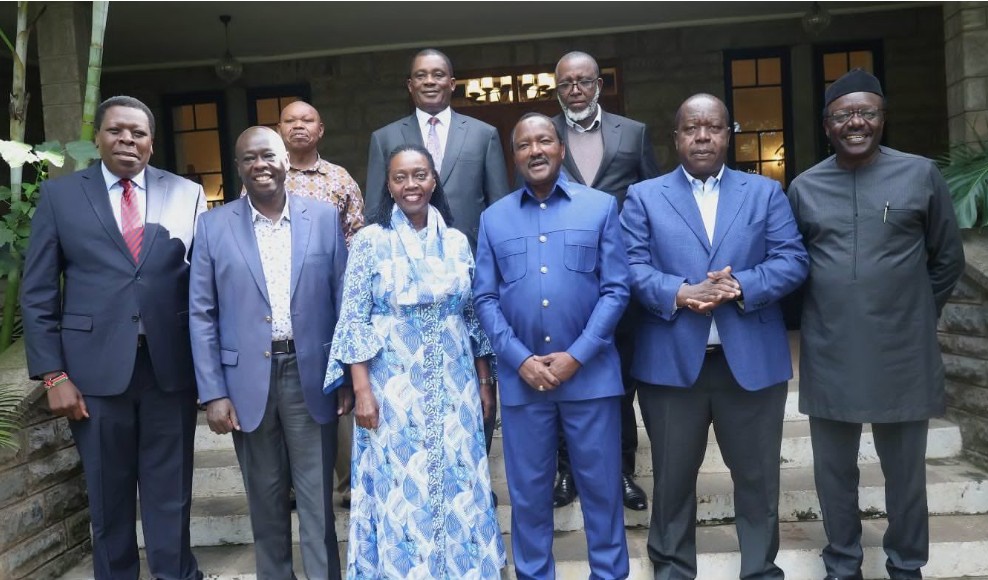
Emerging signals of a possible alliance between the Linda Mwananchi faction led by Edwin Sifuna and the united opposition—a coalition associated with Rigathi Gachagua and Kalonzo Musyoka—point to a rare moment of political convergence. But signals alone are not strategy.
Kenya’s opposition has historically faltered at the altar of personal ambition.
Today, multiple presidential hopefuls circle the same prize, risking a familiar fragmentation that has repeatedly diluted anti-incumbent momentum. Sifuna is right: the mathematics of unseating an incumbent demand a single, formidable challenger.
For Ruto, the stakes are equally high. His fallout with Mt Kenya power brokers has complicated his traditional support base, while divisions within ODM weaken any fallback alliances.
A united opposition could therefore consolidate urban voters, energise disaffected youth and reshape the electoral map in ways that make 2027 far from predictable.
Yet unity is easier declared than achieved. It requires painful compromises, trust-building and a willingness to subordinate individual ambition to collective purpose—qualities often scarce in Kenya’s political arena.
The question is no longer whether unity is desirable, but whether it is possible. If the opposition fails this test again, 2027 may not be a contest—it will be a confirmation.
Quote of the Day:“God is on the side with the best artillery.”—French military leader and Emperor of the French Napoleon Bonaparte died on May 5, 1821