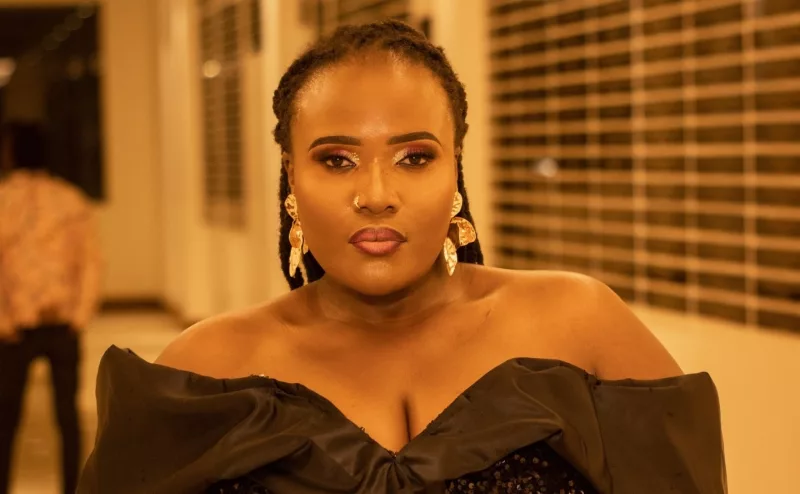
The popular Kenyan comedian and television host, Dr Ofweneke, has sparked a lively public debate after raising questions about a growing trend he has observed.
Known for his sharp wit, the entertainer recently took a more serious tone to ask why more women appear to be growing beards in recent times.
In a video shared online, Dr Ofweneke—whose real name is Sande Bush—expressed his genuine curiosity regarding the physical changes he has noticed while out in public.
He asked his followers if there was a genealogical or physical explanation for what he described as a very high rise in the number of women with facial hair.
A Public Enquiry
The entertainer was clear that he wanted to understand the root cause of this shift. He wondered if the change was due to biological factors or perhaps something external in the modern environment.

“"I just want to ask is there any genealogical or physical explanation why there's a very high rise of numbers of ladies these days who grow beard,” he questioned.
His questions have resonated with many, as he specifically called upon experts to provide clarity.
Dr Ofweneke also questioned if modern skincare routines or the "weather" could be contributing factors. While environmental factors are less likely to be the primary cause than genetics, some dermatologists note that certain medications or hormonal disruptors in some products could potentially play a role.
"What is explanation? Is it because of the genes or the type of skin care they are using," he urged, seeking a professional perspective on the matter.
The Science of Hirsutism
While Dr Ofweneke’s observations are anecdotal, the condition he is describing is a well-documented medical one known as hirsutism.This is the growth of dark or coarse hair in a male-like pattern on a woman's face, chest, or back.
Information from medical sources suggests that hirsutism is usually triggered by an excess of androgens. These are "male" hormones, such as testosterone, which all women produce in small amounts. When these levels rise, they can cause hair follicles to produce thicker, more visible hair.

PCOS and Modern Health
The most common underlying cause for this hormonal shift is Polycystic Ovary Syndrome (PCOS). According to global health statistics, PCOS affects approximately 1 in 10 women of reproductive age.
It is a leading cause of hormonal imbalance and can lead to various physical symptoms, including facial hair growth.
In recent years, there has been a significant increase in awareness surrounding PCOS. Many women are now more open about their experiences, which may explain why the condition seems more "visible" today than in previous decades.