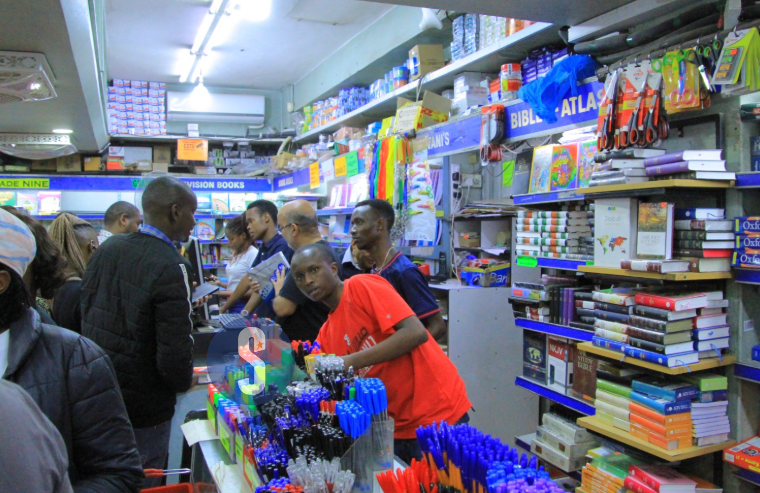
 Parents do last-minute shopping of books and stationery at Savani's Bookshop in Nairobi as schools reopened for Second Term, April 27, 2026. /EZEKIEL AMING'A
Public schools are staring at a fresh operational crisis as they reopen for the second term, despite the government’s move to release capitation funds ahead of time for the second consecutive cycle.
The Ministry of Education disbursed Sh23.4 billion for Term Two last week under the 50-30-20 funding structure, with the funds reflecting in school accounts before learners resumed classes on Monday, April 27, 2026.
This mirrors the first term release of Sh44.2 billion, which was also wired early—marking a departure from the past when capitation delays stretched for months and disrupted learning.
Yet even as the early disbursement signals improved administrative efficiency, school heads say the amounts released remain insufficient, compounding a funding crisis that has steadily deepened over the years.
Basic Education Principal Secretary Julius Bitok last week laid bare the scale of the problem, admitting before Parliament that the government has consistently underfunded learners since the 2020/21 financial year.
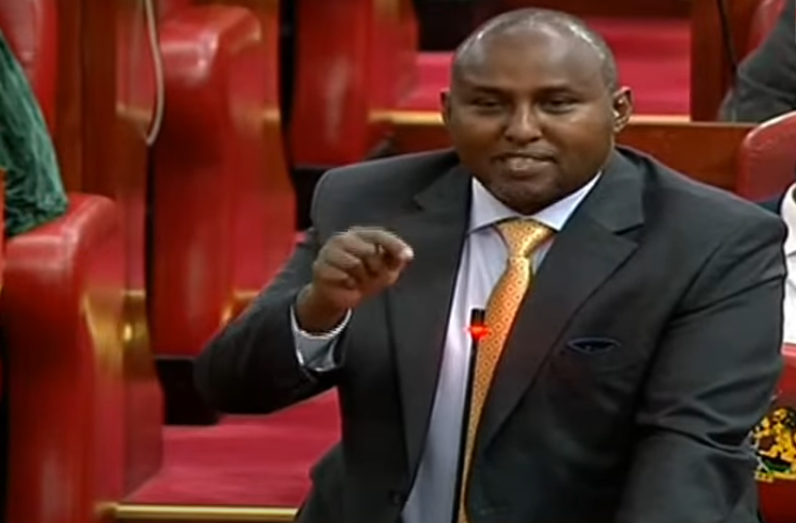
“It is true that the budgetary allocations for secondary schools fall short of the submitted requirements during the years under review for schools,” Bitok told MPs on Wednesday morning.
The admission painted a grim outlook for public schools heading into the second term—the longest and most demanding stretch of the academic calendar.
Learners will be in school for 14 weeks, with teachers under pressure to cover the syllabus and prepare candidates for the November national examinations and competency-based assessments.
At the centre of the crisis is a widening gap between policy commitments and actual funding. While government policy sets capitation at Sh22,244 per secondary school learner annually, schools have been receiving an average of Sh15,844.38—creating a shortfall of roughly Sh7,000 per learner per term.
This mismatch already manifested in strained operations during the first term, where some schools were forced to send learners home before the official closing date after running out of essential supplies, raising concerns that a similar scenario could unfold again.
Bitok told lawmakers that persistent underfunding has left at least 1.1 million secondary school learners without capitation, significantly stretching available resources in public institutions.
He attributed the growing deficit to rising enrolment figures that have not been matched by corresponding increases in budgetary allocations.
Secondary school enrolment rose from 3,396,322 in the 2020/21 academic year to 4,036,650 in 2023/24.
Over the same period, junior secondary enrolment more than doubled from 1,021,059 to 2,170,429 learners.
Despite this surge, capitation has remained constant at Sh22,244 for secondary schools and Sh15,043 for junior secondary.
“The number of learners not provided for increased from 724,959 to 1,161,349, and the amount paid per learner shows a decline from Sh17,495.95 to Sh15,844.38,” Bitok said.
Between 2020-21 and 2023-24, the funding gap has accumulated to staggering levels—Sh71 billion for secondary schools, Sh31 billion for junior secondary, Sh14 billion for primary schools, and Sh67 million for special needs education.
“Despite this, the approved budget increased only marginally, resulting in a growing deficit that reached more than Sh25.8 billion by 2023-24,” Bitok added.
The PS said a special audit commissioned by the ministry concluded that the current funding model does not adequately account for the varying needs and circumstances of learners and institutions, exposing systemic weaknesses in how education financing is structured.
The implications for school heads are immediate and severe. They are caught between dwindling capitation on one hand and strict government directives on school fees on the other.
Through a Gazette notice dated February 6, 2026, Education Cabinet Secretary Julius Ogamba introduced a revised fee structure aimed at standardising charges, enhancing transparency and shielding parents from arbitrary levies.
Under the new framework, schools that previously charged a maximum of Sh53,554 were revised to Sh75,798, with parents paying up to Sh53,554 while the government contributes Sh22,244.
For schools with a previous cap of Sh40,535, parental contributions remain at that level, complemented by state capitation to bring the total to Sh62,779.
State capitaton covers tuition-related expenses such as teaching and learning materials, medical cover, insurance, and SMASSE, but parents are expected to meet boarding costs, which range from Sh25,385 to Sh30,385 depending on the category of school.
Despite the funding deficit, school heads are under strict instructions not to levy any unauthorised fees, with a stern warning that any head found flouting the fees guidelines will face administrative action.
This places institutions in a difficult position—unable to bridge funding gaps through additional charges, yet expected to maintain standards and keep learners in school in line with a presidential directive that no student should be sent home over fee arrears.
The tension between policy and reality has reignited debate over the sustainability of the free education model.
Lawmakers, reacting to the disclosures, questioned whether the current framework can hold under mounting financial pressure and called for a policy rethink.
“The capitation is actually 12,000 and not 15,000 if we factor in inflation because the value of money now and when the capitation was calculated is not the same,” Lugari MP Nabii Nabwera said.
The Kenya Secondary Schools Heads Association (KESSHA) chairman Willie Kuria said during a virtual meeting convened on March 11 by Head of Public Service Felix Koskei that the current capitation was developed in 2014, making it outdated for current economic conditions.
“You find that because of the little capitation coming, it becomes so difficult for schools to operate,” Kuria said, adding that the approved fee structure does not adequately meet student needs.
“The fees now charged in secondary schools is Sh53,000, but during our forums, when we try to calculate how the students spend money in schools per day, we have arrived at a budget of Sh95,000 in boarding schools,” he added.
MPs proposed a shift towards a subsidised education model, arguing that the existing fully free system no longer reflects fiscal realities on the ground.
As schools embark on a 14-week term with constrained resources, the early release of funds, while a logistical improvement, does little to resolve the structural underfunding that continues to undermine the quality of education.
Without a review of funding to match enrolment growth and rising operational costs, the risk remains that schools could once again be pushed to the brink—forcing difficult decisions like levying illegal fees or sending learners home, leading to disruption of learning and placing administrators in difficult positions.