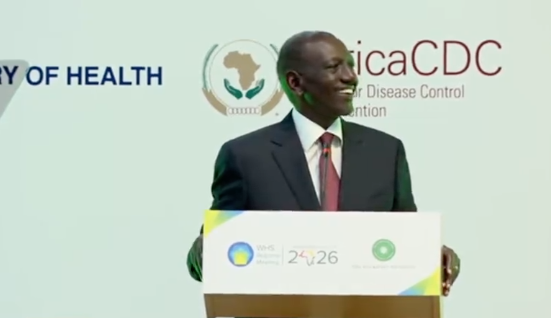
President William Ruto momentarily lightened the mood at a high-level continental meeting in Nairobi after jokingly warning visiting delegates to be cautious of lions during their morning jogs.
Speaking during the World Health Summit Regional Meeting 2026, Ruto welcomed guests to the Kenyan capital with a humorous but pointed reminder of the city’s unique proximity to wildlife.
“We have a national park around the corner from your hotel, it is maybe 15 minutes,” Ruto said, drawing laughter from the audience. “At the national park, we have wild animals; they are not in a zoo.”
“We have tried to fence off the park, but the lions will stray from the area. You may come across a lion when you do a morning jog—please be careful.”
The remarks highlighted the global uniqueness of Nairobi National Park, widely recognised as the only national park located within a capital city.
Situated just seven to 10 kilometres from Nairobi’s central business district, the park offers a rare spectacle of wildlife roaming against a backdrop of skyscrapers.
Home to more than 100 mammal species, Nairobi National Park hosts four of the “Big Five”-lion, leopard, buffalo and rhino-and is particularly known for its high density of black rhinos.
Its proximity to urban life continues to fascinate visitors and underscores Kenya’s global reputation as a premier wildlife destination.
Despite the light-hearted moment, Ruto quickly pivoted to serious matters, using the summit platform to call for sweeping reforms in Africa’s health systems.
“The future of Africa’s health systems must be shaped through collective continental action,” he said. “We carry more than 25 per cent of the global disease burden, yet account for less than three per cent of global health expenditure.”
The President urged African governments to move away from fragmented, piecemeal interventions and instead adopt coordinated, system-wide strategies backed by sustainable financing and strong governance.
He warned that without unified action, the continent risks falling further behind in addressing both longstanding and emerging health challenges, including the rise of non-communicable diseases, mental health conditions, and the growing impact of climate change on health outcomes.
Ruto also pointed to Africa’s heavy reliance on external supply chains for essential medical commodities, noting that the continent produces less than two per cent of the medicines and vaccines it consumes.
He emphasised that such investments would enable Africa to transition from being a consumer of global health solutions to a producer of innovations with worldwide relevance.
The summit brought together policymakers, researchers, and global health stakeholders to explore practical pathways for strengthening health systems across the continent, with a strong focus on collaboration, innovation, and long-term investment.