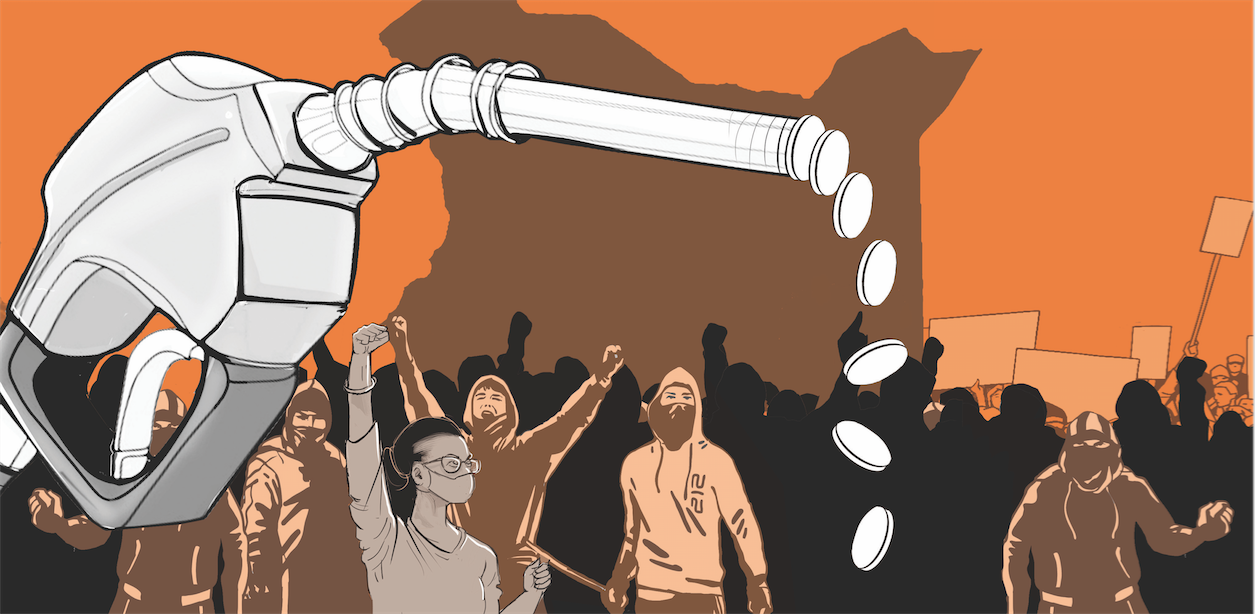
Kenya’s current petroleum pricing framework, governed by Energy and Petroleum Regulatory Authority, is characterised by high-volatility “staircase” adjustments and opaque benchmarking.
Kenya is also currently optimised for revenue collection and corporate margin stability rather than consumer protection or macroeconomic resilience. In the wake of the April global oil shocks, which necessitated a critical mid-month intervention to slash VAT from 16 per cent to eight per cent, the fundamental weaknesses of the “staircase pricing” model have been laid bare.
This article proposes a transition from the current discretionary “cost-plus” model to a rule-based smoothing framework and Incentive-Based Regulation (IBR).
By harmonising foreign exchange (FX) benchmarks with the Central Bank of Kenya and adopting global best practices—such as Chile’s geometric smoothing bands and South Africa’s asymmetric price ceilings—Kenya can mitigate the “deadweight loss” of over-regulation.
In April, Kenyan consumers experienced a whiplash of fuel price volatility. While a mid-month government intervention slashed the value added tax from 13 per cent to eight per cent, bringing the price of Super Petrol down to Sh197.60, this followed a staggering month-on-month increase of nearly Sh30 per litre.
This “staircase” pricing model, where prices are frozen for 30 days and then adjusted in massive leaps, has placed the Epra formula under unprecedented scrutiny.
The April fuel price review served as a stark reminder of the volatility inherent in Kenya’s current energy policy. While the government intervened to lower VAT from 16 per cent to eight per cent for a three-month period—bringing Nairobi petrol prices to Sh190.70—this relief was nearly offset by rising “landed costs” and expanding marketer margins. To shield consumers from these arbitrary hikes, Kenya must look towards structural reforms used globally.
A primary driver of high local prices is the tax stack. Even after the recent VAT reduction, taxes and levies remain a massive component of the final pump price. In fact, historical analysis shows that taxes in Kenya have at times accounted for more than 40 per cent of the retail cost, significantly higher than regional peers like South Africa (30 per cent) and Ethiopia (which does not tax fuel).
Following the April price shocks, it has become evident that the current Epra monthly fixed-price model is too rigid to protect consumers from global volatility. This article proposes a shift from reactive government interventions towards a structural, rule-based formula aligned with international best practices.
The core of the proposed reform rests on three pillars: transparency, competition, and smoothing. By harmonising exchange rates with the CBK, the regulator can immediately remove an estimated Sh5 per litre “currency tax” caused by opaque market rates.
Structural realignment could reduce retail prices by an average of Sh5–8 per litre while stabilising the national Consumer Price Index (CPI) and fostering retail competition.
Furthermore, transitioning to a price ceiling model—as seen in South Africa—will foster retail competition, while adopting Chilean-style smoothing bands will eliminate the disruptive “staircase” price jumps that currently destabilise the transport and manufacturing sectors.
Implementing these reforms will replace the current system of “guaranteed corporate margins” with a dynamic, consumer-centric framework that ensures price changes are gradual, predictable, and market-reflective.
This article, in part, proposes a transition from discretionary, cost-plus pricing to Incentive-Based Regulation and rule-based smoothing. To move away from arbitrary hikes and ad hoc interventions, Kenya can adopt these three internationally proven models:
The Smoothing Band (The Chilean MEPCO Model)
Chile’s fuel price stabilisation mechanism (MEPCO) uses a “reference band” and a moving average of international prices. How does this work? If global prices spike above the band’s ceiling, a contingent tax credit automatically lowers the pump price.
If they fall below the floor, the government collects the difference to refill the stabilisation fund. The resultant effect is that it eliminates sudden Sh20–30 shocks, ensuring that price changes are gradual and predictable.
Instead of the current “staircase” model—where prices jump by double digits every 30 days—Kenya could adopt a price smoothing mechanism: a mathematical “buffer” that absorbs global spikes using a stabilisation fund (such as the Petroleum Development Levy) and gradually releases the cost to consumers. This prevents the “rocket-like” surges that cripple the transport and manufacturing sectors overnight.
Frequent micro-adjustments (Indonesia/Ghana model)
Countries such as Indonesia and Ghana have experimented with weekly or bi-weekly pricing windows. Instead of a 30-day “wait-and-see” or “market-watch” approach, prices are adjusted every week based on current exchange rates and landed costs.
The impact is that adjustments typically range in cents or single-digit shillings, preventing the build-up of massive “under-recoveries” that force the regulator to announce the large hikes currently seen in Kenya.
In Ghana, the National Petroleum Authority (NPA) sets “price floors” for petroleum products (for example, GH¢ 13.27 for petrol as of mid-April 2026). Margins for marketers and dealers are typically around 40 per cent of the price build-up. Unlike Kenya’s fixed monthly price, Ghana’s bi-weekly windows allow these margins to adjust more rapidly to market conditions.
Moving from a 30-day review to a bi-weekly cycle (similar to Ghana) or a weekly cycle (like Chile) ensures that domestic prices more closely track the shilling’s performance and global crude trends. Smaller, frequent changes are far easier for the economy to absorb than the large monthly shocks currently experienced in Kenya.
Competitive ceilings (South African approach)
South Africa, on the other hand, utilises a price ceiling model rather than a fixed retail price. The regulator sets a maximum allowable price based on a transparent formula, but retailers are encouraged to compete below that cap to win customers. This incentivises efficiency among oil marketers.
In Kenya, the current fixed-price model guarantees a specific margin for all marketers, regardless of their operational efficiency. In South Africa’s “benchmark service station” model, retail margins are adjusted annually to target a 15 per cent return on assets for the industry.
If industry-wide returns exceed 20 per cent, margins are automatically reduced; if they fall below 10 per cent, they are increased. This provides a transparent, data-driven “floor and ceiling” for corporate profit.
As of the April cycle, oil marketer margins in Kenya are approximately Sh17.39 per litre for petrol and Sh17.31 for diesel. This reflects a steady climb from around Sh12.39 in early last year. These margins are composed of wholesale costs (bulk storage and handling) and retail costs (station operations and investment recovery).
Kenya’s margins are often revised following “cost of service studies” that are not always fully public, leading to accusations of an opaque system. Adopting South Africa’s 15 per cent return model would link marketer profits directly to operational efficiency and asset value, preventing margins from rising simply because global prices do.
Currently, Epra sets a fixed price that all stations must follow. Shifting to a price ceiling (maximum price) would allow retailers to compete for customers by offering discounts below the cap, as seen in many OECD nations. This would force oil marketers to pass some of their regulated margins back to consumers to remain competitive.
Proposed structural reform for fuel pricing in Kenya
To transition from a “subsidise-and-shock” cycle to a predictable framework, Kenya could adopt the following strategies:
Harmonisation of exchange rates
Epra should be mandated to use the official CBK exchange rate. Using “parallel” or inflated market rates adds an invisible “currency tax” of up to Sh5 per litre, totalling billions in over-recovery for importers at the public’s expense.
The exchange rate discrepancy between Epra and the CBK is a critical driver of high pump prices. While the CBK provides a daily average rate for the market, Epra uses a “parallel” or specific market rate that has historically been significantly higher, directly inflating the landed cost of fuel.
Between late 2022 and 2024, the gap between Epra’s rate and the CBK average grew fifteenfold. In some months, this difference reached nearly Sh10. Even when smaller—such as an average difference of Sh5.39—it still adds significant costs to consumers.
In the March–April 2026 cycle, the shilling averaged Sh130.08 against the US dollar. Epra’s formula applies the prevailing exchange rate at the point of cargo discharge, meaning any slight weakening or use of a higher rate amplifies the cost of dollar-denominated cargoes.
It is estimated that if Epra used the CBK average rate (as before August 2022), petrol and diesel would be approximately Sh5 cheaper per litre. On annual consumption of 4.9 billion litres, a Sh5.39 discrepancy translates to an additional Sh26.4 billion paid by consumers.
Epraper cent a must also publish the full cost of service study used to justify margin revisions. Public participation in fuel pricing should mirror the transparent process used for electricity tariffs to ensure the sector is not managed behind closed doors.
The current Epra framework uses a full pass-through, fixed-margin methodology that exacerbates inflation during periods of high commodity volatility. The proposals outlined here advocate a transition towards a rule-based smoothing framework and Incentive-Based Regulation.
By mitigating the “staircase effect” and harmonising FX benchmarks with the CBK, the regulator can reduce the “deadweight loss” borne by consumers and improve macroeconomic stability.
FX benchmarking and arbitrage
The divergence between Epra’s weighted average market rate and the CBK official mean rate introduces structural distortion. This FX spread acts as a non-tariff barrier, adding an estimated 250–500 basis points to landed costs.
Mandating the CBK interbank rate would eliminate this distortion and align pricing with official monetary policy.
Fixed-margin rigidity vs efficiency
Kenya’s cost-plus model guarantees oil marketing companies a fixed margin, currently about Sh17.39 per litre, offering little incentive for efficiency.
By contrast, South Africa’s regulatory asset base approach ties returns to audited capital efficiency, ensuring margins reflect performance rather than administrative decisions.
Proposed policy implementation
The transition from discretionary pricing to rule-based regulation is essential for long-term fiscal discipline.
Adopting a maximum allowable price instead of a fixed price would foster competition, while a smoothing band would act as a fiscal shock absorber. Together, these measures would transform fuel pricing into a stable and predictable system.
Conclusion
Kenya’s petroleum pricing framework, characterised by a staircase model and fixed margins, creates severe economic volatility.
To protect consumers, the country must move from ad hoc interventions to a transparent, rule-based system. Harmonising exchange rates with the CBK and adopting price ceilings and smoothing mechanisms would stabilise prices and enhance competition.
The current framework amplifies global shocks into domestic crises. Transitioning to Incentive-Based Regulation and automated smoothing would create a more resilient and consumer-focused system, transforming fuel pricing into a stable economic utility.
The writer is an energy economist