The fallout between Kenneth Matiba and Jaramogi Oginga Odinga was not where tribalism was born in Kenya, but it was where it was professionally adopted by our modern politics.
Two heroes of the Second Liberation, men who had shared detention cells under Moi, sat across a table in 1992 and could not share a party. Ford, the vehicle that was meant to carry all Kenyans away from Kanu’s one-party misrule, split into Ford-Kenya for Jaramogi and Ford-Asili for Matiba.
In that moment, the code of our politics was rewritten. The message to the grassroots was brutal and unmistakable: if the fathers of opposition cannot trust each other beyond tribe, why should you? From there, every presidential race became an ethnic census, and every manifesto became secondary to the question, “Who is my base, and who can I add?”
But to understand 1992, we must go back further, because tribalism did not start at that table. It started as administrative convenience for the colonial state.
The British governed by fragmenting — native reserves for the Kikuyu, closed districts for the Somali, special passes for the Coast. ‘Divide and rule’ was not a slogan. It was a policy.
Land alienation in the Rift Valley, labour reserves in Nyanza and chieftaincies awarded along loyalist lines ensured that communities experienced the state differently. By independence, we were not inheriting one country. We were inheriting several nations stitched together, each with its own memory of injury.
The postcolonial elite did not unpick those stitches. They pulled them tighter. The 1960s and 1970s saw the quiet ethnicisation of the civil service, the military and parastatals. The 1969 oathing, the 1975 assassination of JM Kariuki, the 1982 coup attempt and its aftermath — each event was processed by Kenyans not as national trauma, but as communal warning.
By the time Section 2A was repealed in 1991, the cement had already been mixed. Politicians had discovered that tribe was faster than ideology, cheaper than development and more forgiving than accountability. You did not need to build a school if you could convince a community that ‘their son’ in State House was development enough.
The Matiba–Jaramogi split gave that discovery national legitimacy. It taught a generation that even the most principled struggle could be reduced to arithmetic: Kikuyu plus Luhya versus Luo plus Kamba, with the rest as swing votes for hire. That is why 1997, 2002, 2007, 2013, 2017 and 2022 all rhymed. Coalitions were not built on policy.
They were ethnic joint ventures, negotiated like dowry and dissolved just as fast. The 2007-08 post-election violence was not an accident. It was the cement under pressure. We buried 1,300 of our own to learn what we already suspected: that the lie of ethnic destiny is more flammable than the truth of citizenship.
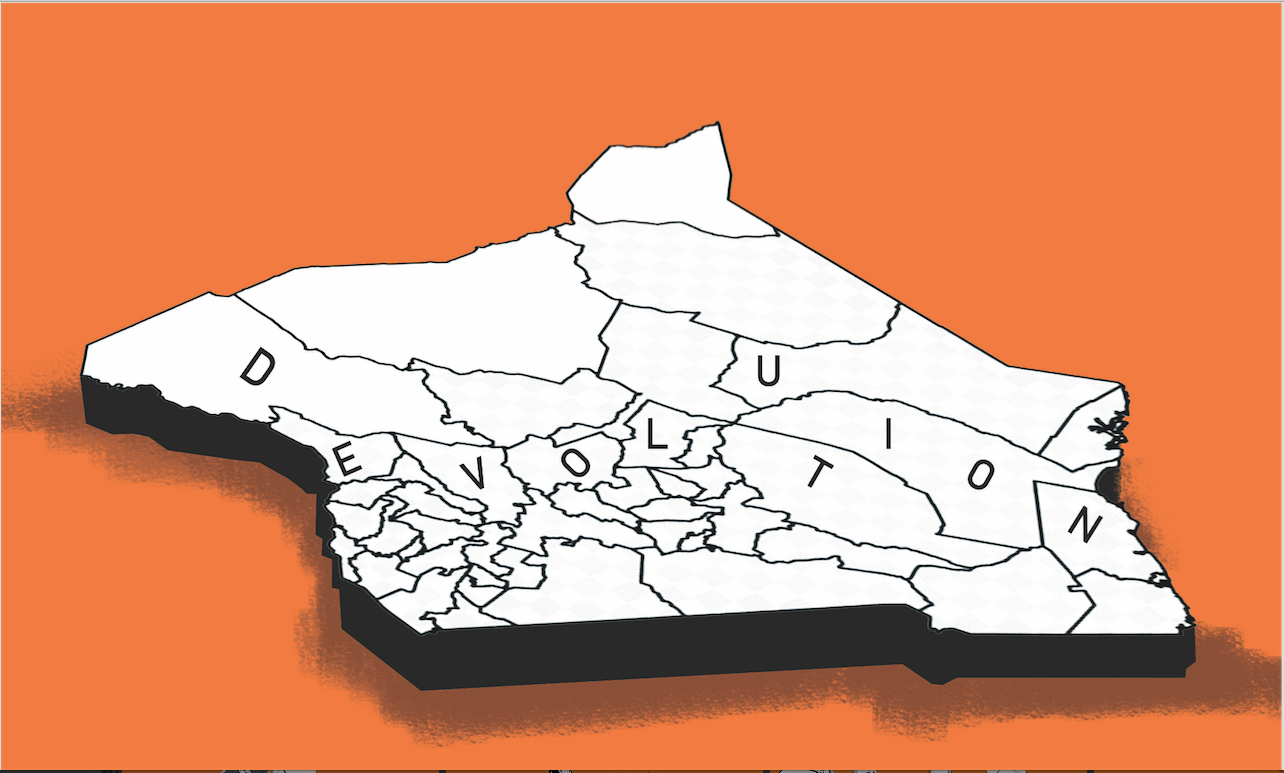
That same lie whispered through the devolution debate before 2010. The unspoken pitch was tribal and seductive: “Take power closer to your people, and you will finally eat.”
Majimbo was sold not just as service delivery, but as ethnic self-preservation. Many believed that if each community could control its own county, development would follow because our own’ would not steal from us.
Devolution was passed on that hope. Yet the last 12 years have exposed the flaw. We devolved cash but not conscience. Today we have 47 governments where the governor’s surname often predicts the payroll, where tenders go to cousins and where a county job is a clan inheritance.
The Auditor General’s reports read like an ethnic obituary of public money. Billions vanish into ghost projects, inflated medical supplies and stadium fences that cost more than hospitals.
From Kilifi to Mandera, from Migori to Nyeri, the theft is local but the script is national. We thought tribalism would cure marginalisation. Instead, it decentralised corruption.
The thief changed accents, not habits. The citizen still queues for water, but now the empty tank has a kinsman’s name on it. Devolution proved that tribalism was never the solution for development. It was only a change of looters.
Cabinet appointments, parastatal boards ambassadorial posts — all are still dispensed as ethnic dividends. We recite Article 10 on national values while practising the unwritten Article 1: “All power belongs to the tribe.” Merit became vernacular. Theft became defensible, provided the thief comes home for Christmas.
We cannot keep blaming a faceless ‘state.’ The state is the choices we reward. It is the voter who asks an MP for school fees, not legislation. It is the media that covers rallies as ethnic headcounts. It is the clergy who prays for ‘our son’ to win. The Matiba–Jaramogi divorce only became a national curse because we all attended the wedding that followed — the marriage of politics to tribe.
Which is why 2027 must be different. If every election since 1992 has been a referendum on tribe, then 2027 must be the election where Kenyans vote to dissolve the union itself. And to make that real, the referendum cannot wait. It must run together with the 2027 general election, on the same day, on the same ballot.
Let Kenyans walk into the polling booth and answer two questions at once: who should lead, and what rules should bind them. Separating the two gives the political class room to sabotage one with the other. Combining them makes the choice inescapable.
The referendum must be singular in purpose: to outlaw the political business model of tribalism and nepotism. It must amend the constitution to make ethnic exclusion in public service a constitutional offence with automatic sanctions. Any governor, Cabinet Secretary, or CEO whose hiring or procurement mirrors his clan must vacate office under Chapter Six, no tribunal needed.
The Political Parties Act must be rewritten so that any party that cannot show genuine membership, office presence and policy activity in at least 30 counties two years before an election is deregistered. We must end the era of briefcase parties built to be sold to the highest tribal bidder in August.
The Commission on Revenue Allocation formula must be restructured to punish counties that run ethnic employment bureaus and reward those that demonstrate diversity in staffing and cross-county projects. Make tribalism expensive. Make nationhood profitable.
But the referendum is only the hardware. The software is us. 2027 is the year Kenyans must refuse to be anyone’s voting bloc. It is the year we must demand that every debate be about tax, health, debt, jobs and education — not about which community has been ‘finished.’
Churches, mosques, media houses and schools must agree on one rule: no platform for ethnic dog whistles. Make it shameful to say ‘our people’ when you mean ‘my votes.’ Make it unelectable to campaign in vernacular grievance.
Kenya’s problem is not diversity. It is the monetisation of diversity. The Matiba–Jaramogi split was the moment we turned a political disagreement into a permanent operating system.
Devolution was the moment we tested whether that system could deliver, and it failed. We have been rebooting the same error every five years. The result is a country brilliant at ethnic arithmetic and bankrupt at nation-building.
The fallout of 1992 was a warning. The blood of 2008 was the consequence. The looting under devolution is the proof that tribe is not a development plan. 2027, with a referendum on the same ballot, must be the cure.
We either use that day to criminalise the cement that fractures us, or we accept that we will keep building a house that cannot stand. Tribalism did not happen to us. We chose it. On the same ballot in 2027, we must choose differently.