Analogies have been drawn over the past few weeks about the reported fallout between ODM and its UDA broad-based partner. Some of these analogies are too graphic to make it to the pages of a family newspaper like this one.
But the general consensus within the country is that they should have seen it coming. Everyone seems to believe they told them so, but the top dogs in the Orange party weren’t in the listening mood when things looked rosy.
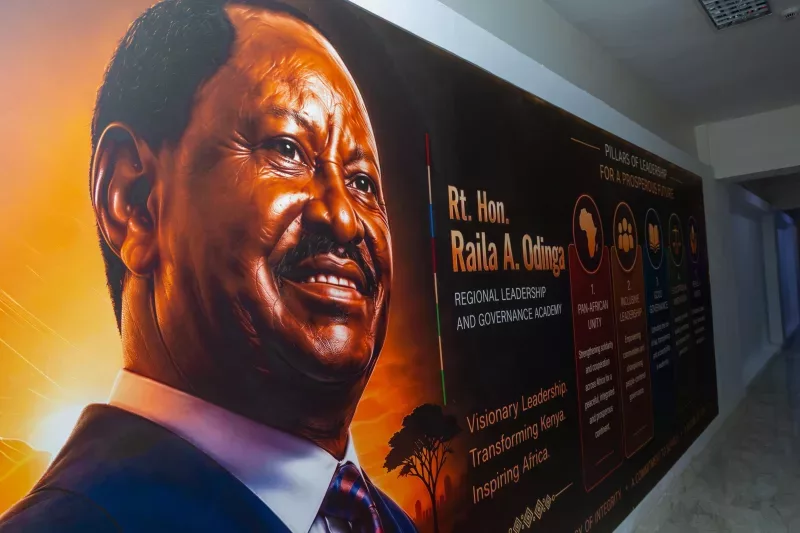
To be fair, there are not many political leaders in this country who would resist the allure of state largesse and trappings of power. With the demise of Raila Odinga, when the attention shifted to his erstwhile surrogates, and goodies ¾ including cash, chase cars, extra security and unfettered access to State House - suddenly became available, there was always just one direction to go: towards the gravy train.
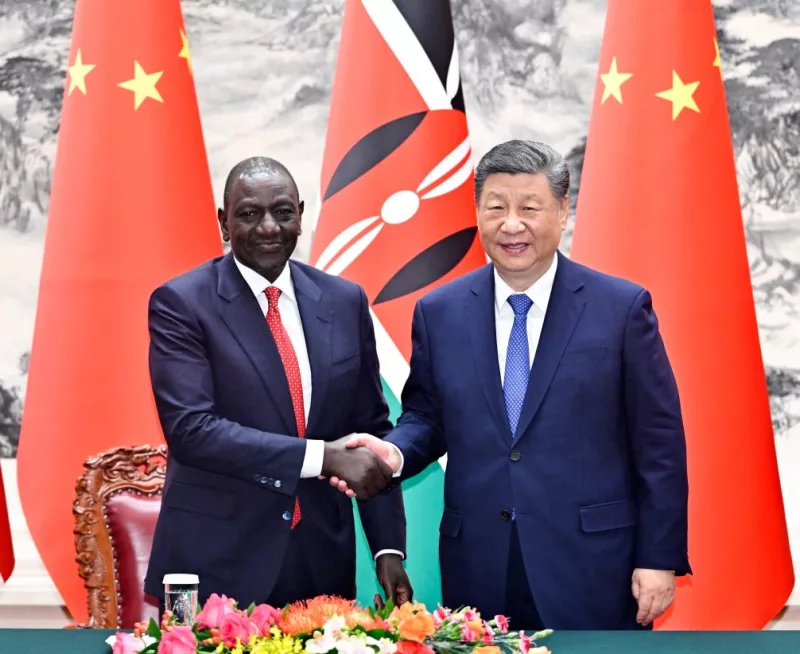
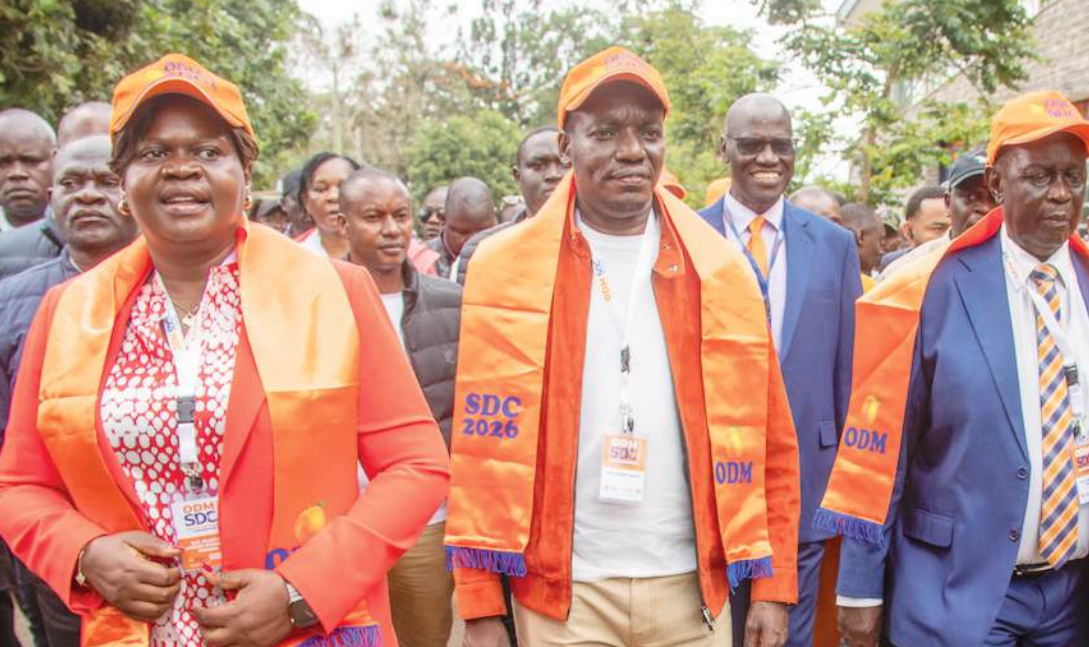
On paper, ODM, specifically the Oburu-Wanga faction, has fallen out with President William Ruto’s UDA over claims that the latter is encroaching on the former’s territory and not only planting its own aspirants in the coming elections, but also rejecting any zoning considerations demanded by the Orange party.
In reality, one can safely state that the two parties are simply as different as day and night. Ideologically, what Raila built and sustained for 20 years, was a social justice movement that was programmed to question everything, and to critically examine its path before taking any plunge.
That a few leaders in the party were willing to rush head-on into deals was a guarantee that they would be at variance with the membership at all levels.
I am certain that President Ruto knew that the further he drew in a few ODM leaders, the further he pushed them away from the membership. In a previous piece here, I pointed out that it seemed to me that this was in fact the plan; cage the ODM leadership in an unpopular arrangement, have them expel the popular rebel group from the party and then make the remaining leaders beholden to you, but alienated from the membership. They walked right into the trap.
The Orange party leadership cannot claim now not to have seen it all coming. The mistakes and red flags were too glaring to miss. The very first one was the manner in which Raila’s position as party leader was filled just hours after his death.
There is nothing in the party constitution that requires the post to be filled so urgently when it falls vacant. Indeed, given that the former Prime Minister had three deputies, it was in fact possible to proceed with his funeral rites and properly convene a new party leader.
But the rush to instal Raila’s brother, Oburu Oginga, as acting party leader, was engineered to stop any “difficult” individual from emerging via consensus as the preferred successor.
That was the first mistake. This is the roundabout way of saying that those who had designs on the party were never comfortable with the possible emergence of independent-minded Kisumu Governor Anyang’ Nyong’o, as party leader, and needed to block this possibility while confusion still reigned over Raila’s death.
The second mistake was the sheer amount of time spent by the party in the poorly handled attempt to remove secretary-general Edwin Sifuna, who led the reformist, true-to-ODM principles wing. Immediately after Raila’s death, nearly all meetings of the party’s organs, obviously egged on by state machinery, focused largely on how to remove the SG.
It deepened existing divisions, while wasting the party a whole six months in a pursuit that wasn’t an emergency to begin with. Indeed, the attempted process itself was so mired in illegality, that one could clearly see that the leadership was simply acting under pressure to get the Sifuna matter off their hands.
The third, and possibly most fatal long-term mistake, was the failure by the new ODM leadership to acknowledge that none of them could be another Raila.
The departed leader’s own daughter warned, during the party’s 20th anniversary bash in Mombasa, that the broad- based arrangement had been so complicated that only Raila had known how to navigate its delicate dynamics.
On taking over, the Oburu-led faction made Raila-level promises and plans, and proceeded as if it enjoyed Raila-level support among the masses. President Ruto must have been secretly smiling with glee.
Because truth be said, even if you were to factor in Luoland alone, none of the remaining ODM leaders could and can make the assumption that they will rally a homogenous tribal vote behind a specific candidate.
If anything, in the absence of Raila, the community has felt emboldened to openly discuss some of the bad practices perpetuated by the party over the years, while adopting a ‘never again’ attitude.
The final mistake was the style of negotiation. ODM was too enthusiastic and too willing to enter into a coalition with UDA that it became a more aggressive campaigner for Ruto’s second term, than even UDA insiders and members. In a way, it exposed the desperation within the party, painting it as one without any options.
At any rate, the initial elevation of 83-year-old Oburu to party leader had already removed any bite from weak threats that some members of the party later made, stating that they would present Oburu as their 2027 presidential candidate if negotiations failed.
A proper negotiation only happens when preconditions and bare minimums are placed on the table in advance. But ODM first dismissed former DP Rigathi Gachagua’s opposition team as an option, before declaring that they were severing ties with their erstwhile coalition, Azimio.
Rather than increase their perceived value by leaving the window open for other potential partners, they shut the door on all options and made Ruto’s the only acceptable deal. It was always going to be downhill from there.
A lot has happened on Kenya’s political scene since Raila passed on. There are discernible changes that no one can wish away, not least the fact that broad-based ODM’s attempt to remove its SG ended up with Sifuna becoming a national sensation and creating his own Linda Mwananchi movement to rival ODM’s Linda Ground.
Depending on whom you ask, Sifuna has managed to steal a large portion of the party’s support base, slicing away what the ODM-UDA negotiators are probably placing on the table as part of their realm.
If anything, if I were President Ruto, I would be wondering which one to negotiate with, the energetic, youth-driven and lively Sifuna movement, compared to the slow-coach Oburu faction, which depends on the state to try and sustain a fast-fading support base.
It will soon be clear to all who care to see and understand, that the people’s love for Raila was never transferable. No single politician or family member can stand upon his legacy and promise anyone support based on the former PM’s influence.
After his death, every politician previously aligned to Raila will work their own way up and build their own support.
While we’re at it, all actors will be aware that a new order has taken over Kenyan politics, in which ageing politicos associated with the old system of big-man political parties and fraudulent primaries are staring at a bleak future.
The youth revolution will define and inform the 2027 election. So, the “old ODM” might sit in a room and negotiate until kingdom come, but they will be rudely awakened to the reality that the membership they flaunt in those deal-making sessions has walked out! And that will be a good thing for our politics!