The drama unfolding around the Strait of Hormuz is not just another Middle Eastern flashpoint. It is something far more consequential: a live audit of global power. And for the United States, the early results are not flattering.
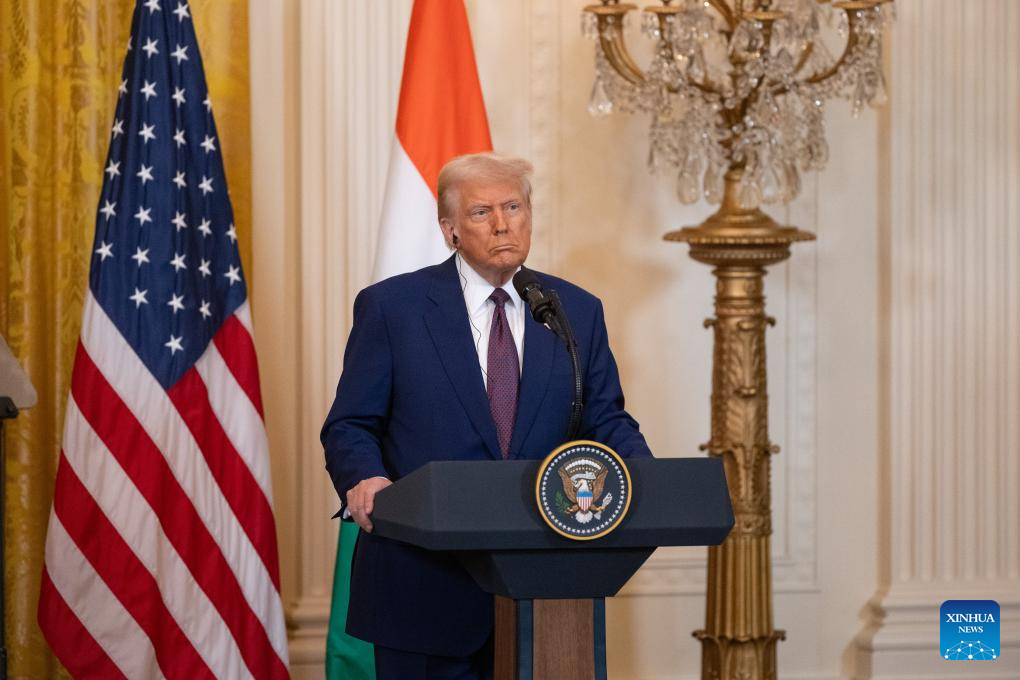
For decades, Washington has operated from a position of near-instinctive authority. It spoke, allies aligned. It sanctioned, others complied. It deployed, and the world adjusted. Through institutions like NATO, the United States perfected a model of power built on military reach, alliance disciplineand the ever-present threat of coercion. It wasn’t always liked — but it was rarely ignored.
But today, something is breaking.
Not dramatically. Not in headlines. But in patterns - subtle, steady and deeply telling. European powers such as France, Germany, Italy and Spain are no longer reflexively echoing Washington’s line, especially when it comes to high-risk geopolitical escalations.
Instead, they are hedging. Calculating. Asking hard questions about energy security, economic exposure and domestic political cost. This is not rebellion. It is something more dangerous for any hegemon: independence of thought.
For the first time in a long while, America is discovering that influence is not the same thing as control. That alliances are not permanent contracts. That even loyal partners have limits —especially when asked to absorb the consequences of decisions they did not shape.
And while Washington is still trying to command the room, China is quietly rearranging the furniture.
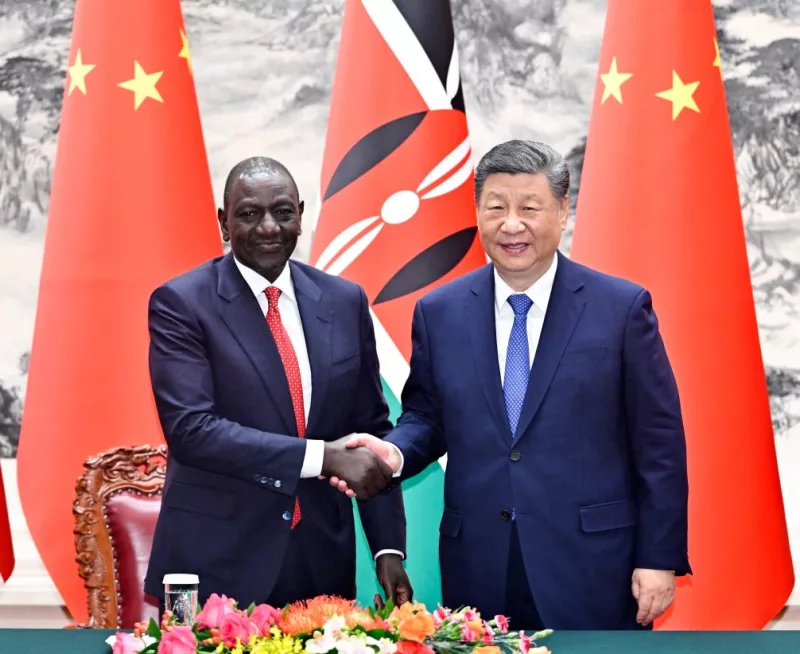
China’s approach to the same crisis could not be more different. No megaphone diplomacy. No ultimatums. No visible theatrics of force. Instead, Beijing is leaning into what might be called strategic patience - corridor diplomacy, infrastructure financing, shuttle engagement and a relentless focus on economic interdependence.
China understands a basic truth of the 21st century: power is no longer exercised only through dominance - it is cultivated through dependence. You don’t need to intimidate a country if its trade routes run through your ports, its infrastructure is financed by your banks and its growth is tied to your markets.
And this is where the Middle East crisis becomes instructive. At the heart of the tension is not just geopolitics - it is energy. Oil flows. Maritime chokepoints. Economic vulnerability. The Strait of Hormuz is less a battlefield than it is a lifeline. Disrupt it, and you don’t just trigger conflict — you rattle the global economy.
China, the world’s largest energy importer, knows this. Stability is not an abstract ideal for Beijing; it is a strategic necessity. And so its diplomacy is calibrated not for ideological victory, but for continuity ¾ keep the oil flowing, keep the markets stable, keep the relationships intact.
The United States, by contrast, often appears trapped in an older script - one where pressure yields compliance and force guarantees outcomes. That script is aging. The problem is not that America is weak. It is not.
It remains unmatched in military capability, technological innovation and global institutional reach. The problem is that its method of exercising power is losing efficiency in a world that has become more complex, more connected and less willing to be managed from a single centre.
What we are witnessing, then, is not a collapse of American power, but a dilution of its authority. And that distinction matters.
Meanwhile, the European Union is navigating its own quiet transformation. Long seen as a junior partner in transatlantic security, Europe is beginning to articulate a more autonomous voice. Not anti-American, but not automatically pro-American either. Strategic autonomy, once a slogan, is becoming a practice - driven by hard lessons on energy dependency, supply chain vulnerabilityand geopolitical overreach.
Then there is the rest of the world — the so-called Global South. For decades, countries in Africa, Asia and Latin America were expected to choose sides in great power contests. That expectation is collapsing. Today, they are choosing interests.
For countries like Kenya, this is a moment of rare leverage. A multipolar world offers options: infrastructure from China, security partnerships with the US, trade with Europe and emerging alliances elsewhere. But this is not a free ride. It demands a new level of diplomatic intelligence - one that avoids entanglement while maximising opportunity.
So, is this the end of US hegemony? No. But it is the end of its comfort zone. The era when Washington could assume alignment is over. The era when military power alone could shape outcomes is fading. The era when one country could define the rules of global engagement is giving way to something messier, more fluid and far less predictable.
China has read that moment early - and is playing accordingly. Slowly. Methodically. Without the urgency of a power trying to prove itself, but with the confidence of one building something durable.
The United States, on the other hand, is at a crossroads. It can adapt — shifting from coercion to coalition, from pressure to partnership ¾ or it can double down on a model that the world issteadily outgrowing.
The Middle East crisis is not the cause of this shift. It is the mirror reflecting it.