
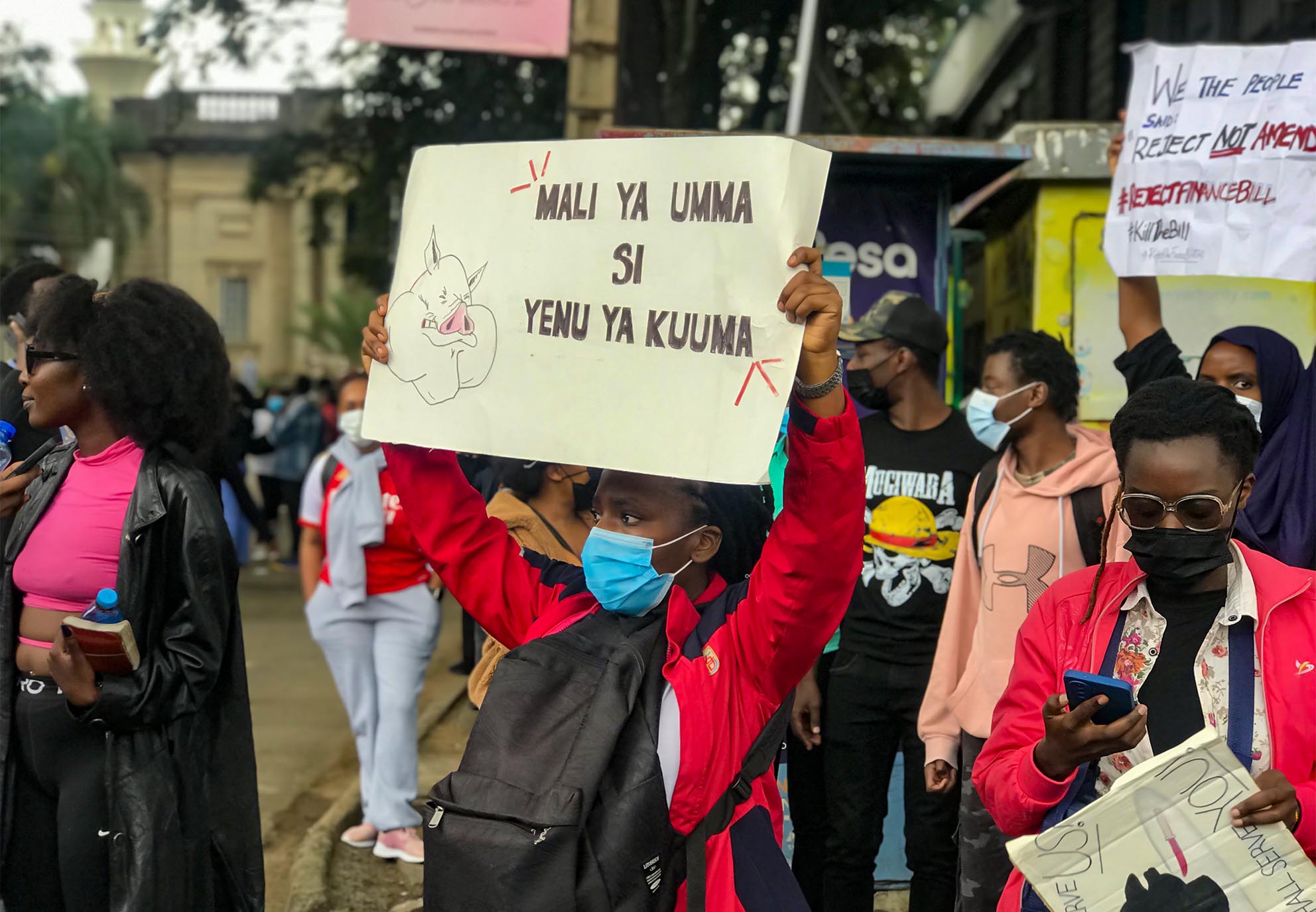
When 50 young people walked free and a magistrate ordered their bail refunded on Tuesday, there was a temptation to celebrate.
But the acquittal, delivered by the Ngong law courts, is not quite a victory and not pure justice; it is an indictment of systemic failure within the prosecution apparatus.
Chief magistrate Charles Kutwa did not free the 50 because new evidence proved their innocence. He freed them because the prosecution presented nothing. No witness. No exhibit.
By failing to produce even a single witness over almost two years, the state did not just lose a case; it demonstrated a reckless disregard for the legal standards that protect individuals from the caprice of the Executive.
The state walked into court empty-handed. That is not a slip. That is a collapse of the prosecutor’s core duty.
The Director of Public Prosecutions should issue a public explanation for how a case can proceed for this long without a single witness.
Likewise, the Kenya Police Service should be required to justify mass arrests in writing before charges are filed, ending the practice of scooping first and asking questions never.
Additionally, Parliament should amend the bail framework so that any accused person whose case collapses for lack of evidence receives automatic compensation beyond a refund.
While the state has a right to arrest, that right comes with the obligation to prove. When it fails that obligation as spectacularly as it did here, the only honest conclusion is that the arrests were never about lawful restoration of order. They were about punishment before trial.
Let us name what happened in Ongata Rongai on June 24, 2024. Young people took to the streets. There was unrest. There were clashes. There was also looting, which no serious defender of protest should excuse.
But the state responded with mass arrests, scooping up individuals and hauling them to court. All for nothing.
For nearly a year, those young people carried the weight of criminal charges. They reported to court. They paid cash bail. They lived under the shadow of a conviction that the prosecution never intended to prove. That is not policing — it is deterrence by detention: arresting 50 to discourage 500.
The court saw through it, with the magistrate ordering the refund of all cash bail, but the damage had already been done.
Those young people paid money — often raised by struggling families — for the privilege of waiting for a trial that the state never prepared.
When a court gives your money back and throws out the case for zero evidence, it is not a reward. It is a quiet acknowledgment that you should never have been charged in the first place.
But no cheque can repay the months of anxiety, the sleepless nights, the job interviews lost because of a pending court date, the neighbour who looked at you differently after the arrest. That is the real cost of these empty prosecutions.
Morally, the state owes these 50 young people a formal apology. Not a guarded statement. A real apology. Because the right to protest is not a privilege granted by a benevolent government. It is a constitutional promise.
Kenya’s history is littered with moments when the executive overreached and the courts pushed back.
After the 2017 election rerun, courts struck down unlawful arrests of protesters.
During the Covid-19 curfew, magistrates released dozens held without charge for violating public health orders.
Each time, the pattern is identical: mass arrests, weak or absent evidence, judicial rescue and then silence.
No accountability for the prosecutors who wasted court time. No reform of the police who make sweeping detentions without documentation.
The 50 who walked free in Ngong are fortunate. They had a lawyer, Shadrack Wambui, who did not give up and a magistrate who refused to accept empty charges.
Reflecting on the significance of the acquittal, Wambui stated that the decision is a clear message to the Executive that the Judiciary remains the last line of defence for the common citizen.
Human rights observers opined that such dragnet arrests are intended to intimidate activists rather than secure convictions.
Chief magistrate Kutwa said the court cannot act on mere suspicion or hearsay, and the total absence of witnesses suggests that there was no case to begin with.
But fortune is not a right and political rights cannot depend on the luck of a good judge or a determined advocate.
The right to peaceful assembly means nothing if the state can arrest you today, hold you for months and then drop the case tomorrow without consequence.
The Gen Z protesters of June 2024 were not asking for chaos. They were asking for a hearing. Instead, they got handcuffs and a months-long wait for a verdict that should have been delivered on day one.





