 Calvince Okoth, widely known by his nickname Gaucho/HANDOUT
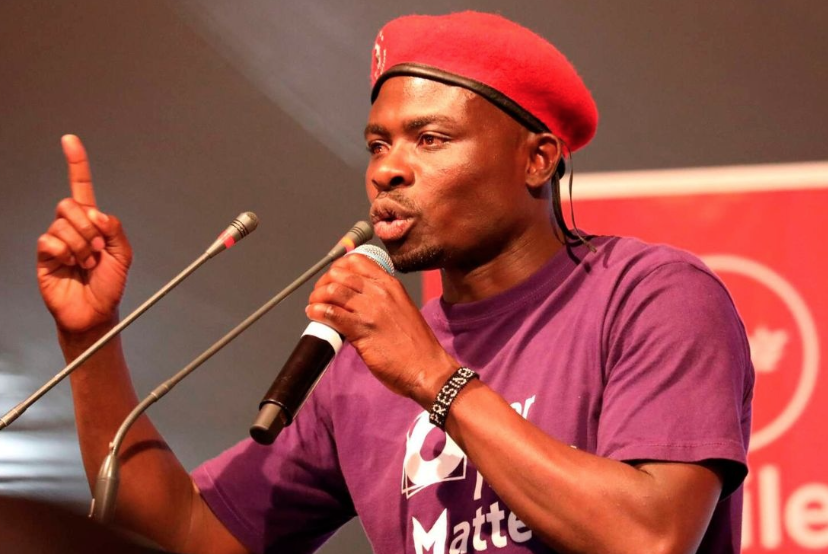
Calvince Okoth, widely known by his nickname Gaucho, has prominently featured in Nairobi’s public life, blending grassroots activism with an increasingly visible role in governance.
His recent appointment to the board of management of Mama Lucy Kibaki Hospital has thrust him into the national spotlight once again, igniting debate about merit and the place of lived experience in public service.
The appointment, made by Nairobi County under Gazette Notice No. 5733, took effect on April 16, 2026, and will run for a three-year term.
Gaucho joins five other members on the board of the Level 5 referral facility located in Nairobi’s Eastlands area.
The hospital serves an estimated 2.25 million people and handles more than 2,000 patients daily, making it one of the busiest public health institutions in the county.
Given its critical role, the decision to include Gaucho in its management structure has drawn sharp reactions from sections of the public, particularly those who argue that such positions should be reserved for individuals with formal backgrounds in healthcare or administration.
Yet Gaucho himself has been unapologetic. In response to critics, he framed his appointment as a victory for ordinary citizens who are often excluded from decision-making spaces.
He argued that leadership is not solely defined by academic credentials but also by wisdom, community understanding, and the ability to represent the voiceless.
He pledged to use his position to advocate for justice and equity, particularly for residents of informal settlements who rely heavily on public healthcare services.
“I will defend the voiceless. I will stand for justice. I will not remain silent,” he said, urging detractors to give him time to prove his capability.
Nandi Senator Samson Cherargei has come out strongly in defence of Gaucho, following his appointment.
His inclusion in the management of the public referral hospital has sparked widespread public debate, with critics questioning whether he possesses the professional qualifications required for governance in a health facility.
But Cherargei has dismissed the backlash as hypocritical, arguing that the same voices that have long called for the inclusion of ordinary citizens—such as youth, boda boda operators, and small-scale traders—are now shifting the goalposts.
“When government appointments are made, many people ask where are mama mbogas, boda bodas or youth?' But when Gaucho is appointed to serve in government, the same people start questioning about qualifications and credentials. This hypocrisy is nauseating,” Cherargei said.
He urged Gaucho to remain focused and not be distracted by the criticism, encouraging him to serve diligently in his new role.
“To Gaucho, go and serve Kenyans with commitment, zeal, and passion. Don’t be intimidated,” he added.
Gaucho’s journey to this point is anything but typical. Born in Rongo, Migori County, his early life was marked by hardship. He lost his parents at a young age and dropped out of school in Class Six around 2002 while caring for his younger siblings.
As the eldest in a family of five, he was forced to navigate adulthood prematurely.
His migration to Nairobi exposed him to the realities of life in informal settlements, including stints in Korogocho and Dandora, areas often associated with poverty, crime, and limited access to basic services.
It was within these environments that Gaucho began to shape his identity as a community mobiliser.
His nickname, “Gaucho,” dates back to 2007, inspired by his football skills and a resemblance—at least in style—to Brazilian football legend Ronaldinho, popularly known as Ronaldinho Gaucho.
The name stuck, eventually becoming synonymous with his persona as a fiery grassroots activist.
Gaucho rose to prominence through his involvement with the Bunge la Mwananchi movement, a loosely organised civic platform that provides space for ordinary citizens to debate national issues.
As a former president of the movement, he became known for his impassioned speeches and ability to mobilise crowds, particularly during periods of political unrest.
His influence grew significantly during the 2023 cost-of-living protests, where he positioned himself as a vocal advocate for low-income Kenyans struggling with rising prices.
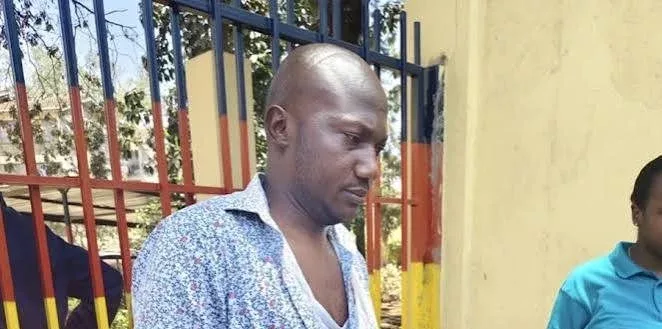
His activism often placed him at odds with authorities. In May 2023, he was arrested outside City Hall in Nairobi by undercover police officers and charged with creating a disturbance, contrary to the Penal Code.
He was later released on a cash bail of Sh5,000. Despite repeated arrests and confrontations with law enforcement, Gaucho maintained that his mission was to “speak truth to power,” a stance that endeared him to many in the informal settlements but also attracted criticism from those who viewed his methods as disruptive.
Politically, Gaucho has long been associated with the late opposition leader Raila Odinga.
He was widely regarded as a diehard supporter and was actively involved in protests and mobilisation efforts linked to Raila’s political agenda, particularly under the Azimio coalition.
However, Gaucho has consistently denied having a formal working relationship with Odinga or holding any official position within his political structures.
Instead, he has described his involvement as rooted in shared interests and a common goal of advocating for social justice.
Interestingly, his recent appointment has also seen him express gratitude across the political divide.
He thanked Nairobi Governor Johnson Sakaja for the opportunity, as well as President William Ruto for enabling him to serve.
He also acknowledged the influence of Odinga’s family, claiming they had believed in him long before he entered formal public service.
Beyond activism, Gaucho has made efforts to improve his educational background.
In 2023, he returned to school through an adult education programme at Gumbaru School in Nairobi, where he completed his secondary education.
He also attended Diguna Discipleship Training College for a year, focusing on religious and leadership development.
More recently, he has expressed interest in taking language classes to improve his English proficiency, a move he says will enhance his effectiveness in public service.
His participation in the 2024 Gen Z-led protests against the Finance Bill further cemented his role as a bridge between different waves of activism in Kenya.
While the younger generation brought digital mobilisation and new energy to the protests, figures like Gaucho provided on-the-ground experience and organisational networks within informal settlements.
Still, questions linger about whether his transition from activism to governance will be successful.
Critics argue that managing a major referral hospital requires technical expertise and administrative experience, qualities they say Gaucho has yet to demonstrate.
Supporters, however, see his appointment as a bold step toward inclusive governance, where individuals with lived experience of systemic challenges are given a seat at the table.