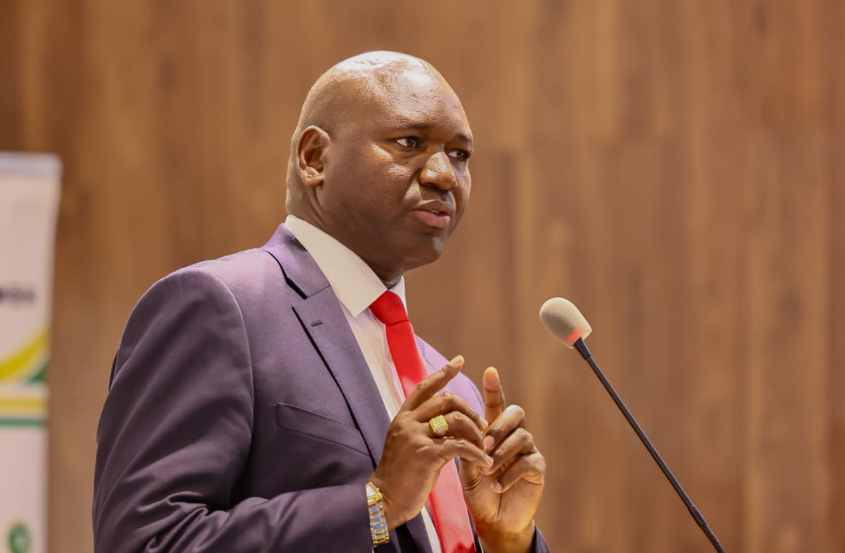
 Basic Education PS Julius Bitok /HANDOUT
The government is planning to initiate what it describes as a controversial but necessary step of cutting by half the number of teachers trained per year, a move that could significantly reshape the teaching workforce.
Basic Education PS Julius Bitok said the current teacher production is superfluous, as it surpasses demand.
"The current national demand for teachers stands at about 40,000 yearly, yet we train between 70,000 and 80,000," he told the Star in a recent interview.
PS said President William Ruto's promise of creating job opportunities for the youth, including the hiring of more teachers, prompted many students to enrol in teaching courses.
Since coming to power in September 2022, the Kenya Kwanza government has hired about 100,000 teachers, particularly following the demand created by the government's 100 per cent transition policy.
Overall, the national teacher population stands at 458,000 against a total learner population of 12 million students in basic education.
This puts the teacher-learner ratio at one teacher per 26 students across the board, one spot short of Unesco-recommended ratio of 1:25.
Against this backdrop, the PS said there is need to scale down the number of trainees enrolled in teaching programmes annually.
"More students are now enrolling in teaching programmes because the President has promised jobs. Starting this year, we will seek to reduce by half the number of those pursuing teaching. This is a controversial conversation, but it is one that we must have," Bitok said.
In the 2025–26 budget, the education sector was allocated Sh702.7 billion, the lion's share from the Sh4.29 trillion national expenditure.
The bulk (Sh387.2 billion) went to the Teachers Service Commission (TSC), representing a Sh29 billion increase from the Sh358.2 billion the teacher employer was allocated in the 2024–25 fiscal year.
TSC was expected to spend Sh7.2 billion on the recruitment of intern teachers and Sh980 million on capacity building of tutors on the Competency-Based Education (CBE).
However, the Court of Appeal in February slammed brakes on the internship programme, terming it unconstitutional, illegal and discriminatory.
The court's decision left the fate of about 44,000 intern teachers in limbo as TSC looks for a way forward.
Bitok, however, confirmed that 2,500 teachers have so far been retooled to align their pedagogical skills with the needs of the CBE as the pioneer cohort of Grade 9 learners transitioned to senior school in January.
The training ensures adherence to the Basic Education Curriculum Framework (BECF), emphasising learners' core competencies, values and attitudes.
It equips educators to manage the new curriculum, master formative assessment techniques and teach specialised pathways of STEM, Social Sciences, and Arts and Sports Science.