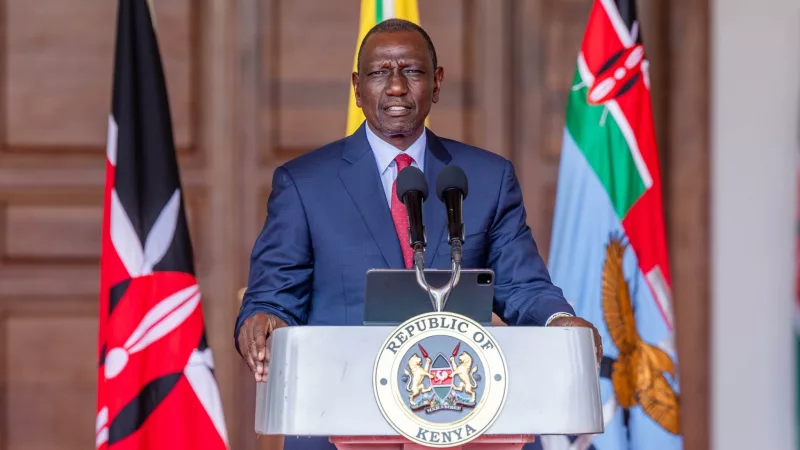
President William Ruto has explained how he came to be nicknamed “Zakayo,” saying the label emerged from the political backlash surrounding his housing agenda and tax reforms.
Speaking during a meeting with Kenyans living in Italy, Ruto traced the origin of the nickname to the resistance he faced when his administration pushed for the Affordable Housing Programme, which he described as one of his most deliberate but difficult policy decisions.
“That is how I became Zakayo,” the President said, recounting the criticism he received from leaders and members of the public when the housing initiative was introduced.
“When I pushed for the housing programme, many citizens, leaders actually, said, ' Who told you that Kenyans need houses? People have their homes, why are you obsessed with this programme?” he said.
Ruto noted that despite the opposition, housing has consistently featured in political party manifestos over the last 25 years, but has rarely been implemented at scale.
He defended his administration’s approach, insisting that the programme is now translating into tangible results.
“You see, the irony is that in every manifesto of every political party in the last 25 years, housing has always been a permanent feature,” he said.
The President highlighted progress made under the programme, saying thousands of jobs and multiple development sites have been created across the country.
“Today, in our housing ecosystem, we have 640,000 Kenyans who are working. We have 210 sites of affordable housing and 600 sites of markets,” Ruto said.
He further added that the government has already begun handing over completed units to beneficiaries.
“We are doing 240,000 housing units. We have started giving out keys, and we have hostels for 180,000 college students,” he said.
Ruto explained that the introduction of the Housing Levy was a necessary but difficult policy choice that helped finance the ambitious programme, despite strong opposition from critics.
“It was deliberate, but it was difficult, and that is how I became Zakayo. We had to have the Housing Levy,” he said.
The nickname “Zakayo” became widely used in political and public discourse as criticism mounted over tax-related policies introduced under the government, particularly following the Finance Act 2023, which introduced or increased several taxes and levies affecting fuel, housing, and essential goods.
The label drew from the biblical figure Zacchaeus (Zakayo in Swahili), a tax collector in the Gospel of Luke, often associated with tax collection and public resentment. Critics used the name to symbolise what they viewed as increased taxation and rising cost of living.
Opposition leaders and social media users popularised the term through protests, memes and political commentary, turning it into a shorthand for public dissatisfaction with the economic situation.