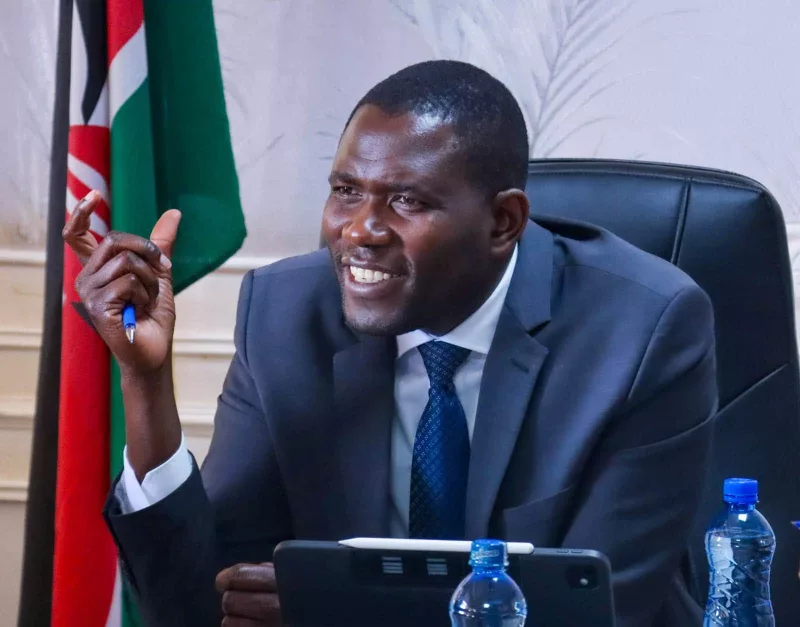
 The chair of the Departmental Committee on Defence, Intelligence and Foreign Relations MP Nelson Koech/HANDOUT
MPs have approved the ratification of five key Defence Cooperation Agreements (DCAs) between Kenya and foreign partners.
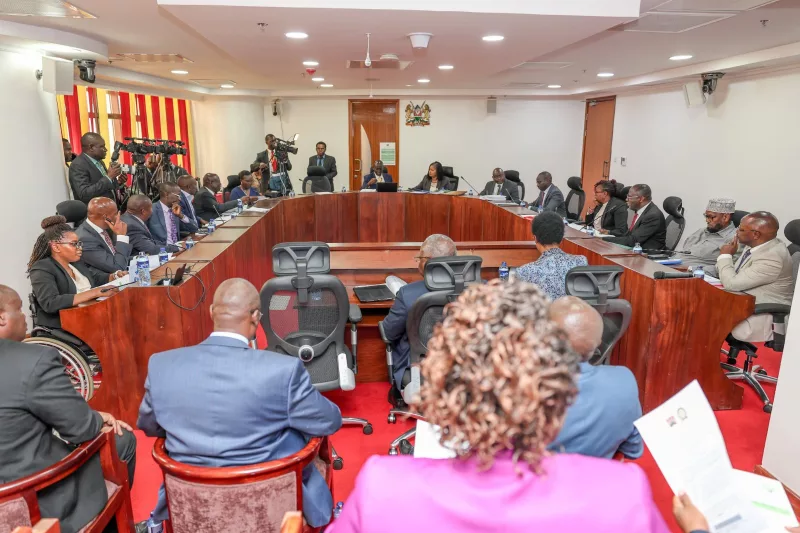
The Departmental Committee on Defence, Intelligence and Foreign Relations chaired by Belgut MP Nelson Koech adopted the agreements between Kenya and France, the Czech Republic, China, Ethiopia and Zimbabwe following a detailed review.
Moving the Motion in the House, Koech said the agreements are critical in strengthening Kenya’s defence capacity and positioning the country within an increasingly complex global security landscape.
“These agreements will enhance Kenya’s defence capabilities through partnerships with technologically advanced and strategically significant states,” he said. “They will also deepen cooperation in intelligence sharing, counter-terrorism, peace support operations and research and development.”
The ratification, however, comes with strict conditions as lawmakers insisted on reservations touching on jurisdiction, environmental protection, community relations and the need for a standardised framework for all future defence agreements.
In a departure from past practice, Parliament undertook extensive public participation before approving the agreements marking what legislators described as a historic shift in the handling of defence treaties.
The committee invited submissions from key institutions, including the Ministry of Defence, the State Department for Foreign Affairs, the Office of the Attorney-General, the National Environment Management Authority (Nema), the Kenya Wildlife Service (KWS), the Kenya National Commission on Human Rights (KNCHR) and the Kenya Revenue Authority (KRA).
“This is the first time we have subjected Defence Cooperation Agreements to public participation as guided by Article 118 of the constitution,” Koech said. “The input from stakeholders significantly enriched this process.”
Gilgil MP Martha Wangari, who seconded the motion, said the inclusion of stakeholders exposed critical gaps that would otherwise have been overlooked.
“We realised the importance of involving line ministries early in the negotiation process,” she said. “Parliament often comes in at the tail end, with limited options. This process must change.”
Legislators largely supported the agreements, citing their strategic importance in addressing emerging security threats such as cybercrime, terrorism and cross-border instability.
Leader of Majority Party Kimani Ichung’wah (Kikuyu) said the agreements go beyond traditional military training to include modern domains like cyber security, maritime surveillance and space technology.
“These are new frontiers that will significantly enhance the capability of our defence forces,” he said. “For instance, cooperation with Ethiopia will help address insecurity along the Marsabit–Moyale corridor and curb cross-border crime.”
Funyula MP Ojiambo Oundo described the move as a “positive step” but cautioned that Kenya’s interests must always come first.
“We must guard against human rights abuses and ensure that these agreements do not disadvantage Kenyans,” he said.
A major sticking point during debate was the question of criminal jurisdiction over foreign troops operating in Kenya.
Legislators unanimously agreed that any serious crimes committed on Kenyan soil must be tried under Kenyan law, a position informed by past controversies, including the murder of a Kenyan woman linked to foreign troops.