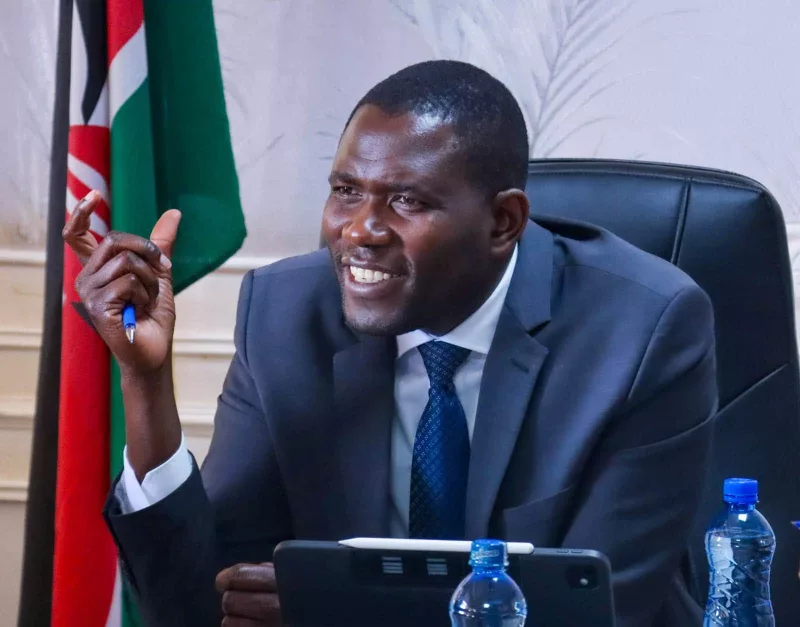
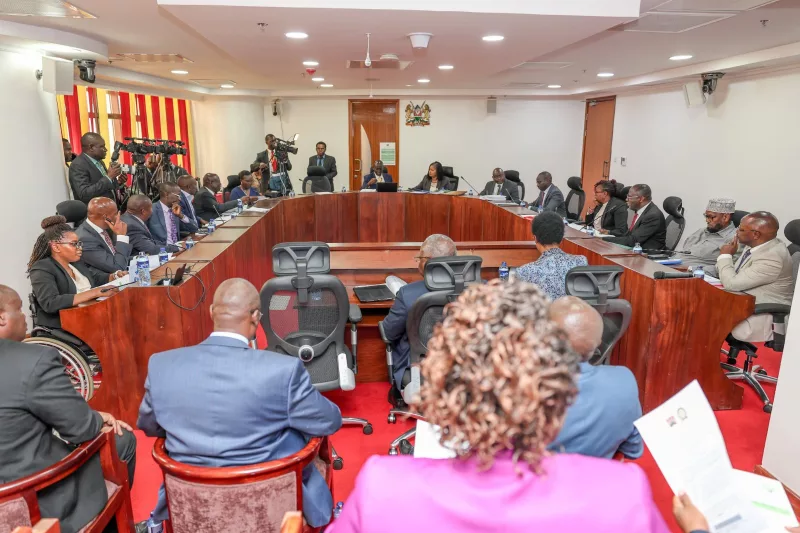
Wednesday, Murkomen appeared before the Senate plenary to respond to a question by Kisumu Senator Tom Ojienda regarding the circumstances surrounding the attack on former Deputy President Rigathi Gachagua at Witima ACK St. Peter's Church in Nyeri.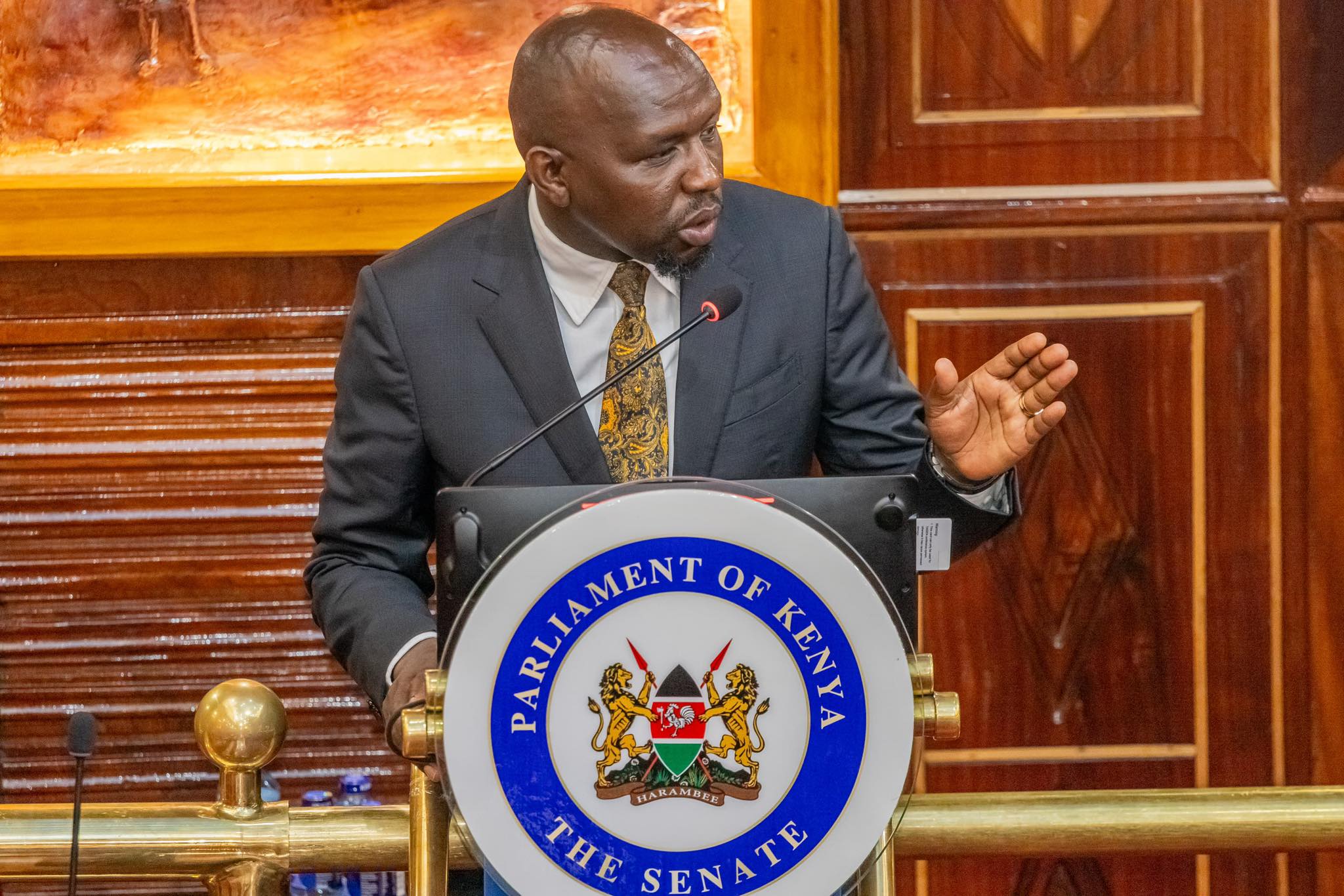 Interior Cabinet Secretary Kipchumba Murkomen before the Senate on April 22, 2026./PARLIAMENT
The inquiry sought clarification on the deployment of police officers to the church, the identities of those who authorised and commanded the operation, and the measures being taken to ensure that police conduct aligns with constitutional provisions and the standards of the National Police Service.
Responding to the matter, CS Murkomen informed the Senate that investigations into the incident remain active, with the Inspector General of Police having directed the Internal Affairs Unit to take over the case in order to ensure an independent and impartial inquiry, particularly in light of allegations suggesting possible involvement of police officers.
He told the House that a preliminary report has since been submitted, while investigations continue.
On the events of January 25, 2026, the CS stated that unknown individuals lobbed teargas canisters into the church during a service attended by the former Deputy President and his entourage, disrupting the proceedings.
CS Murkomen noted that preliminary findings indicate that the church leadership did not provide prior notification of the visit to the police or other government authorities, and that the Officer Commanding Police Station (OCS), Witima, was not aware that a high-profile guest would be in attendance.
He further explained that no formal request for police security had been made in respect of the service, and therefore no sanctioned deployment had been arranged in advance.
The CS added that police officers who responded to the incident did so after it had already been reported, in line with their statutory duty to maintain law and order, but encountered resistance from members of the public who blocked their access and accused them of complicity.
CS Murkomen indicated that local political rivalries may have influenced the coordination and execution of the attack.
On the legal framework governing police deployment, the CS explained that the Public Order Act requires any person or organisation intending to convene a public meeting or event that may require security arrangements to notify the nearest police station at least three days, and not more than fourteen days, before the event.
He told the Senate that, notwithstanding the requirement for prior notification, police commanders have been directed to enhance situational awareness within their jurisdictions by proactively monitoring social and religious gatherings, including those that may not ordinarily trigger formal notification requirements.
The CS stated that the directive is intended to enable timely risk assessments and the implementation of appropriate preventive security measures, particularly where high-profile individuals may be present.
CS Murkomen reaffirmed the Government’s commitment to upholding professionalism, neutrality and the constitutional mandate of the National Police Service, noting that any officer found to have acted outside the law or established procedures will be subjected to appropriate disciplinary and legal action upon conclusion of the ongoing investigations.