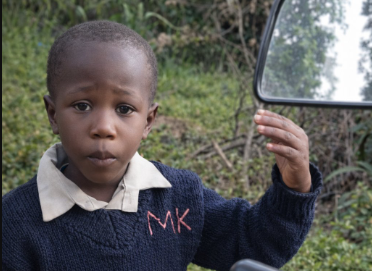
On a quiet afternoon in a village in Meru County, a small boy stood by the roadside, patiently explaining directions with the confidence of someone who knew every path, every home, and every familiar landmark.
His tiny hands gestured animatedly, his voice steady and assured. What he did not know then was that his simple act of kindness would soon ripple far beyond his village, capturing hearts across the country.
“Unajua kwa Mbae?”
That phrase, casually dropped in conversation by five-year-old Musa Kihara, has since taken on a life of its own.
What began as a moment of innocence, helping a stranger find their way, has turned into one of Kenya’s most unexpected viral sensations.
In the now widely shared clip, Musa gives detailed, almost poetic directions, referencing neighbours and landmarks only locals would understand.
“Hapo, hapo, unaona ukifika hapo kwa Mbae, alafu hapo kwa akina Monda. Unajua hio side ya uncle Mureithi, hapo katikati, nitakuonyesha,” he says, his tone earnest and precise.
To many, it was both amusing and deeply relatable, the uniquely Kenyan way of giving directions, anchored not in street names but in people, relationships, and memory.
Social media users quickly picked up the clip, turning Musa’s words into a trending sound on TikTok and other platforms.
But beyond the laughter and remixes, something more powerful began to emerge.
Kenyans, moved by Musa’s innocence and kindness, started asking about the boy behind the viral phrase.
Soon, the online buzz transformed into tangible acts of generosity. Strangers, now bound by a shared affection for “Kwa Mbae” began sending gifts, from clothes and shoes to school supplies.
More significantly, contributions started pouring in to support Musa’s family, particularly to help offset a hospital bill for his nine-year-old brother, who is battling throat cancer.
The story took another turn when former Nairobi Governor Mike Sonko hosted Musa, his family, and a group of TikTok creators in his office on Monday.
The meeting was both celebratory and sobering, a reminder that behind the viral joy was a family navigating a difficult chapter.
“I had the absolute joy of hosting the ‘Kwa Mbae’ legend himself, Musa Kihara, alongside his mother and the incredible TikTok community that has rallied behind them,” Sonko said.
He added that beyond the viral videos, the family is fighting a brave battle to support Musa’s brother, who is currently admitted at Kenyatta University Teaching, Referral and Research Hospital.
To support them, Sonko contributed Sh100,000 to the family and an additional Sh40,000 to content creator Obidan Dela and his team, who helped amplify the story.
What stands out in Musa’s story is not just the virality of a phrase, but the humanity it has stirred.
In a digital space often dominated by fleeting trends, “Kwa Mbae” has become something more enduring, a reminder of how small acts of kindness can unite strangers.
From a dusty roadside in Meru to timelines across the country, Musa’s voice continues to echo, not just as a meme but as a symbol of warmth, community, and the quiet power of being helpful.
And somewhere in that simple question, “Unajua kwa Mbae?” Kenyans have found not just directions, but a shared sense of connection.