Today, that dream is slipping further out of reach, not because vehicles are expensive at source markets, but because of the mounting tax burden that pushes final costs beyond affordability.
When William Mochere decided to import a Subaru Forester Sport, he thought he had done his homework.
He secured a Sh2.5 million loan, carefully calculating the purchase price, shipping and expected taxes.
But when the vehicle arrived at the Port of Mombasa, reality hit hard.
Customs officials assessed the car at a value of Sh1.7 million, which became the basis for calculating import duty and other taxes.
By the time all levies were added—35 per cent import duty, excise duty, 16 per cent VAT, 3.5 per cent Import Declaration Fee and 2 per cent Railway Development Levy—the total tax bill exceeded Sh1.2 million.
Mochere found himself short by about Sh400,000.
“I was forced to borrow more to clear the taxes,” he said, highlighting the financial strain faced by many importers caught off guard by fluctuating valuations.
His experience reflects a growing crisis in Kenya’s vehicle import market, where shifting valuation methods and rising taxes are locking out ordinary citizens and, in some cases, forcing them to abandon vehicles at the port altogether.
In global source markets such as Japan, second-hand vehicles remain relatively affordable.
A Toyota Probox, a popular choice among small business operators, typically costs between $3,000 (about Sh386,000) and $7,000 (about Sh902,000), depending on age and mileage.
Yet in Kenya, the same vehicle retails for between Sh1.2 million and over Sh2.5 million.
The disparity is largely driven by taxes and duties, which now account for a significant portion of the final retail price. Recent changes in valuation frameworks have further widened the gap.
Under updated Kenya Revenue Authority regulations for 2025–26, the general import duty rate rose from 25 per cent to 35 per cent, while excise duty for some categories climbed to as high as 35 per cent.
Additional levies—including VAT, Import Declaration Fee and Railway Development Levy—compound the cost.
For a Probox, total duties can reach up to Sh500,000, pushing the vehicle’s price beyond the reach of many small-scale traders who rely on such cars for daily business.
Mazda Demio has a customs value of Sh437,475 based on the new KRA’s new duties, with taxes now up to above Sh460,000.
This has taken the prices up to above Sh1.7 million from an average of Sh1.35 million.
Nissan Note has seen prices go up to Sh1.5 million from an average of Sh1.1 million, while Nissan Dayz, which is commonly used in the taxi industry, has seen taxes go up from Sh152,000 to Sh384,000, with KRA putting its customs value at Sh354, 410, with average final prices now at Sh1 million from Sh800,000.
Suzuki Alto, also common on the Kenyan roads now, has a customs value of Sh215,615, pushing its final value to over Sh1 million from between Sh600,000 and Sh800,000.
Duty on Suzuki Swift has also gone up from about Sh234,000 to Sh450,000, pushing prices to over Sh1.4 million.
This means Kenyans are paying equal or even more in taxes compared to the original car price in the source market.
Under the new KRA duties, Range Rover Vogue has a customs value of Sh4.1 million with duties of more than Sh2 million, pushing final prices to above Sh6 million.
Mercedes-Benz C200 has a customs value of Sh1.6 million, Mazda CX-5’s customs value is at Sh1.1 million, Mercedes-Benz Actros (truck)’s customs value is set at Sh1.9 million, while BMW X6 has a customs value of Sh9.4 million, with final prices for all these units shooting up.
"Prices have gone up significantly; we are at a point where we choose which models to import because some are not getting buyers," Antony Gitonga, a car dealer along Ngong Road, told the Star. "Without Sh2.5 million, you cannot get a good imported second-hand car."
Antony Mwangi, a dealer along Kiambu Road, said he moved a mere five units a month from 30 when business was good.
"I think the purchasing power has really reduced. Kenyans are not buying cars like they used to, probably because of the high prices we are now experiencing," he said.
At the centre of the controversy is the transition from the Current Retail Selling Price (CRSP) system to a more invoice-based valuation model.
The KRA has expanded its CRSP database from about 3,000 models in 2019 to more than 5,200, incorporating detailed specifications such as trim levels and engine types.
At the same time, importers are now required to submit invoices and shipping documents through the Integrated Customs Management System (iCMS) for verification.
While the changes are intended to improve accuracy, industry players say they have introduced uncertainty and inconsistency.
Car Importers Association of Kenya national chairman Peter Otieno describes the situation as “customs roulette,” where importers cannot predict final costs.
“The greatest enemy of any business is not high taxes, it is unpredictable taxes,” Otieno said.
“How can a professional importer quote a customer, only for the value to change upon arrival?”
According to the association, the unpredictability has eroded trust between importers and their clients, with many customers accusing dealers of inflating prices—when in reality, the final tax burden is often determined at the port.
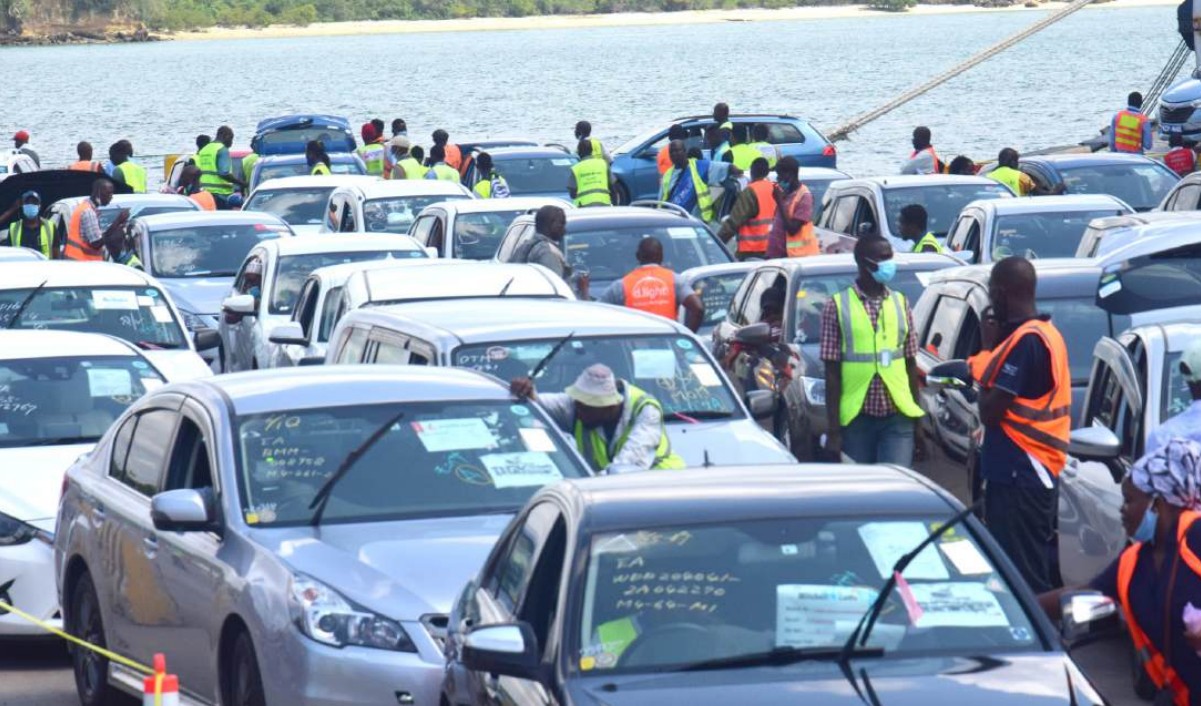
The consequences are increasingly visible at the Port of Mombasa and container freight stations, where a growing number of vehicles remain uncollected.
Importers who budget based on initial estimates often find themselves unable to raise additional funds at short notice when valuations are revised upwards. With banks unwilling to top up existing loans, many are forced to walk away.
“Imagine saving for years or taking a loan, only for the cost to jump by Sh500,000 overnight,” Otieno said. “The result is abandoned vehicles, lost savings and financial distress.”
Industry data shows a sharp decline in vehicle imports, from a peak of 126,415 units in 2021 to 70,275 in 2023. Although 2024 saw a slight recovery, volumes remain significantly below previous highs.
The KRA maintains that taxes on motor vehicles have not increased arbitrarily and are applied in accordance with the Common External Tariff (CET) and regional laws.
According to the tax authority, the 2019 CRSP remains in use as directed by the courts, while valuation for models not captured in the database follows the East African Community Customs Management Act, 2004.
“Kenya Revenue Authority has not abandoned the 2019 Current Retail Selling Price.
The 2019 CRSP continues to be used as previously directed by the court," KRA acting Commissioner for Customs & Border Control's office told the Star.
However, for motor vehicle models not captured in the 2019 list, valuation is undertaken in accordance with section 122 and the Fourth Schedule of the East Africa Community Customs Management Act, 2004, which provides for the applicable customs valuation framework, the taxman said.
Import duty is charged at 35 per cent of the customs value (CIF), with excise duty ranging from 20 per cent to 35 per cent depending on engine capacity and fuel type.
VAT is applied at 16 per cent, alongside other levies such as the Railway Development Levy and Import Declaration Fee.
KRA argues that the framework aligns with international standards, including the WTO Customs Valuation Agreement and is designed to ensure fairness and consistency.
Despite these assurances, stakeholders warn that the cumulative tax burden is pricing out middle- and lower-income Kenyans, effectively confining many to walking or relying on increasingly expensive public transport.
For small businesses, especially in logistics and trade, access to affordable vehicles is critical. Rising costs threaten to stifle entrepreneurship and slow economic activity.
Industry players are now calling for reforms, including a predictable pre-arrival valuation system, revival of local valuation committees and stronger collaboration between KRA and importers.
Without such measures, they warn, Kenya risks turning one of its most vibrant sectors into a shrinking market—where cars remain plentiful at the source, but unattainable at home.
Meanwhile, car dealers in Mombasa have raised concerns over a worsening business environment, citing high taxation, insecurity and global geopolitical tensions as key factors hurting sales.
The situation, they say, has been further exacerbated by the ongoing Middle East conflict, which they noted is affecting customers’ purchasing power, particularly for high-end imported vehicles.
“The question is how both national and county governments can empower businesses so that our clients can afford to buy both high-end and low-end cars,” said Jackson Tevera, a dealer at Roki Motors.
Ken Sassy, another dealer, urged authorities to improve security, saying vehicles are frequently vandalised by street urchins.
Dealers have also decried high taxation, noting that permit fees in Mombasa are significantly higher than in Nairobi.
Sassy said dealers with more than 10 cars pay up to Sh165,000 in licence fees, compared to about Sh50,000 in Nairobi.
The dealers, who number more than 40 in Mombasa, said they contribute significantly to the local economy through taxes and employment.
James Macharia, another dealer, raised concerns over the high cost of signage, saying businesses are charged Sh5,500 per letter for 3D signage.
“This means if your business name is long, you pay heavily. A minimum signage costs about Sh30,000,” he said, calling for a reduction to encourage more installations.
“What KRA is doing is they take 2025 CRSP that was disallowed by court, they do depreciation, get customs value then they just give a value and they call it ruling, which has no basis. If you ask them to explain they cant, they tell you it is based on previous import value to beat the law,” a major importer told the Star.
There are also concerns over new regulations on imported used vehicles, which have tightened the age limit to eight years based on the first registration date.
Under the rules, only vehicles first registered in 2019 or later are now allowed into the country, with older units being rejected at the port.
The government is also planning to gradually reduce the age limit to zero by 2030 in a bid to promote local assembly.
Kenya's main second-hand vehicles import source is Japan (80 per cent), with other key markets being the UAE, South Africa and an emerging Chinese market on Electric Vehicles.
For Felister Naka, her dream of owning a car has been dealt a blow by the high prices, which are a result of high taxation.
"I have always wanted to get a vehicle, but it is very expensive. Remember, buying it is one thing, but there are maintenance costs and everything in this country is becoming more expensive every day."