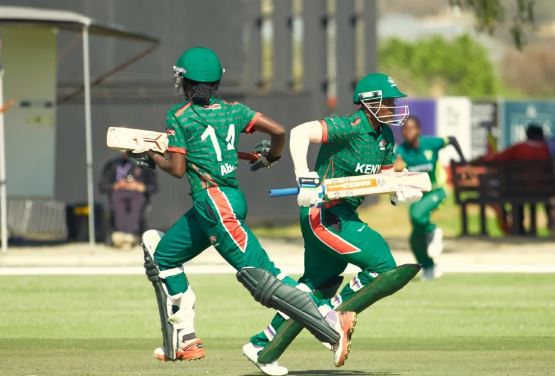
 Cricket Kenya./FILE
Details have now emerged of the frantic legal battles Cricket Kenya fought—and survived—in the days leading up to Sunday’s decisive elections at Ruaraka Sports Club in Nairobi.
In what insiders describe as a week of “siege”, the federation battled at least five separate suits across four different courts, all seeking to halt the polls.
The elections were widely seen as the last chance to save Kenyan cricket from international sanctions.
By Tuesday—barely five days to the elections—one of the petitions had succeeded in the High Court in Nairobi, with ex parte orders issued stopping the polls.
The development sent shockwaves through the sport, raising the real prospect of a ban by the International Cricket Council (ICC).
Such an outcome would have been catastrophic.
The aborted elections in February had already triggered the ICC to suspend funding to Cricket Kenya, and failure to conduct fresh polls risked being the final nail in the federation’s coffin.
The federation has been rocked by months of governance wrangles and repeated warnings from the global body.
The initial petition was filed by Julian Kathure and David Obuya, but it quickly became clear that this was only one front in a broader legal offensive.
Multiple litigants moved to court, each seeking to derail or influence the electoral process.
Former Cricket Kenya Vice Chairman Kalpesh Solanki was among those who filed suit, seeking to be reinstated as a candidate after being barred from contesting.
He argued that if his application is not accepted, then the elections should be postponed until the legal battle against his suspension is determined.
However, Justice Wilfred Okwany dismissed his application for want of jurisdiction, directing that the matter ought to have been filed before the Sports Dispute Tribunal.
Crucially, the judge underscored the high stakes involved in delaying the elections.
“On a balance of convenience, I note that the respondents have demonstrated …that failure to conduct elections may expose Cricket Kenya to sanctions by the ICC, raising significant public interest considerations,” she stated.
In a separate case before the Sports Dispute Tribunal, Tom Shikolo—himself a candidate—for Chairman sought orders to allow counties that had been barred from participating in the elections to take part.
The legal drama stretched right to the wire.
On Friday evening at 7:45 PM, Justice R.E. Aburili delivered a decisive ruling, lifting the earlier ex parte orders that had threatened to derail the elections.
The court found, among other issues, non-disclosure of parallel cases seeking similar relief.
“…the exparte conservatory orders issued on 14/4/2026 be and is hereby vacated, discharged and set aside. That Cricket Kenya schedule elections for 19/4/2026 shall proceed as scheduled unhindered,” Aburili stated in the judgement.
In Kisii, Justice Odera Achieng went further, sharply criticising the petitioners for what she termed abuse of the court process.
She warned against the growing trend of filing multiple suits in different courts to achieve similar outcomes.
“This proliferation of parallel proceedings offends the doctrine of sub judice and bears the hallmark of forum shopping,” she stated.
“Such conduct must be deprecated in the strongest terms, as it risks generating conflicting decisions from courts of concurrent jurisdiction."
Inside Cricket Kenya, the sense of relief was palpable after what one source described as an extraordinarily tense week.
“Basically we were under siege. People were just dashing to court to try and stop the elections knowing they were holding us hostage,” the source said, adding that for some, it was better Kenya burnt permanently by the ICC.
The successful defence of the electoral process now offers a lifeline to the embattled federation.
Just over a month ago, the ICC had frozen funding to Cricket Kenya following the collapse of the February elections.
Two weeks ago, Cricket Kenya Chief Executive Officer Ronald Bukusi maintained that the fresh polls were the final step in a reform roadmap agreed upon by the ICC, the Ministry of Sports and the Registrar of Sports.
Sunday’s elections, therefore, were not just an administrative exercise—they were a high-stakes test of governance, credibility and survival for Kenyan cricket.