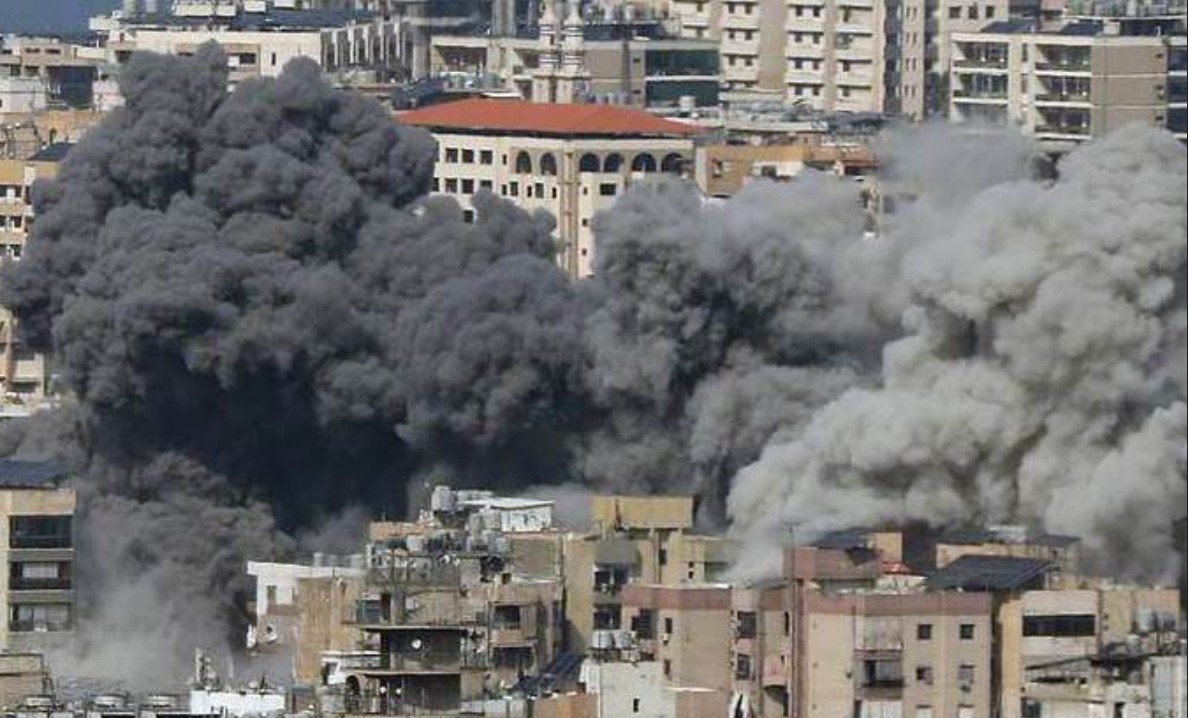
The pattern is difficult to ignore. Successive administrations in the United States, including that of President Donald Trump, have moved from one conflict to another, sustaining a cycle of military engagement that appears, at first glance, economically unsustainable. Wars are, by nature, destructive and extraordinarily expensive. They drain public resources, destabilise regions and leave long-term political consequences. Yet despite decades of continuous military involvement across different regions, the United States has not collapsed under the weight of these costs. The question is not whether war is costly, but how those costs are managed and, more importantly, distributed.
The answer lies in the structure of global power. The United States does not bear the burden of its wars alone. Instead, it operates within a system that allows it to externalise significant portions of the political, economic and financial costs to the rest of the world. This system is not accidental; it is built on alliances, market dominance and institutional influence that together sustain what can only be described as a durable war economy.
First, the political and diplomatic costs of war are rarely carried by Washington in isolation. Through alliances such as NATO, the G7 and the Five Eyes, namely, Australia, Canada, New Zealand, the United Kingdom and the United States, responsibility is distributed among partners. These alliances provide not only military support but also diplomatic cover, helping to legitimise interventions and diffuse criticism. In effect, they transform what might otherwise be unilateral actions into collective decisions, even when the strategic direction is largely driven by Washington. This shared framework reduces the direct political cost while reinforcing a sense of global consensus.
Second, war generates its own economic demand, particularly in the security sector. Military conflicts heighten global insecurity, and insecurity fuels demand for weapons, surveillance systems and defence technologies. This demand overwhelmingly benefits American defence contractors, which remain among the most advanced and well-funded in the world. As tensions rise, countries increase their military spending, often turning to US suppliers. In this way, conflict becomes not just a cost centre, but a revenue stream. The paradox is striking: instability abroad can translate into economic stability at home, at least for certain sectors.
Energy markets provide another layer of advantage. Conflicts in regions such as the Middle East and parts of Latin America tend to disrupt supply chains and push global energy prices upward. At a time when the United States has transitioned into a major exporter of oil and natural gas, these price increases can generate substantial profits for its energy companies. What was once a vulnerability, dependence on foreign energy, has evolved into a strategic asset. Rising prices, while burdensome for many economies, can strengthen the financial position of American energy firms and contribute to domestic economic resilience.
Perhaps the most important factor, however, is the dominance of the US dollar in the global financial system. This monetary power allows the United States to finance its wars in ways that few other countries could sustain. By issuing treasury bonds, it raises vast sums of money that are eagerly purchased by investors around the world. In essence, global demand for dollar-denominated assets enables Washington to spread the financial cost of its military activities across the international system. Other countries, by holding these assets, indirectly support the funding of US expenditures. It is a system that turns financial trust into strategic leverage.
Taken together, these mechanisms explain why the United States has been able to sustain successive wars without immediate economic collapse. The costs are real, but they are diffused. They are shared across alliances, embedded in global markets and absorbed by a financial system structured around the dollar.
Yet this system is not without limits. Signs of strain are becoming increasingly visible. Domestically, political divisions are deepening, and public tolerance for prolonged conflicts is not infinite. Internationally, allies are beginning to question the arrangement. Calls for greater strategic autonomy, particularly from countries like France, reflect a growing desire to reduce dependence on US-led security frameworks. This shift, while gradual, suggests that the consensus underpinning these alliances may not hold indefinitely.
Beyond the traditional Western sphere, the Global South is also rethinking its position. Discussions around de-dollarisation are gaining traction, as countries explore alternatives to a financial system that concentrates power in one currency. Some nations are experimenting with new mechanisms, including the use of digital currencies in trade. Iran, for example, has explored such approaches as a way to navigate financial restrictions. These developments, while still emerging, point to a broader search for economic sovereignty.
Importantly, none of this suggests that the current system will collapse overnight. The structures supporting US power remain deeply entrenched, and change in global systems tends to be uneven and slow. However, history shows that even the most stable arrangements can shift rapidly once certain thresholds are reached. What appears permanent can, under pressure, transform with surprising speed.
For the Global South, including Africa, the implications are profound. This is not merely a question of geopolitics; it is a question of economic strategy and long-term development. Relying on a system that externalises costs may offer short-term stability, but it also carries inherent risks. As the global landscape evolves, there is a growing need to think beyond existing frameworks and to imagine alternative models of cooperation that are more balanced, inclusive and sustainable.
The era of successive wars sustained by diffused costs may not end abruptly, but its underlying assumptions are being tested. For those willing to look ahead, the real challenge is not simply to understand this system, but to prepare for what comes after it.
The writer is a journalist and communication consultant