As is always the case, the politics of the Middle East, especially the Gulf countries, impact global economics. Nations are affected because of the reliance on oil as the primary source of energy yet the Gulf region supplies more than half of global oil consumption.
Therefore, when the United States declared and commenced war against the state of Iran, it was anticipated that oil prices would skyrocket. This is what happened, despite reassurances from the US government and many consumer countries.
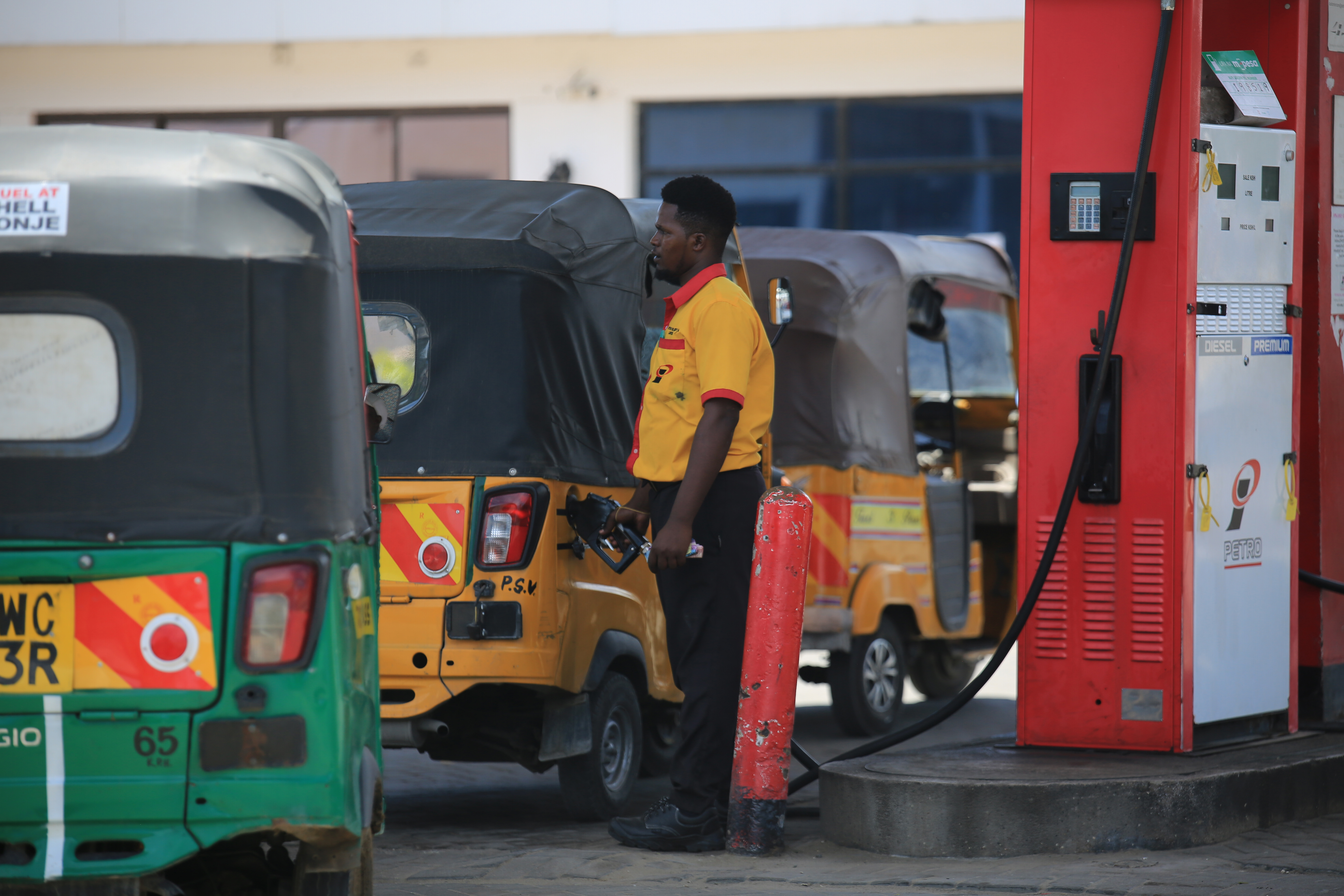
However, as the war escalated, the Strait of Hormuz was closed. This stopped the free flow of oil supplies to the rest of the world. Many countries immediately witnessed a sharp rise in crude oil and its products. Kenya suffered the same fate and proportionately adjusted pump prices.
The rise in the cost of the vital commodity already had been preceded by an acute shortage. However, the presidential intervention on Wednesday, April 15, reversed the shock and eased the burden on the citizens, although not significantly.
Every cloud has a silver lining. There is always an opportunity lurking in any crisis. The current oil crisis has presented a unique occasion for Kenyans to discuss candidly the pitfalls of reliance on oil as its primary source of energy.
Thankfully, the government has made critical policy decisions in this regard. These decisions would catalyse the discussions and make the debate more informed.
The government has undertaken projects to diversify the sources of energy. It should be noted that mega energy is required for industrial production and manufacturing.
Diesel and related oil products have been the largest source of this energy. The country also has a large segment that comprises the small-scale consumers that are fully reliant on combustive oil products. These include mainly those in the transport industry, both as commercial or private. Kenya’s transport mode for people is overly in public service vehicles.
Consequentially, any fluctuation in the cost of diesel and petrol has direct impact on the cost of living. Many households still depend on paraffin for cooking. Any slight increase in cost strain family incomes. Deliberate efforts are being made to switch entirely to renewable energy. This includes introduction of electric vehicles for transport.
Reliable electricity supply is crucial for effective national development through industrialisation, but more importantly, the relative of energy for manufacturing must be economically viable. It is for this reason that under the Vision 2030, stakeholders are consciously debating the inclusion of mega producers of electricity such as nuclear energy.
After Independence in 1963, Kenya's main source of electricity was hydropower, which served as the backbone of the national grid for several decades. While hydropower was the primary source, thermal power (diesel-based) was also used, particularly during periods of low rainfall. Hydropower is primarily drawn from stations along the Tana River, such as the Seven Forks Scheme.
Thermal oil was a supplementary source, which became more prominent during the 1990s due to drought-related failures in hydropower. While research began earlier, large-scale exploitation of geothermal energy at Olkaria was developed later to reduce the risk of reliance on hydropower.
These sources remained inadequate, leading to importation of energy. Kenya has long relied on importing a portion of its electricity, particularly from Uganda, to meet demand. Reliance on hydro is risky as the country is vulnerable to drought, leading to a later push for diversification into geothermal, wind and solar, which now dominate the energy mix.
In a bid to make power energy from electricity affordable and sustainable, the government has heavily invested in alternative source of generation from natural resources. The most notable are the hydroelectric and geothermal power plants.
Energy, which includes electricity, is one enabler of economic growth. Specifically, Chapter Two of Kenya’s Vision 2030 classifies energy under the foundations for socio-economic transformation and as an infrastructural enabler of the pillars of the Vision.
In the last 25 years since 2000, electricity generation has experienced both significant expansion in quantity and variety of sources driven partly by growing demand and climate change concerns.
However, reliability remains a major concern. Until 2015, the two major sources of electricity were thermal oil and hydro, accounting for 48.3 and 42.9 per cent, respectively, adding up to 91.2 per cent of domestically generated electricity.
Geothermal was a distant third with a share of 8.8 per cent. While renewable sources still accounted for the majority of electricity (51.7 per cent), thermal oil was the single largest source of electricity at 48.3 per cent. Thermal oil is a non-renewable source and contributes greatly to carbon emissions into the environment.
Over time, the amounts of electricity from thermal oil declined by 30 per cent, resulting in the contribution of renewables rising from 51 to 85 per cent. This substitution of high-carbon non-renewable sources with low-carbon renewable sources is a clear indication of actual de-carbonation in electricity generation.
Increased investments in renewable energy saw wind as a primary source move above thermal oil. Together with solar, their combined contribution increased to 18 per cent by 2024.
However, the contribution from hydro and geothermal sources is far less than required for the industrial leap. This has reignited the debate and push for nuclear energy as a more stable and cleaner source for the national development agenda. Ironically, the war in Gulf has been objectified by the United States and allies as a deterrent measure against nuclear energy development.
They justified this by claiming Iran is accused of building nuclear technology for war arsenal, a claim for which evidence is lacking and which key experts dispute. World political stability is necessary for the economic prosperity of everyone, and this can only be assured by the absence of imminent threat of attack on any nation by another.
Kenya has recently enhanced her initiatives at developing nuclear technology for energy generation. These are meant to address the huge power demands necessary for industrial development. A plan to build Kenya's first nuclear power plant is in top gear in Siaya county. In 2017, the Nuclear Power and Energy Agency (NuPEA), formerly the Kenya Nuclear Electricity Board (KNEB), estimated that a 1,000MW nuclear plant could be operational by 2027 and cost Sh500-600 billion.
It will be located near a large body of water, such as the Indian Ocean, Lake Victoria or Lake Turkana. It is planned that by 2030 Kenya would have installed a capacity of 4GW of nuclear energy, generating 19 per cent of Kenya's energy needs. This means nuclear power would be the second-largest source of energy, following geothermal power, a clean form of energy. The NuPEA is in charge of spearheading this sector.
The initiative will position Kenya as a regional hub for advanced nuclear science, research and STEM education in East Africa. The economic and energy benefits of nuclear power include reliable baseload power providing a consistent 24-7 power supply, reducing frequent blackouts and dependency on weather-dependent sources like hydro and wind.
Investors will have the opportunity to venture into mass transport systems in the railways, water and electric public and private vehicle transport. This development will greatly reduce, if not eliminate, reliance on combustive oil as the primary source of energy for transport services.
Nuclear technology facilitates food preservation through irradiation, which extends shelf life and improves food security by reducing post-harvest losses. It will also promote nuclear medicine for early diagnosis and treatment of cancer and the sterilisation of medical equipment.
Nuclear is one of the cleanest energy forms, emitting virtually no greenhouse gases during operation, thus supporting Kenya’s climate change goals. Large-scale energy generation of 1,000MW by 2034 and as much as 20,000MW by 2040 is expected to spur industrial growth by lowering electricity costs for manufacturers, making Kenyan products more competitive. This will also eliminate reliance on electricity imports from neighbouring countries such as Ethiopia and Uganda.
Industrial development will lead expanded job creation and improved livelihoods. At the same time, the construction and operation of a single 1,000MW plant is estimated to create 5,000 to 10,000 direct and indirect jobs for technicians, engineers, and support staff.