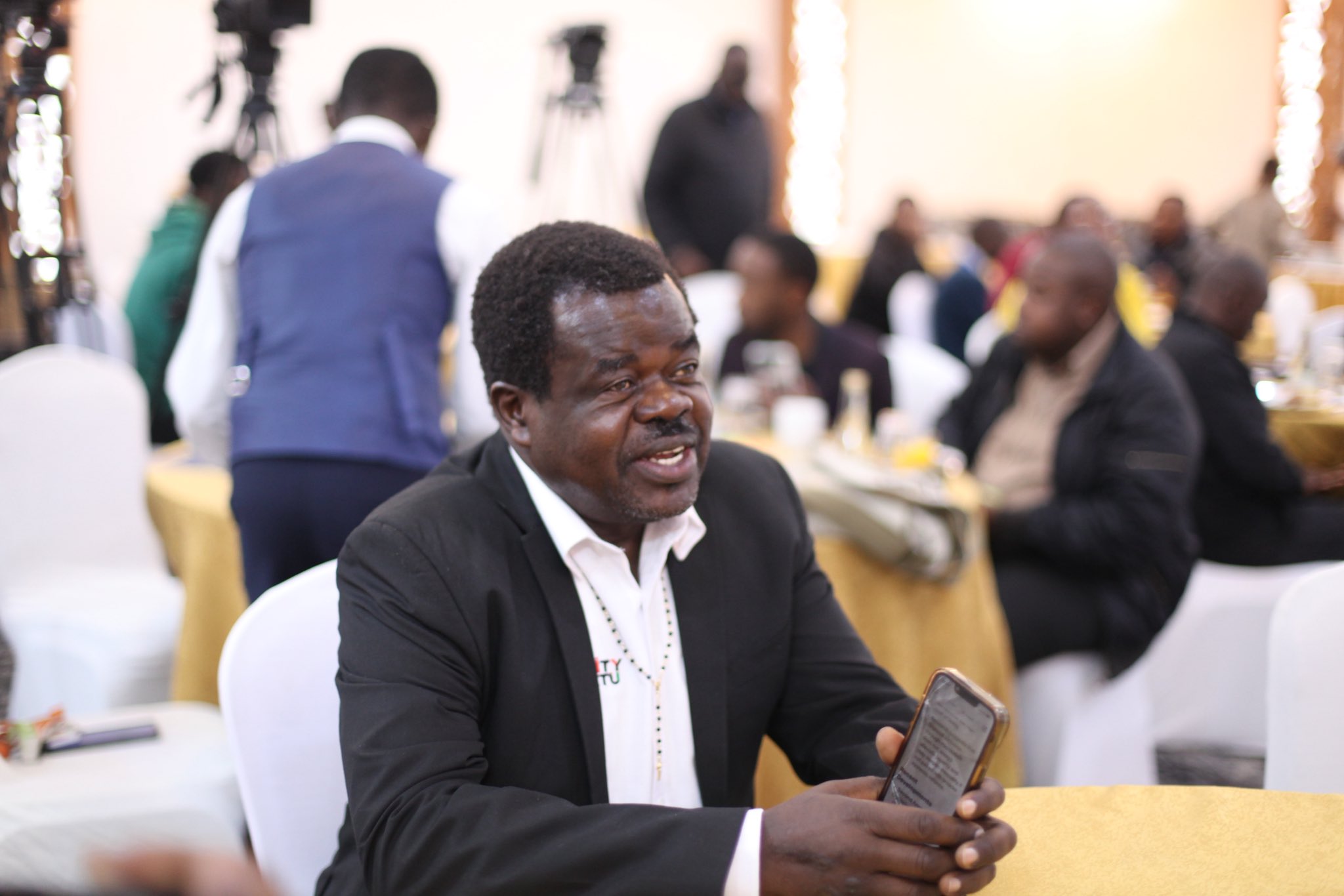
Senator Okiya Omtatah, Adrian Kamotho Njenga, Isaac Aluochier, Dr Magare Gikenyi, Katiba Institute, Kenya Human Rights Commission, Law Society of Kenya. Have you ever wondered how these people and organisations can go to court about the constitution when they will not be personally (or institutionally) affected by the result?
It would not (normally) be possible to go to court to enforce a contract that you were not a party to, or affected by, to get a divorce for someone else, or damages for road accident victims when you were not yourself hurt.
And until 2010 it would not have been almost possible to do that for breaches of the constitution either.
It used to be a crime to support another person to sue, and even more serious to assist in return for a share of proceeds of the action. This is no longer true. But courts were equally keen on preventing people coming to court for cases that were not personal. In fact, courts said only the Attorney General could bring a case on behalf of the public and not even by an affected person if they were not affected any more than the public generally. You may imagine how likely it was that a Kenyan AG, closely tied to government, would actually bring any such case against government.
Gradually courts in various countries relaxed this approach a bit, if public interest was involved, even in a few cases in Kenya.
India – and South Africa
For Kenya the story really begins in India. It began in 1978, when the Indian judiciary – under criticism for having been too pro-government during Prime Minister Indira Gandhi’s emergency period in 1975 – began to assert itself on behalf of the people. The first case was about enforcing law requiring local authorities to provide sanitary services. So not about the constitution.
The Indian Supreme Court (Gupta “judges’ case”) has been quoted in Kenya. They said, “The strict rule of standing that only a person who has suffered a specific legal injury can maintain an action for judicial redress is relaxed and a broad rule is evolved which gives standing to any member of the public who is not a mere busy-body or a meddlesome interloper but who has sufficient interest in the proceeding.”
The Indian courts went further. Judges have occasionally themselves begun cases on issues they have become aware of. Courts have allowed individuals to begin cases by informal letters to the courts. One of India’s greatest lawyers, Prof Upendra Baxi, likes to call it Social Action Litigation – viewing it as a form of activism.
The drafters of the South African constitution picked up the basic idea and said that anyone (including organisations) may go to court to enforce human rights.
2010
The Kenyan Constitution also says that anyone may bring a case on the basis that human rights have been denied or violated or are about to be - and not just for themselves but on behalf of another person who cannot act in their own name, as a member of a group acting in the public interest; or an association in the interests of its members (Article 22). It also says that rules must say that the courts may entertain proceedings on the basis of informal documentation (it hasn’t happened).
It also recognises a very wide range of human rights – so there is more potential to use the constitution in this way. Particularly striking is recognising the right to a decent environment –bringing much of environmental law under human rights, and thus under the protection of public interest litigation (PIL).
It takes the same approach to other situations involving the constitution (Article 258) – so PIL is not just about human rights.
Impact
I scanned the cases in which final judgment was given in the High Court in Nairobi on constitutional issues last year. I mention just a few.
Most cases are brought by affected people, not as PIL. Very often they do not involve new issues, nor lead to new law – though sometimes cases brought by affected individuals do also have wider implications.
Cases brought by organisations or individuals not personally effected tend to cover much broader issues. Indeed the petitioners will usually chose their cases very carefully – “strategic litigation”. (This is not to say that these cases never fail. Several public interest litigators I mentioned had cases rejected last year).
Several cases related to the 2024 Gen Z demonstrations, and the police response. Katiba Institute obtained a decision that a press statement by the Inspector General of Police, “suspending” the right to assemble, demonstrate, picket and present petitions in Nairobi city centre, was unconstitutional. The LSK obtained a judgment that using police with faces covered to confront demonstrators was unconstitutional, as was using vehicles of which the identity was concealed.
Senator Omtatah was successful in arguing that imposing limits on the time for the National Land Commission to deal with historical injustices was unconstitutional.
Our very old-fashioned Penal Code is overdue for a major overhaul. Meanwhile the courts are playing a role in modernising it. The Kenya National Commission of Human Rights obtained a High Court decision that the offence of attempting suicide is unconstitutional – an issue much discussed and the subject of a current private member’s bill before Parliament. And, this year, the LSK obtained a decision that the provision making it an offence to “brawl or in any other manner create a disturbance in such a manner as is likely to cause a breach of the peace” is too vague and an infringement of the right to freedom of expression, therefore unconstitutional.
Several cases involved decisions on issues of administration – how government should be run under the constitution. So, the High Court ruled that it was unconstitutional for the head of the public service to hold office at the whim of the president (a case brought by Dr Gikenyi).
The LSK obtained an order that guidelines for terms of service of statutory corporations was the responsibility of the Pubic Service Commission, not the president.
Two Nairobi residents obtained an order to the Nairobi county government to appoint a substantive county secretary (having had only acting secretaries for more than six years).
Katiba Institute obtained two court decisions on privacy, including that it was a violation to require all mobile phone users to disclose the International Mobile Equipment Identity of their phones to KRA, at least without guidelines on the use of this personal information.
When can cases be rejected?
Most cases that fail do so because the court is not convinced that any breach of the constitution has been proved.
Sometimes the court says that the case does not need to be a constitutional one – some other area of the law is the relevant one.
They also say things like courts should not accept a case unless the person bringing the case is acting “bona fide with a view to vindicating the cause of justice … not … act for personal gain or private profit or out of political motivation or other oblique consideration.”
An interesting Indian example was the rejection of a case that complained that a new statue of Mahatma Gandhi made him look miserable.
The constitution gives a central role to the courts in protecting the constitution. Since our judges do not start cases themselves, it is necessary for concerned citizens and organisations to bring the cases forward.
PIL makes this possible. Not all cases succeed. Some are no doubt misguided. Some may be reversed on appeal. Some will be ignored, especially by government. But overall it has made a radical difference to the role of the courts and the people. The decisions and, perhaps, the publicity caused by the cases, have been major factors in upholding the constitution.