It is a cold Tuesday evening in the streets of Wuhan in March, yet nothing about the atmosphere suggests a city that once stood still under the weight of a global crisis.
The air is rich with the scent of sesame paste and sizzling spices, streetlights glow against the dusk, and life moves with an energy that feels both ordinary and extraordinary.
Car horns echo in soft tones, never harsh, just part of the city’s living pulse.
At first glance, no one would know that this city of over 14 million people was once at the centre of a pandemic that changed the world.
Today, Wuhan hums again, alive, vibrant and unapologetically forward-looking, not trapped in the memory of headlines anymore.
Not everyone here wants to revisit those early days.
Some of the people I approached to speak about Covid-19 lowered their voices or declined altogether.
The subject remains sensitive, tucked away in quiet corners of memory.
A taxi driver named Si Xuedong from Beijing city politely but firmly declined to discuss the pandemic at all.
When I asked how he would describe Wuhan to a friend abroad who only knows the city from crisis headlines, he pointed to a camera installed on his vehicle.
Then he typed into his phone and showed me: “Political sensitivity. Those are topics that cannot be discussed.”
But others were surprisingly open.
Yet even in that silence, there is a powerful message: Wuhan has moved on; it has made a remarkable comeback.
PRIDE AND HEROISM
In many ways, the city feels untouched by tragedy.
On this particular day in the heart of the city centre, the streets are bustling with commuters, vendors softly call out to customers and restaurants overflow with laughter.
Between 5pm and 8pm, a particularly heartwarming ritual unfolds. Groups of elderly men and women gather outside residential buildings, dancing to Chinese music from portable speakers.
They move with ease, dressed in fitted trousers, carefree and smiling, embodying a quiet resilience.
Inside a modest restaurant, I meet Chen Wui, 27, who works in the chip-making industry.
The language barrier meant we kept exchanging phones, typing into a translation app, I in English, he in Chinese.
When I asked about the origin of the virus, he grew careful but not silent.
He has lived here for eight years, but like many others, he is reluctant to dwell on the past when I asked him about how it started and how they managed to cope with it.
“No one knows exactly how it came,” he says, before sharing a theory he has heard. “I heard it was brought by American soldiers who were here in 2019 for the military games.”
But what stands out more than speculation is his pride.
“We managed to control it because we are a very strong country,” he adds, raising his hand slightly in emphasis.
That pride is echoed across the city, not in loud declarations but in the quiet confidence of people going about their lives.
Our tour guide in this city, Jojo, is equally reserved.
When I ask if she can take me to the Huanan Seafood Wholesale Market, widely believed to be linked to the early outbreak, she brushes it off gently.
“It is far…very far from here,” she says, steering the conversation elsewhere.
Yet, while some prefer distance from the past, others are eager to reshape Wuhan’s story.
The official narrative, repeated by guides and government media alike, is that Wuhan is a ‘city of heroes’.
But heroism here is not a slogan. It is embodied by men like Li, 40, whom I met at a motor scooter parking lot along a street next to the Holiday Inn Express. He was waiting for a delivery customer.
At first reserved, he gradually opens up, even asking where I come from.
After a brief introduction, he became so warm that he dipped his hand into his jacket pocket and pulled out a packet of cigarettes.
“Do you smoke?” he asked in Chinese.
“No,” I responded, and he shrugged and smiled anyway.
That is the thing about people here: Everyone shares whatever they have, however small.
Li does deliveries using his scooter.
Before his phone buzzed with an alert, he asked me a question that cut through every fear a visitor might carry, “Do you like Wuhan?”
Then he insisted I try reganmian, hot dry noodles, plus a delicious duck head, and visit the Yangtze River Bridge, built with help from the former Soviet Union.
He spoke of these things not as a tour guide but as a man showing off his home.
“People should not fear this city,” he says simply, before excusing himself to rush off to complete a delivery.
3,500-YEAR HISTORY
That sense of openness is something many visitors notice quickly.
Other residents, including little children walking with their parents, couldn’t stop staring, probably wondering what kind of people we were.
They just kept staring at us and smiling as we passed, like we were some kind of moving attraction.
Zhou, 26, who lives a few kilometres from the city but works in Beijing, offers a deeper perspective when I ask how she would describe Wuhan to someone who only knows it from pandemic headlines.
“Wuhan is a famous historical and cultural city with more than 3,500 years of history,” she explains, voice carrying both knowledge and pride.
“It is the cradle of Chu Culture and the birthplace of the 1911 Wuchang Uprising.”
She speaks of a city formed by the merging of Wuchang, Hanyang and Hankou, strategically located at the meeting point of the Yangtze and Han rivers, a place that has long been a hub of trade and connection.
Zhou recalls the early days of the pandemic vividly.
“The city fell quiet with empty streets and all public transport suspended. Only medical workers and supply drivers moved around,” she says.
Yet even then, there was unity.
“Neighbours shared food and supplies through closed doors. Small acts of kindness made us feel connected,” she says.
That spirit of community remains one of Wuhan’s strongest legacies.
Today, the city honours its past while embracing its future.
Memorial halls, annual ceremonies and quiet personal rituals ensure that those who were lost are not forgotten.
During festivals, Zhou says residents leave flowers and light candles, keeping memories alive in deeply personal ways.
PAST MEETS PRESENT
What surprises many visitors is how seamlessly Wuhan blends its past with its present.
“Many foreigners are surprised by its modern bridges and vibrant city life mixed with ancient culture,” Zhou says.
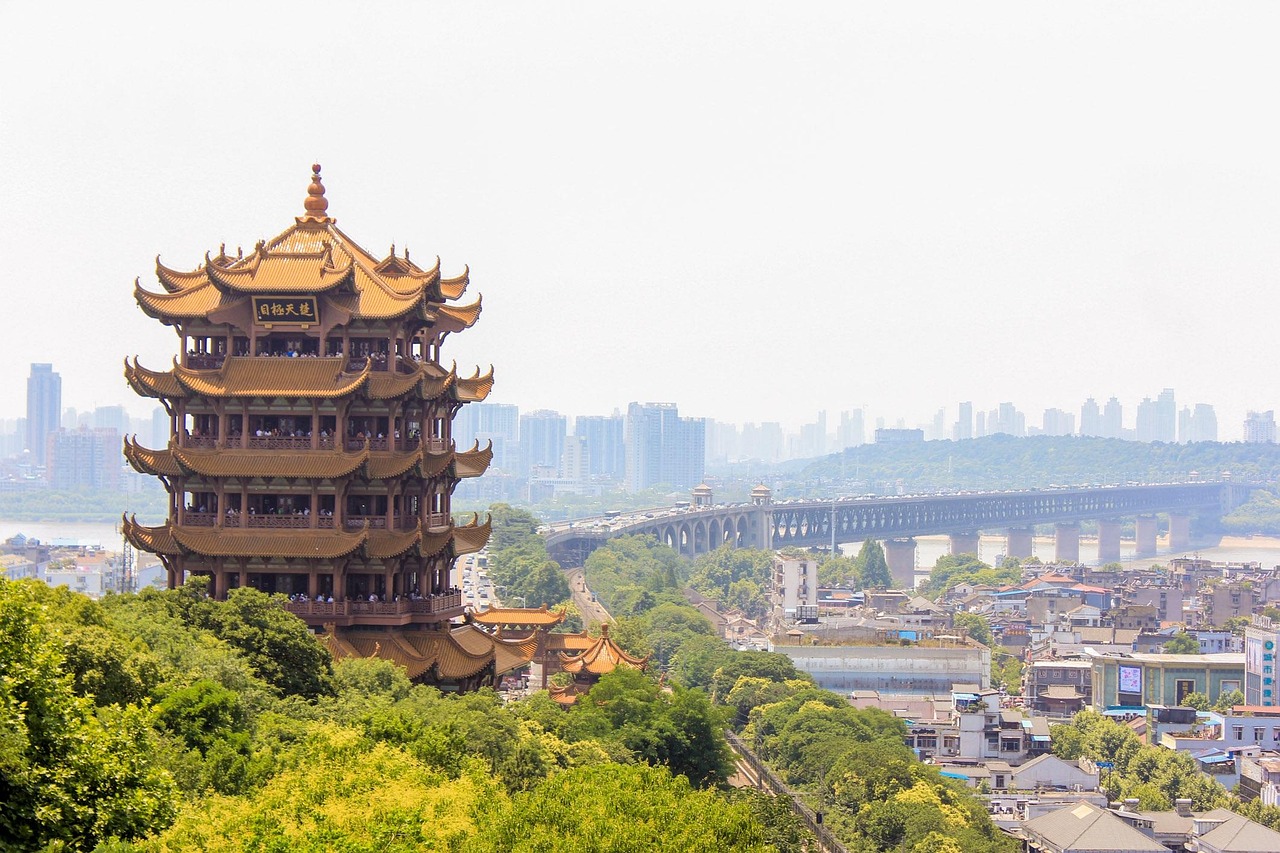
From the grandeur of the Yellow Crane Tower to the calm beauty of East Lake, the city offers a richness that goes far beyond its pandemic narrative.
When asked what she hopes the world would understand about Wuhan, Zhou’s answer is both simple and profound.
“I hope people understand the courage, unity and resilience our city showed,” she says.
But beyond history, it is the everyday experiences that define Wuhan today.
Food, for instance, is central to the city’s identity.
Zhou recommends the century-old snack streets in Wuchang, where visitors can try hot dry noodles, reganmian, alongside soup dumplings and tofu skin delicacies.
She highlights Jiqing Street for its lively night food scene and Cai Linji for its iconic noodles.
“Hot dry noodles are a must. They are a Wuhan breakfast staple,” she insists.
For first-time visitors who may arrive with hesitation, Zhou believes the welcome itself changes everything.
“I greet them with a warm smile, help them with directions and introduce them to local food. I let them know they are welcome and safe here,” she says.
The past is not erased, but it is carefully held.
In the early days of the outbreak, Wuhan became a symbol of rapid response.
The construction of the Leishenshan Hospital, a 1,600-bed facility built in just 12 days, captured global attention.
Today, we were told the site stands largely unused, its prefab structures behind fences, slowly being reclaimed by nature.
It is a quiet reminder of a moment when urgency defined everything.
Behind the headlines were ordinary people making extraordinary sacrifices.
Wuhan didn’t just survive; it came back stronger.
Walking through its streets today, that strength is visible everywhere: in the laughter of families, the rhythm of evening dances, the generosity of strangers and the quiet determination to keep moving forward.
Wuhan is no longer just a place remembered for a crisis. It is a city that has reclaimed its story, one meal, one smile, one moment at a time.
And for those willing to visit, it offers something rare — not just a destination but also a lesson in resilience, and a reminder that even after the darkest chapters, life can return, fuller and brighter than before.