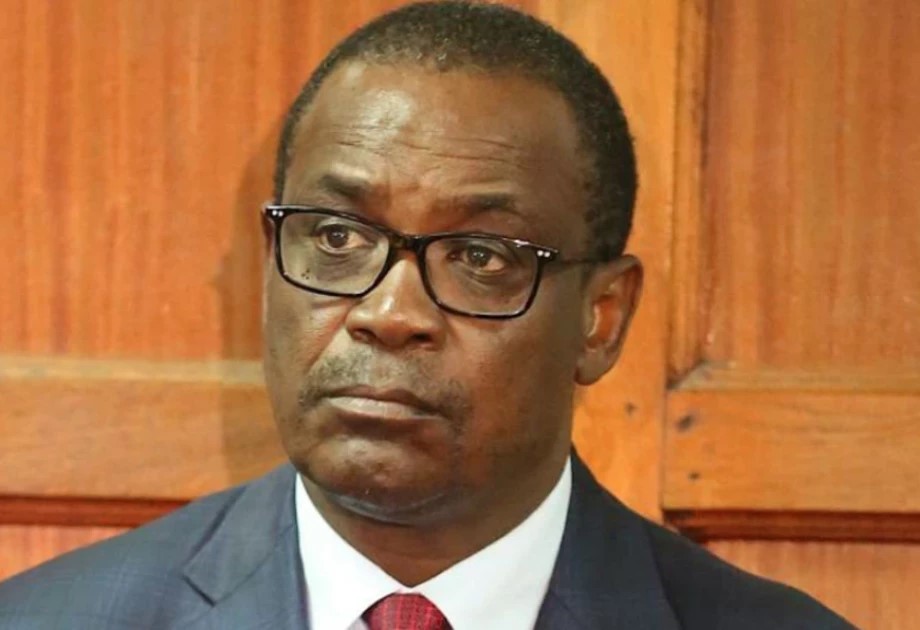
 Former Nairobi Governor Evans Kidero /EACC
The Anti-Corruption Court declined an application by the Director of Public Prosecutions (DPP) to withdraw the Sh58 million graft case against former Nairobi Governor Evans Kidero, instead ordering that the trial proceed to its logical conclusion.
In a ruling delivered by Chief Magistrate Celesa Okore, the court found that the prosecution’s attempt to terminate the case at this stage was premature and not supported by the circumstances on record.
The case revolves around allegations that Sh58 million was irregularly paid by Nairobi City Hall in January 2014 to a law firm for legal services that were allegedly not rendered during Kidero’s tenure as governor.
He has, however, denied any wrongdoing.
At the centre of the decision was the state of the prosecution’s case.
The court said although the matter has been pending for a considerable period, the evidentiary record remains minimal.
Out of 36 witnesses lined up by the prosecution, only six had testified by the time the application to withdraw was made.
The magistrate held that such a limited evidentiary record could not justify the closure of the case, particularly where it was indicated that additional witnesses were available and ready to testify.
“The prosecution lined up a total of 36 witnesses… however, they have only called six. There is much to be covered in terms of the evidence intended to be adduced,” the court observed.
Justice Okore further found that allowing the withdrawal would undermine the court’s obligation to ensure that all relevant evidence is presented before a determination is made.
She invoked Section 150 of the Criminal Procedure Code, which empowers the court to summon or recall witnesses where necessary to arrive at a just decision.
In doing so, the court said continuing the trial would not prejudice the defence, as the accused persons had already been furnished with witness statements and would retain the right to cross-examine any witnesses called.
The magistrate also rejected any suggestion that reopening or continuing the prosecution’s case would amount to filling gaps in a weak case.
She said the strength or weakness of the prosecution’s case can only be assessed after all intended evidence has been presented and tested in court.
“It is important to note that the weakness or strength of the prosecution case is yet to be determined,” she said, adding that proceeding with the hearing would not amount to repairing the case but rather ensuring a fair trial process.
The court further pointed out that there were witnesses already available to testify, based on submissions by the investigating officer and counsel from the Ethics and Anti-Corruption Commission (EACC).
In such circumstances, the magistrate held that the proper course was to direct the prosecution to proceed with calling those witnesses instead of terminating the case.
Ultimately, the court found that granting the withdrawal application would prematurely end the proceedings without giving the court an opportunity to fully interrogate the allegations.
With the application dismissed, the prosecution is now expected to proceed with presenting its remaining witnesses as the trial resumes.