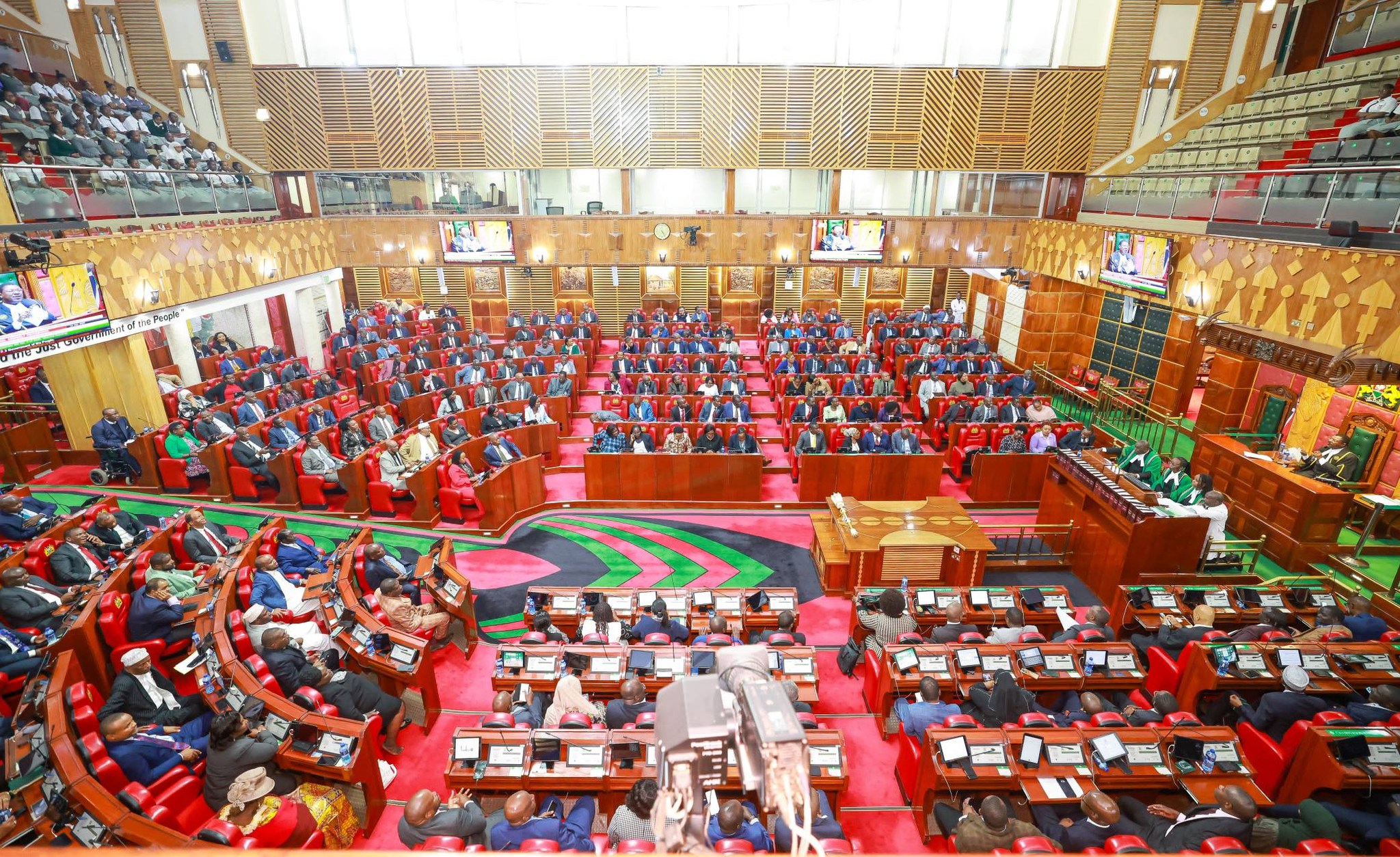
 The National Assembly. /HANDOUT
The National Assembly of Kenya has passed the Value Added Tax (Amendment) Bill, 2026, slashing VAT on petroleum products from 16 per cent to 8 per cent for three months in a bid to cushion Kenyans from rising fuel prices.
The Bill was approved during a special sitting, with lawmakers backing the measure as an emergency intervention to ease the cost of living amid global oil price shocks.
Moving the Bill, Deputy Majority Leader Hon. Owen Baya attributed the surge in fuel prices to external shocks, particularly geopolitical tensions in the Middle East that have disrupted global supply chains.
“Kenya exists within the global financial ecosystem, and therefore the wars and disruptions that have been happening in the Middle East have greatly affected our country. What we have is not domestic policies that have driven up the cost of fuel, but rather international trade dynamics and geopolitics,” Baya said
He said the sharp rise in global oil prices, worsened by geopolitical tensions and conflicts in the Middle East, has significantly increased the cost of importing fuel into the country.
According to Baya, Kenya’s dependence on imported refined petroleum products makes local pump prices highly sensitive to international market trends and exchange rate fluctuations.
“Fuel prices in the current cycle are primarily driven by external economic factors rather than domestic policy decisions,” he said, adding that even slight changes in the exchange rate have a compounding effect on fuel costs due to the large volumes imported.
He told the House that the landed cost of petroleum products had risen sharply between February and March 2026, with diesel and kerosene recording significant increases.
“This clearly confirms that the primary driver of the current increase in fuel prices is the cost at which fuel is imported into the country,” Baya said.
The MP added that the high cost of fuel has a ripple effect across the economy, driving up the price of transport, food and other essential goods.
“Every Kenyan has felt the impact. From farm produce to cooking gas, the cost of living continues to rise,” he said.
The reduction of VAT is expected to directly lower the landed cost of fuel, with ripple effects across key sectors such as transport, manufacturing, and agriculture that are heavily dependent on energy.
Kitutu Chache South MP Antoney Kibagendi welcomed the reduction, terming it a positive step but urged the government to do more to shield households from the high cost of fuel.
“It is a welcome move by the government to reduce VAT, which affects almost every sector of the economy,” Kibagendi said.
“However, more can still be done, including additional subsidies, to further ease the burden on Kenyans.”
Central Imenti MP Moses Kirima challenged the country to fast-track development of its own oil resources to reduce reliance on imports. “If we had developed our own oil. We would not be facing what we are facing now,” he said.
Lawmakers said the tax cut is expected to provide immediate relief at the pump, following recent price increases that pushed fuel costs above Sh200 per litre in several towns.
The passage of the Bill comes after earlier interventions by the government, including adjustments to VAT rates and the use of stabilisation funds to moderate prices.
Members emphasised the need for continued policy measures to cushion consumers, warning that sustained volatility in global oil markets could continue to exert pressure on the economy.
The Bill will now be transmitted for assent, paving the way for implementation of the reduced VAT rate.