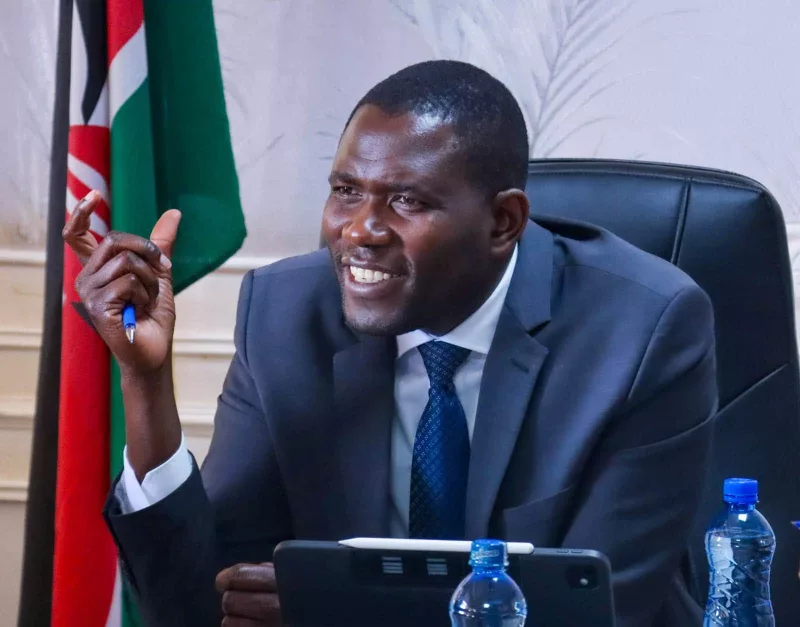
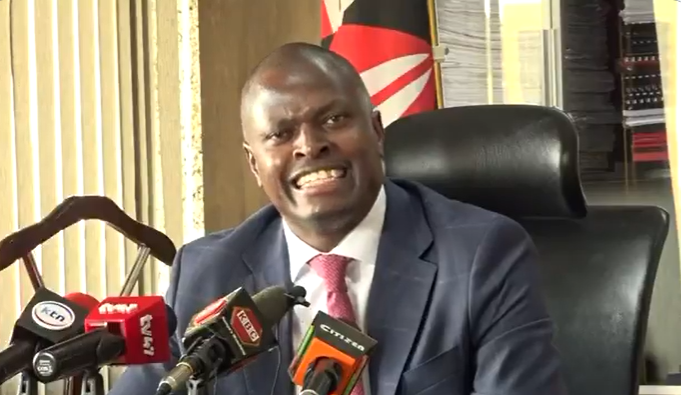
 Kiharu MP Ndindi Nyoro addressing the media in his office on April 15, 2026. /SCREENGRAB
Kiharu MP Ndindi Nyoro’s position on fuel pricing continues to evolve, catching the attention of Kenyans online.
A section of Kenyans have put his current proposals under scrutiny, saying they contrast with positions he previously supported in Parliament.
The debate intensified this week after the Energy and Petroleum Regulatory Authority (EPRA) raised fuel prices sharply.
Super Petrol increased by Sh28.69 while Diesel rose by Sh40.30 per litre, pushing pump prices in Nairobi to Sh206 and Sh206.84 respectively.
Kerosene remained unchanged at Sh152.78 per litre.
The regulator later effected a partial reduction, cutting petrol by Sh9 and diesel by Sh10, following a directive by President William Ruto to lower VAT on fuel to 8 per cent.
Amid the adjustments, Nyoro has advanced proposals he says would ease the burden on consumers. He has called for the removal of taxes and levies introduced under the Finance Act 2023, including the Sh7 fuel levy introduced in 2024 that raised the Road Maintenance Levy from Sh18 to Sh25 per litre.
He has also argued that fuel products should be exempt from VAT in the short term, dismissing an earlier 3 per cent VAT reduction as insufficient.
In addition, he proposed a Sh5 billion increase in the fuel subsidy programme, saying the measures combined could reduce pump prices by Sh27 per litre.
“This is not too much to ask. Kenyans are simply demanding the reduction of levies and taxes to the level they were before 2023,” Nyoro said.
The MP has further criticised the Government-to-Government (G-to-G) fuel procurement framework, arguing that it benefits a few players while other regional economies such as Uganda, Ethiopia, Rwanda and Burundi manage lower prices without similar arrangements.
He has questioned the structure of the deal, claiming that while the Gulf-based suppliers are state-owned, local participants are private entities.
“This level of insensitivity must stop. Kenyans cannot continue to pay political rent at the pump. Enough is enough,” he said.
However, Nyoro’s current position marks a shift from his earlier stance during the passage of tax measures that directly affect fuel pricing.
In June 2024, as chairperson of the National Assembly Budget and Appropriations Committee, Nyoro defended the Finance Bill, 2024, which MPs passed despite widespread protests. At the time, he argued that rejecting the Bill would significantly disrupt government spending.
“If the Bill does not pass Mr Speaker, we would be reducing the budget for the State House by Sh451 million, Defence will be losing Sh7.75 billion, ongoing TVETS in our constituencies will have to shelve that ambition by reducing by Sh800 million,” he said on June 20, 2024.
He also warned that failure to pass the Bill would limit the National Treasury’s ability to raise revenue and fund key programmes, including the coffee cherry fund and NG-CDF allocations.
Nyoro was among legislators who supported earlier tax measures, including the increase of VAT on petroleum products from 8 per cent to 16 per cent under the Finance Act 2023.
At the time, the policy shift was justified on grounds that fuel subsidies were not effectively benefiting consumers.
The contrast between these positions has become part of the broader policy debate on how Kenya should manage fuel pricing, taxation and subsidies.
Some Kenyans have also weighed in on the debate online, expressing mixed reactions to the MP’s latest stance.
“This guy forgets that there are videos of him supporting the things he’s now claiming to have a remedy for,” one social media user said.
Another called for a less political approach to the issue, saying: “This affects us all. Let’s put politics aside and address these serious issues for the sake of future generations.”
Others questioned the approach taken in raising the concerns.
“Izi tactics mkuu… incite them in Parliament, that is the proper channel. Otherwise giving us this information we should treat it as diversion tactics,” another user said.
However, some users expressed support for the MP’s position, with one describing his remarks as “powerful words from a brilliant mind.”
Molo MP Kimani Kuria, chairperson of the National Assembly’s Departmental Committee on Finance and National Planning, has maintained that the removal of subsidies and tax adjustments followed public participation and fiscal considerations.
Kuria attributed current fuel price pressures partly to global factors, including the conflict in the Middle East involving the United States, Israel and Iran, which has disrupted energy markets.
“Before G-to-G, there was no war in Iran; we had seamless importation of fuel but now we are facing a crisis. Let’s not politicise it. We need to find solutions,” he said.
The differing positions highlight a wider policy dilemma facing the country: balancing the need for government revenue with the rising cost of living.
Nyoro’s latest proposals focus on tax reduction and increased subsidies as immediate relief measures, while his earlier stance emphasised revenue mobilisation to sustain public spending.