A procedural dispute over who should preside over the Sh1.3 billion land case involving former Provincial Commissioner Davis Chelogoi and Andrew Kirungu has been resolved, with the court directing that the matter proceed before the original trial magistrate.
This is after Chief Magistrate Lucas Onyina directed that the case remain with the court where the trial had substantially progressed, noting that no successor magistrate had formally assumed jurisdiction in line with the law.
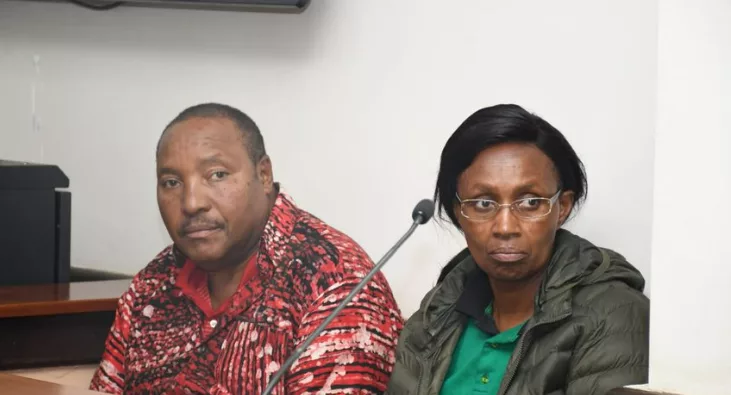
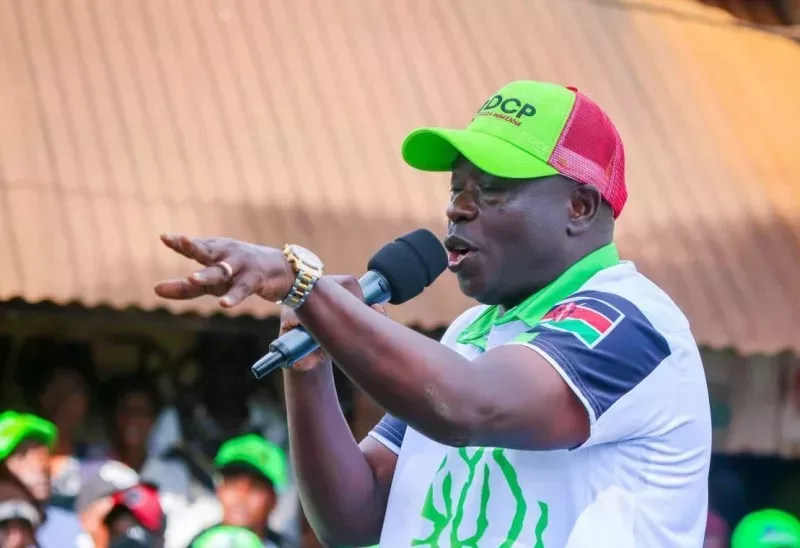
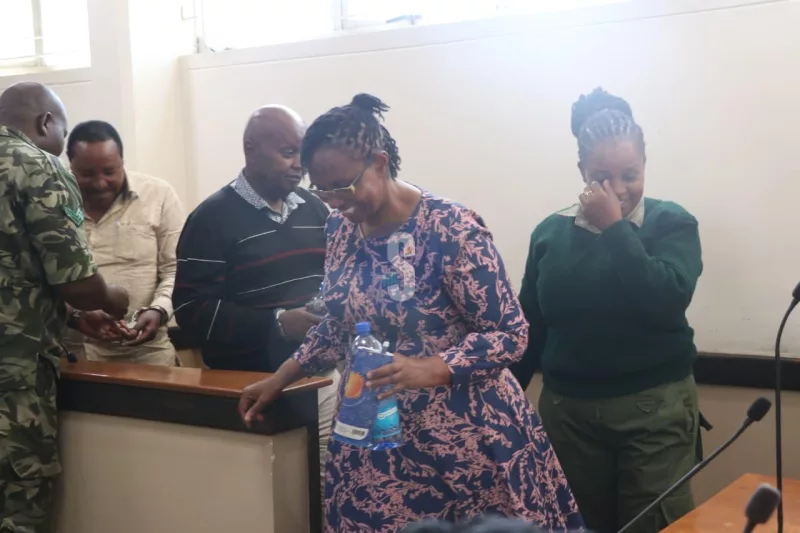
Kirungu is facing charges alongside former Provincial Commissioner Chelogoi relating to the alleged fraudulent acquisition of a parcel of land valued at Sh1.3 billion, said to belong to businessman Ashok Doshi.
They denied the claims.
A magistrate dispute arose after the original trial magistrate, Dolphina Alego, was transferred, triggering uncertainty on whether the case had effectively shifted to another court or remained part-heard.
The matter had reached an advanced stage, with the prosecution already closing its case and the defence hearing underway.
According to the record, the defence hearing had commenced, with Chelogoi taking the stand before proceedings were interrupted by administrative changes within the court station.
The file was initially handled by Chief Magistrate Alego before her transfer.
Following the transition, the matter was mentioned before different courts for directions, with parties raising objections over allocation and jurisdiction.
In his ruling, Onyina held that the case had not been formally transferred to another magistrate and that what had occurred was a transitional administrative arrangement following the transfer of judicial officers across several courts.
He further noted that Section 200 of the Criminal Procedure Code, which governs the continuation of part-heard criminal trials, had not been fully complied with, as the succeeding magistrate had not formally taken over jurisdiction after explaining to the parties their rights regarding recall of witnesses.
The court emphasised that until such procedural steps are properly undertaken, jurisdiction cannot be said to have vested in a new magistrate. "The rationale is quite clear; that a magistrate taking over a matter formally resumes jurisdiction after giving directions under section 200(3) of the Criminal Procedure Code," he said.
As such, the court noted, any attempt to proceed substantively before a different judicial officer would be irregular. Onyina also pointed out that a recusal application on record had not been formally withdrawn, further complicating the procedural posture of the case.
He observed that while courts may be reallocated administratively, parties have no role in selecting the judicial officer to hear a matter.
Citing appellate authority, the court reiterated that Section 200 should be applied sparingly, particularly in cases where a trial is already substantially underway, in order to avoid unnecessary disruption and safeguard the right to a fair hearing.
“The issues raised ought to have been addressed at the point of taking directions under Section 200 of the Criminal Procedure Code,” the court noted, adding that no magistrate had properly assumed jurisdiction over the matter.
The court therefore directed that the matter be returned to the original trial magistrate to proceed with the hearing and conclude the case. Earlier mention dates before other courts were deemed overtaken by events.
With the jurisdiction question now settled, the Sh1.3 billion land fraud trial involving Chelogoi and Kirungu is set to proceed from the defence stage before the magistrate who initially heard the case.