Media stakeholders have called for urgent legal reforms to protect whistleblowers and investigative journalists, warning that rising threats, intimidation, and strategic lawsuits are undermining the fight against corruption.
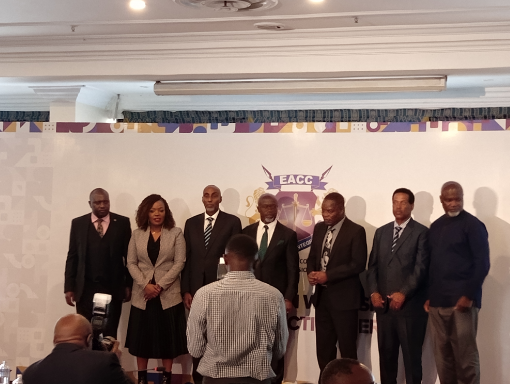
Speaking during an anti-corruption workshop for media practitioners in Nairobi on Tuesday, Kenya Editors Guild (KEG) president Zubeida Kananu said the current environment exposes journalists and sources to significant risks, even when acting in the public interest.
Kananu said while collaboration between the media and the Ethics and Anti-Corruption Commission (EACC) has improved, legal and security gaps continue to hinder effective investigative reporting.
“When KEG and EACC signed the memorandum of understanding, we did not just sign a piece of paper. We signed a pact to protect the soul of this nation from the cancer of corruption,” she said.
Kananu said the nature of corruption has evolved, requiring closer cooperation between journalists and investigative agencies, but warned that such efforts are increasingly being frustrated through intimidation and litigation.
“We are witnessing a rise in strategic lawsuits against public participation, where powerful individuals use the courts to tie up journalists in costly legal battles even before a story is published,” Kananu said.
She called for a legal framework that shields journalists and whistleblowers, arguing that no reporter should be forced to choose between personal safety and exposing the truth.
“No journalist should ever have to choose between their life and their truth,” she said.
Africa Editors Forum president Churchill Otieno echoed the concerns, describing corruption as more organised, adaptive and emboldened than before.
“Corruption is no longer hiding. It is organised, it is networked, and it is learning faster than we are,” Otieno said.
He challenged the media and anti-corruption agencies to strengthen their collaboration and deepen their commitment to accountability, urging journalists to move beyond reactive reporting.
“Are our investigative journeys growing in skill, in courage, in depth? Or are we becoming reactive and chasing headlines?” he asked.
Media Council of Kenya Chief Executive Officer David Omwoyo stressed the need for institutions to actively support journalists by ensuring access to information and guaranteeing their protection.
“We cannot ask journalists to expose corruption if we do not protect them,” Omwoyo said.
He criticised the tendency by public institutions to withhold information, saying it undermines efforts to uncover wrongdoing.
“If journalists are following up on corruption stories, they should not be told ‘we are not at liberty to share that information’. That is the minimum we can do,” he added.
Participants at the forum also raised concerns over emerging digital threats, including the use of artificial intelligence, deepfakes and coordinated online smear campaigns to discredit investigative reporting.
Kananu warned that such tactics are designed to erode public trust even before facts are published, calling for stronger technical collaboration between the media and investigative agencies.
As the calls for reform grow louder, stakeholders emphasised that strengthening legal protections for whistleblowers and journalists will be critical in sustaining credible, independent reporting and advancing the country’s anti-corruption agenda.
Radio Africa Group Digital Editor Francis Mureithi likened corruption to a “slow poison,” warning that its effects, though gradual, are deeply damaging to society and institutions.
Mureithi said the metaphor reflects how corruption quietly erodes public trust, governance, and accountability over time.
“What that means to you, I really don’t know. But I’m just thinking, someone who has been taking slow poison—what does that mean to that person?” he posed, challenging journalists to reflect on the long-term impact of graft.
Mureithi emphasised that for the media, the most critical defence when undertaking investigative reporting lies in adherence to truth and justification.