

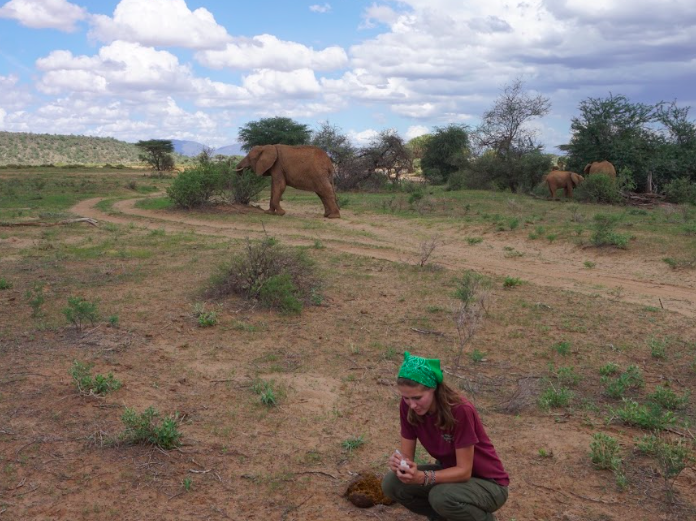
 One of the scientists collecting dung /Save The Elephants.
 Allowing livestock to share land with elephants may be quietly undermining the animals’ health.
When herders move their livestock into northern Kenya’s wildlife reserves, the impact on elephants may extend far beyond competition for grass and water.
A new study has found that simply sharing space with cattle and goats can alter what is happening inside an elephant’s body, disrupting the delicate balance of microbes in its gut in ways scientists say could signal health risks.
The research, led by San Diego Zoo Wildlife Alliance in partnership with Save the Elephants, followed known elephants in Samburu and Buffalo Springs National Reserves for more than a year.
By repeatedly collecting and analysing dung samples, researchers were able to track how the animals’ gut microbiomes — the community of bacteria and other microbes that support digestion and overall health — changed over time.
What they found was striking. As livestock numbers increased in the reserves, the elephants’ gut microbiomes shifted noticeably.
Microbes commonly found in livestock became more prevalent in elephants, while beneficial bacteria declined.
“We observed increases in methane-producing microbes that are typically found in livestock, and decreases in bacteria known to support good health,” the study’s lead author Jenna Parker said.
She said while the exact health effects are not yet fully understood, such changes are rarely a good sign.
“We are not sure if these changes are harmful, but they are concerning because shifts in gut microbiomes often signal health problems,” she said.
The findings, published in Royal Society Open Science, add a new layer to concerns about human pressure on wildlife habitats.
For years, conservation efforts have focused on visible impacts such as shrinking habitats, drought and conflict between people and animals. This study suggests there may also be hidden biological effects occurring within animals themselves.
The research came at a time livestock numbers in these reserves continue to rise, driven by drought and the search for pasture. During dry periods, herders often move animals into protected areas, bringing them into closer and more frequent contact with wildlife.
According to Candace Williams, the findings highlight how closely linked the health of people, livestock and wildlife truly is.
“The health of wildlife, livestock and humans is interconnected, and more work is needed to understand how each affects the others,” she said.
Scientists say the implications could extend far beyond elephants. Livestock now make up the majority of mammal biomass on Earth, meaning similar changes could be occurring in wildlife populations across the globe without being noticed.
For conservationists on the ground, the message is clear: protecting wildlife is no longer just about land and numbers, but also about understanding the invisible systems that keep animals healthy.
As George Wittemyer of Save the Elephants put it, the study shows that human activity can have subtle but significant effects that are easy to miss, yet critical for the future of both wildlife and the ecosystems they depend on.
Instant analysis
This study shifts the conservation conversation from visible pressures to hidden biological impacts. It suggests that coexistence between livestock and wildlife, often seen as manageable, may carry unseen health risks that could affect animal survival over time. For Kenya, where shared landscapes are common, the findings raise difficult questions about how to balance pastoral livelihoods with conservation. Managing grazing patterns and reducing pressure on protected areas may become more urgent. However, more research is needed to confirm long-term health effects before policy shifts can be firmly justified.







