 AI ILLUSTRATION
In the narrow alleyways linking Kinyago village and Biafra in Nairobi, a steady stream of people walks toward Biafra Lions Dispensary.
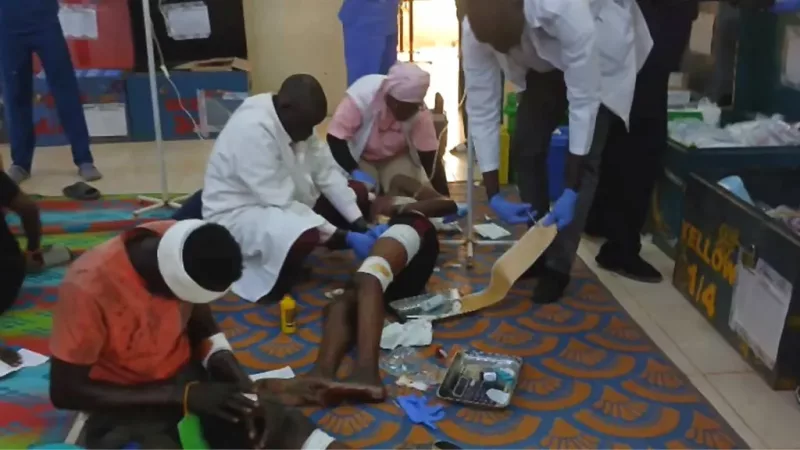
Inside, the public clinic in Kamukunji in Eastleigh South ward is typically crowded, busy, and efficient but off to the side is a quieter, private space.
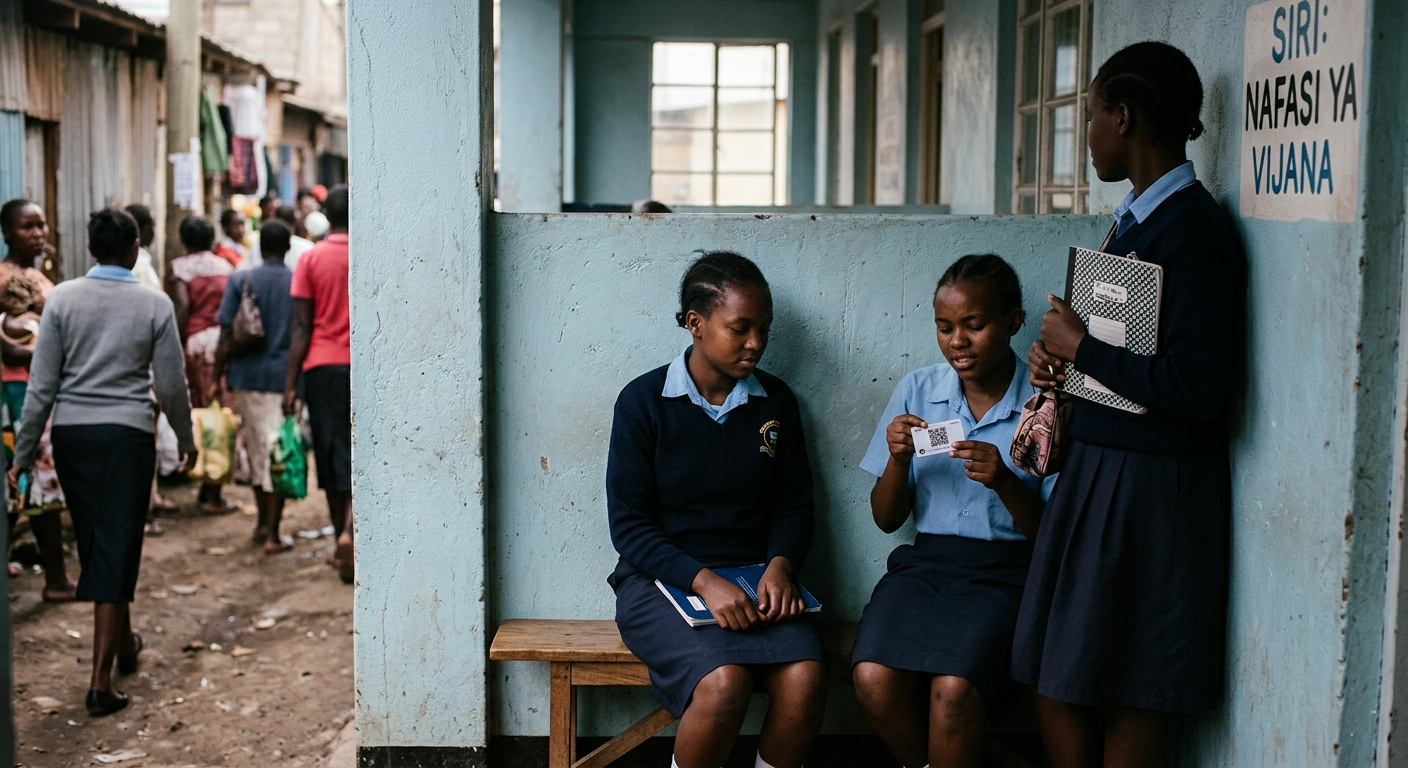
Tucked away from the many patients, adolescent girls wait out of sight, safe from the disapproving stares and whispered questions that often follow young people seeking sexual and reproductive health treatment and advice.
For many of them, a visit to a clinic isn't just about health. It can trigger gossip, judgment, and uncomfortable questions at home and in the community.
Here, however, they slip in and out quietly.
Along a shadowed corridor, some clutch exercise books, others fiddle with small plastic cards that fit discreetly into their hands.
The cards are their entry point to access services: HIV testing, contraception, counselling and support after sexual or gender-based violence.
Each time the card is used, it records the visit, which service was accessed, when and where.
The system runs on mobile phones and QR-coded cards, linking girls to clinics and pharmacies, tracking visits and offering small rewards for participation.
Behind this setup is a bigger issue. Adolescent girls in Kenya face what the Ministry of Health calls a "triple threat": teen pregnancy, HIV infections and sexual and gender-based violence. The numbers are disturbing.
The National Syndemic Diseases Control Council (NSDCC) reports that nearly 100 adolescents aged 10-19 contract HIV every week.
Syndemic refers to two or more diseases or health conditions interacting synergistically within a population, exacerbated by social, environmental or economic factors. They worsen each other’s effects and often lead to a greater burden on individuals and communities.
In 2021 alone, more than 316,000 adolescent pregnancies were recorded.
Data from the 2022 Kenya Demographic and Health Survey show that 15 per cent of girls aged 15 to 19 have been pregnant, while 34 per cent of women and girls aged 15 to 49 have experienced physical and/or sexual violence.
For girls out of school and under financial pressure, the risks multiply. Poverty, idleness, and limited options for work make them more vulnerable to coercion, exploitation and abuse.
In places where stigma, cost and overcrowded facilities make youth-friendly care difficult to access, digital platforms such as Tiko are gaining ground.
Tiko’s Kenya country director, Dr Celestine Mugambi, said the platform was built around the idea that these issues — HIV, pregnancy and gender-based violence — are deeply connected.
“If you treat them as separate problems, you miss the girl at the centre," she tells the Star.
“The system learns as we go.”
She describes the system as “data-driven”, but is vague on exactly how it “learns”.
When asked whether artificial intelligence is involved, she sidesteps the question, saying only that staff analyse patterns and adjust outreach accordingly.
That distinction matters. Tiko relies on user data to guide follow-up and engagement.
At its best, this approach can help reach girls who might otherwise fall through the cracks — a strategy supported by the World Health Organization, Unicef and others.
These data collection systems aren't necessarily neutral.
They can prioritise certain users who are easier to reach, reinforce particular behaviours through incentives, and quietly influence who gets attention and who doesn’t.
Inside the system
On the ground, the system feels personal.
Tiko refers to its users as rafikis, or friends, and that relationship often begins with a trusted person in the community.
In California ward, one of those people is Linda Ogola, a community health promoter and mobiliser who connects girls to the programme. Trust is built slowly, often through word of mouth.
Pendo (not her real name), age 16, met Ogola during a health awareness campaign.
She should be in Grade 10, but lack of fees has kept her at home.
Living in a single-parent household supported by her father’s casual work, she describes long, uncertain days and the pressures that come with them.
"When you are at home with no fees, you start thinking too much,” she said. “Men see that you are struggling and try to take advantage of you.”
Because she does not own a smartphone, Ogola registered her using a QR-coded Tiko card linked to a digital ID, with her father’s consent.
“You cannot force a parent,” Ogola said. “You explain and give them time.”
Between April and May 2024, Pendo attended six weekly counselling sessions and received HIV testing.
Each visit earned her Tiko Miles, non-cash points she can redeem for essentials such as sanitary pads and food, from approved retailers.
But for her, the biggest shift wasn’t material. “It helped me understand my feelings," she said. “I realised I wasn't alone.”
Wanja (not her real name), age 17, joined the programme a year later after Ogola approached her and later spoke with her mother.
Like Pendo, she doesn't have a phone and depends on the card system to access services.
“They did not make you feel like a bad person,” she said. “They encouraged us to focus on school and our future.”
What stands out for her is simple: a place without judgement.
Then there is Daisy (not real name). The 19-year-old joined after her mother noticed she had become increasingly idle. Her first visit was for HIV testing.
She became pregnant and gave birth last December.
Only after that did she begin using family planning services, highlighting a recurring pattern in which care often comes after the risk, not before.
She has since used her Tiko points for baby supplies and has enrolled in a catering course.
These stories reflect real support. They also reveal the limits of the system. The deeper issues such as school exclusion, financial hardship, and structural inequality remain unchanged.
The incentives built into the platform add another dimension. Each visit earns the girls points that can be redeemed for basic goods.
On paper, these lower barriers to care.
In practice, they also shape behaviour.
By tracking how girls use services, the system can adjust follow-ups and rewards, nudging them towards certain actions, such as repeat visits, to ensure they continue getting the rewards.
Research shows that even small incentives can influence decision-making in low-income settings.
When girls can’t afford essentials such as food or sanitary pads, the rewards can make them feel they have to keep coming back, even if they don’t want to.
Tiko said that participation is voluntary and minors require parental consent.
But it is unclear if the organisation tracks whether girls feel compelled to keep engaging in order to access essentials.
Details were not provided about how retailers are chosen and how misuse is prevented.
Then there is the question of data. Every interaction with the system generates personal information.
Tiko says it collects minimal demographic data and complies with Kenya’s Data Protection Act.
Key information, however, remains unclear: where the data is stored, how long it is kept, who can access it and whether third parties are involved.
In communities where girls are judged and often shamed for seeking reproductive healthcare, even basic reproductive health data — such as age, number of clinic visits, and services used — could put them at risk if exposed.
“Every piece of information collected from adolescents is sensitive,” Bonface Otieno, an information technology specialist, said.
In tightly knit communities, something as simple as a clinic visit could expose a girl to judgement and harm if mishandled. And breaches don't always come from outside.
“Sometimes it is not hackers,” Otieno said. “It is people within the system misusing access.”
Without transparency around storage, access, and oversight, it’s hard to know how secure the system really is or who ultimately controls the data.
Beyond privacy concerns, there is still not clear evidence the programme is reducing teen pregnancies, new HIV infections, or cases of gender-based violence.
The platform reported reaching more than 719,000 girls in 2025; it has yet to provide independent data showing direct impact on/of these health outcomes.
Without such verification, it is difficult to measure success beyond participation numbers.
Back at Biafra Lions Dispensary, the queue moves quietly. Names aren't called out. Girls come and go unnoticed. The discretion of the system appeals to them.
But without clear data on concrete outcomes, transparency on how incentives affect decisions, and clarity on how personal information is handled, it’s hard to tell if the system is solving these problems or simply managing them more quietly.
This article was produced as part of the Gender+AI Reporting Fellowship, with support from the Africa Women’s Journalism Project (AWJP) in partnership with DW Akademie. The journalist used AI tools as research aids to review and summarise relevant policy and research documents and extract key statistics. All interviews, analysis, editorial decisions and final wording were done by the reporter, in line with the Star’s editorial standards. IS THERE MORE RECENT DATA THAN FROM 2021?