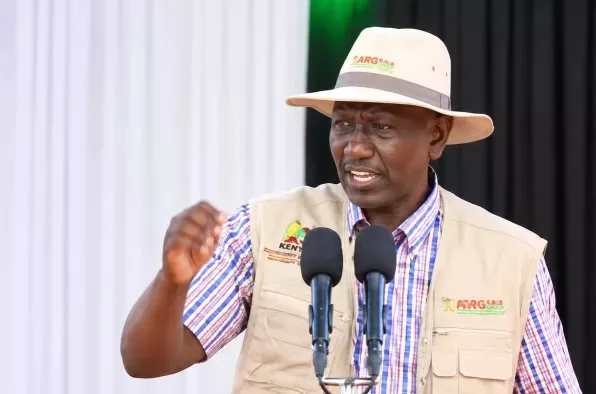
In Kenyan politics, volume is often mistaken for noise. But sometimes, volume is the message. Few figures embody this paradox more than Edwin Sifuna - lawyer, Senator for Nairobi, and Secretary General of ODM.
Whether at the Senate floor, in press briefings and talk shows, or on the campaign trail, Sifuna has built a brand around bluntness, confrontation, and an almost defiant refusal to sugarcoat his critique of government.
To his critics, he is abrasive, theatrical, and needlessly combative. To his supporters, he is authentic, fearless, and refreshingly honest, some may say naïve, in a political culture often defined by caution, double speak and coded language.
Yet to reduce Sifuna to personality is to miss the deeper currents he is tapping into. His politics is not just style; it is substance. It is, in many ways, an attempt - conscious or otherwise - to renegotiate the very terms under which Kenyans relate to the state.
At the heart of this lies the idea of the social contract - the implicit agreement between citizens and those who govern them. Classical political thought offers two powerful lenses through which to understand Sifuna’s posture: John Locke and Jean-Jacques Rousseau.
Locke’s formulation is straightforward: governments exist to protect life, liberty, and property. Their legitimacy is conditional, not absolute. When they fail - when they overtax, underdeliver, or become indifferent to the welfare of citizens - they breach that contract and invite resistance.
It is difficult to miss the Lockean undertones in Sifuna’s persistent attacks on the economic direction of the administration of President William Ruto. His critique of rising taxation, the spiraling cost of living, and what he frames as governance excesses is not merely partisan opposition. It is an argument that the state has overstepped its bounds and must be called to order.
But Sifuna does not stop at accountability in the abstract. His political language - sharp, accessible, and often deliberately provocative—signals something closer to Rousseau. For Rousseau, legitimacy flows not just from protecting rights, but from embodying the “general will” of the people. Governance must reflect the lived realities of citizens, not the insulated logic of elites.
This is where Sifuna’s rhetorical style becomes politically significant. He speaks in a register that resonates beyond policy circles. He collapses the distance between leader and citizen, articulating frustrations in a manner that feels less like representation and more like participation. In doing so, he is not just communicating politics; he is democratising its language.
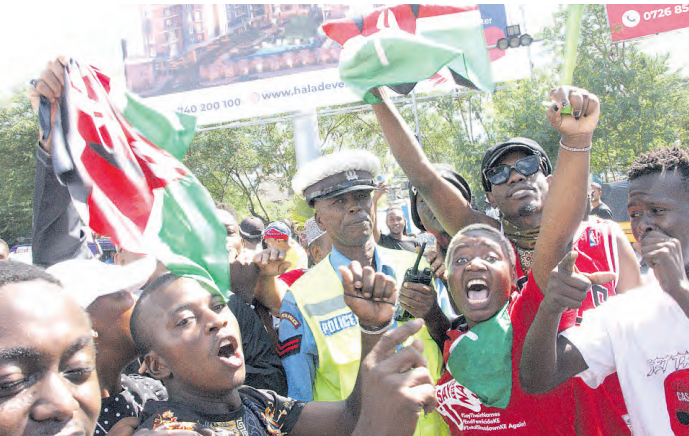
The now-familiar phrase “sisi ni Sifuna” captures this phenomenon with striking clarity. It is not simply a chant of support. It is a declaration of identity. Those who invoke it are not merely endorsing a politician; they are aligning themselves with a posture - one that rejects elite detachment, demands accountability, and insists that leadership must speak the language of the people it claims to serve.
What, then, is the nature of the social contract that Sifuna appears to be advancing?
It is a hybrid model combining John Locke’s focus on accountability with Jean-Jacques Rousseau’s emphasis on popular sovereignty. It calls for economic justice, where taxation is fair, transparent, and tied to real public benefit, recognizing citizens as stakeholders, not just revenue sources.
It demands radical accountability, treating leadership as a responsibility under constant public scrutiny and protecting dissent as a democratic right.
Finally, it centers popular sovereignty by ensuring governance reflects citizens’ lived realities, with leaders both acting in and demonstrating alignment with the public interest.
Crucially, Sifuna is advancing this vision not through dense policy documents but through political performance. His confrontational style, his headline-grabbing statements, and his refusal to conform to traditional norms of political decorum are all part of a broader strategy of disruption.
He forces issues into the national conversation. He sets the agenda. He compels both allies and opponents to respond.
As Kenya looks toward the 2027 elections, the implications of this emerging political grammar are profound. If the social contract is indeed being renegotiated, then the responsibility does not rest with politicians alone. Citizens, too, must recalibrate their engagement with politics.
There must be a clear shift from ethnic and personality-based voting to issue-driven choices, where voters prioritise candidates’ policies, economic plans, and accountability mechanisms.
Civic engagement should not end at the ballot; it must be continuous, with citizens actively monitoring, organising, and holding leaders accountable throughout their terms.
Finally, strong institutions—independent courts, effective oversight bodies, and an active civil society—are essential to sustain accountability beyond individual leaders.
Ultimately, the phenomenon of Edwin Sifuna points to a broader transformation in Kenyan politics.
It signals the erosion of a deferential political culture and the rise of a more assertive, demanding citizenry. Whether one agrees with his methods or not, his impact lies in shifting expectations—of leadership, of accountability, and of what it means to represent.
And in that noise, there is meaning.
The writer teaches Globalisation and international development at Pwani University and is a programmes associate at DTM, a Media CSO