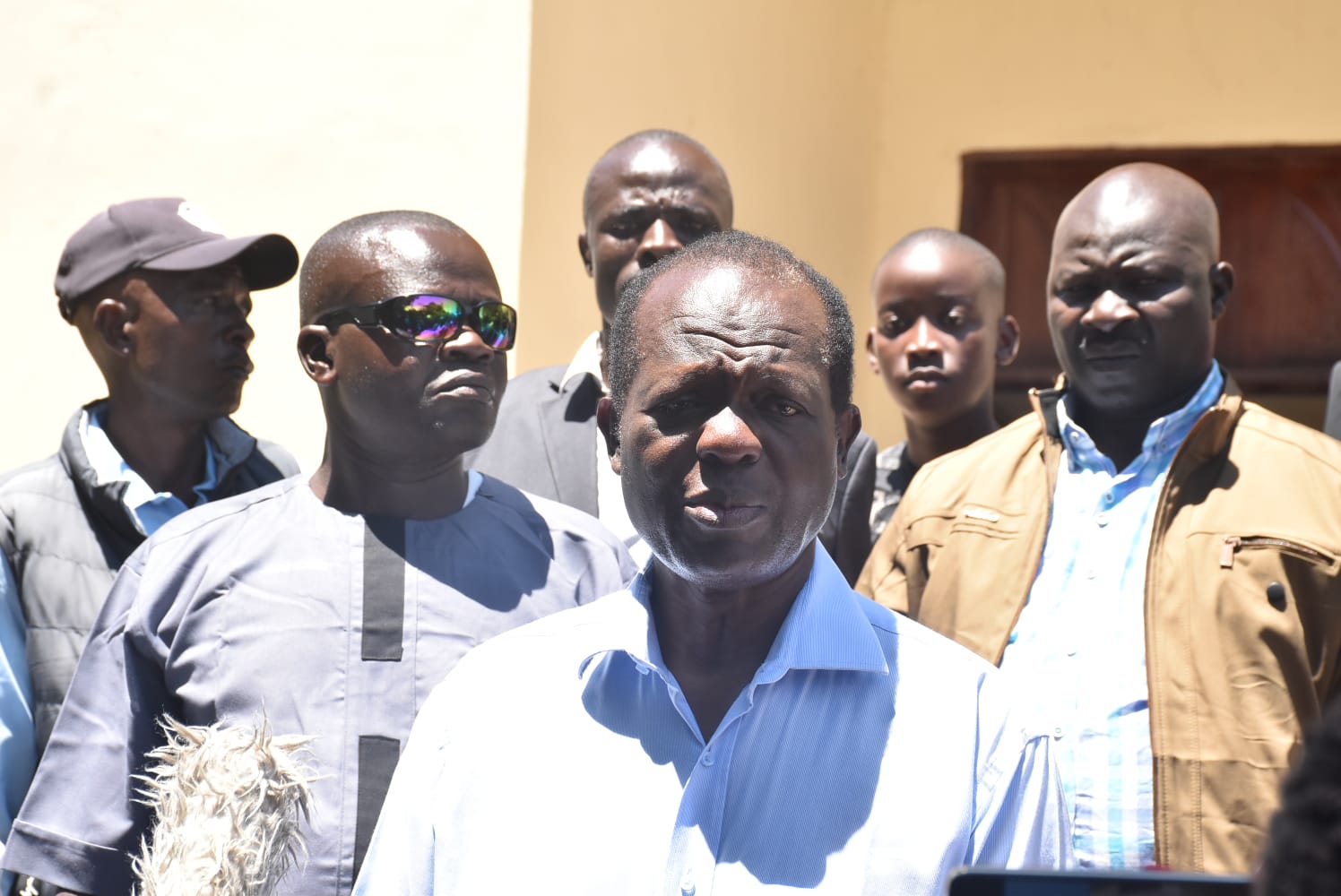
 Former Cabinet Secretary Raphael Tuju addressing media after a church service at St Stephen’s Cathedral in Milimani, on April 12, 2026./KNA
Former Cabinet Minister Raphael Tuju has accused Shanta Gold Limited of lacking transparency and failing to adequately consider community concerns in an ongoing land dispute in Ramula, Siaya County.
Efforts to reach Shanta Gold for comment were unsuccessful by the time of publication.
Speaking at St Stephen's ACK Church in Kisumu on Sunday, Tuju claimed that preliminary checks on the company’s structure raise more questions, which he said could make it difficult to establish ultimate ownership.
“You cannot know where it is coming from. Such arrangements raise serious questions about accountability and oversight in the extractives sector,” he said.
He also criticised the company’s efforts to access land in Ramula, saying the dispute had heightened tensions in the area. Tuju claimed the standoff had resulted in loss of lives, although this could not be independently verified.
The former minister said that while communities may be open to leasing land for extraction, their cultural ties and concerns should be respected.
“It is possible to mine without bringing down people’s homes,” he said, arguing that modern exploration technologies allow for less disruptive extraction methods.
Tuju warned that failure to address such disputes transparently could trigger similar conflicts elsewhere.
“If you allow this kind of impunity, today it is Ramula, tomorrow it will be elsewhere,” he said.
He called for reforms in the mining sector, including greater disclosure of ownership structures and stronger safeguards for host communities.
In a separate matter, Tuju also raised concerns over what he described as the misuse of state security agencies in a land dispute involving his private property.
He claimed that more than 100 police officers had been deployed to the land despite court rulings nullifying contested ownership documents.
“Why should the government release policemen onto a private property?” he posed.
Tuju alleged that the continued presence of security personnel pointed to possible collusion between powerful individuals and state actors, though he did not provide evidence.
Police had not responded to the allegations by the time of publication.
He further claimed that he was under surveillance and that unidentified vehicles had been trailing him, raising fears about his personal safety.
“The only thing standing between them and that land is me,” he said.
Beyond the disputes, Tuju linked rising tensions in the country to youth unemployment, warning that jobless young people are increasingly vulnerable to exploitation.
“The goons are not the problem; they are a symptom,” he said, attributing the situation to what he described as leadership failures in addressing economic challenges.