Kenya’s greatest democratic weakness has never merely been corruption, inefficiency, or electoral turbulence. It has been the persistent success of tribal politics as the organising principle through which too many leaders acquire, sustain, and recover power.
More than six decades after Independence, the country remains trapped in a political culture whereby leaders rise not by persuading citizens with ideas, but by first conquering ethnic constituencies and presenting themselves as custodians of communal destiny.
Over time, Kenya has produced a familiar political archetype: the ethnic kingpin. This is the leader who ceases to be merely an elected official and instead fashions himself into defender, spokesman, and gatekeeper of an entire community.
He convinces his people that their fortunes are inseparable from his own political relevance, and that any challenge to him is a challenge to them.
Every political era has had its merchants of tribe. They arrive clothed in the language of peace, unity, and development, but beneath this vocabulary often lies a far less noble enterprise.
They persuade communities that only one of their own can protect their interests, secure appointments, or deliver development. In doing so, they transform public service from a constitutional obligation into a tribal favour, and leadership from national stewardship into ethnic brokerage.
What makes this manipulation easier is the unfortunate manner in which many Kenyans increasingly consume politics.
For a worrying number of citizens, politics is no longer treated as a serious contest of ideas and governance but as theatre, spectacle, and entertainment.
Political rallies are followed with the excitement of football matches; social media erupts not over policy pronouncements but over who delivered the cleverest insult, the loudest retort, or the most theatrical declaration. Citizens wait eagerly for the next dramatic outburst, the next slogan, the next viral political performance.
It is within this unserious political environment that shallow sloganeering flourishes.
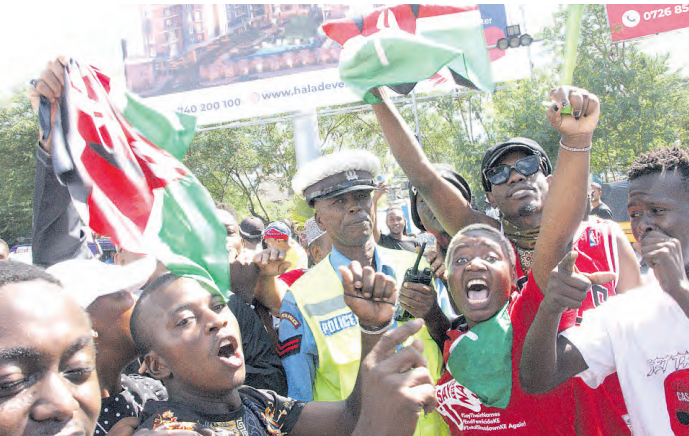
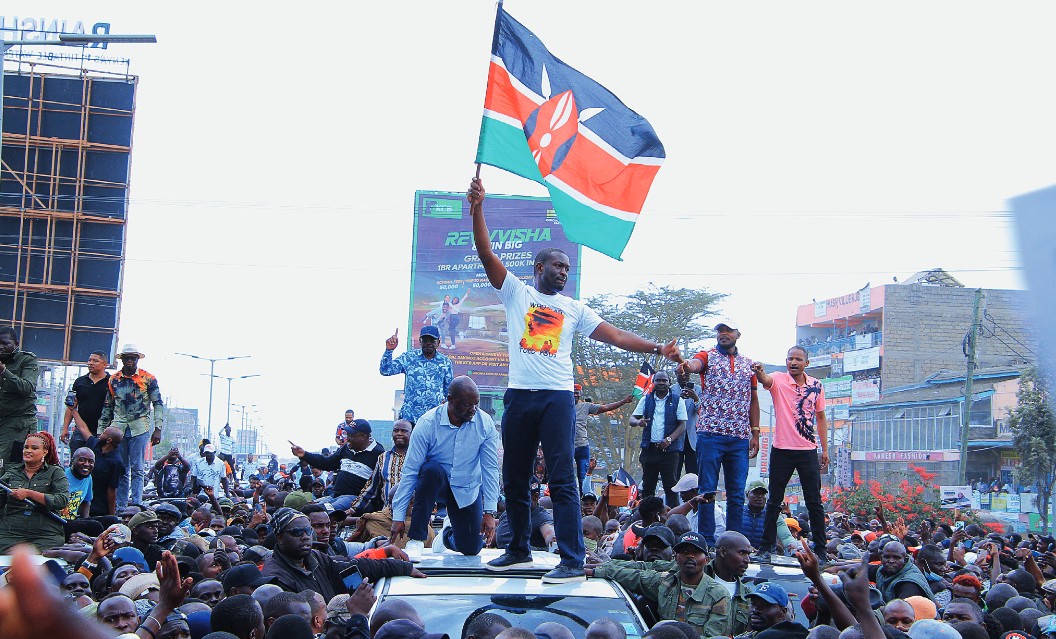
Hollow declarations such as “Mimi Ndio Sifuna” are received not with scrutiny but applause, celebrated less for substance than for bravado. In the same performative spirit, Edwin Sifuna took to theatrically branding his rallies or draping himself in the Kenyan flag, an unmistakable attempt to mimic the symbolism popularised by Gen Z demonstrators and appropriate their patriotic imagery. He does this to pursue youthful political support.
Yet symbolism without substance remains precisely that, performance. One cannot simply adorn oneself in the national flag and inherit the credibility of a movement whose frustrations were born of genuine civic discontent and principled demands for accountability.
Equally laughable was Senator John Methu’s recent attempt at populist theatre, aping Sifuna in declaring, “I am still Methu, I haven’t changed.” He acted as though public leadership were a matter of preserving personal branding rather than demonstrating ideas, competence, and measurable service.
Such declarations are not political philosophy. They are marketing gimmicks, carefully staged performances intended to manufacture emotional connection while distracting the public from the far more important questions of governance, delivery, and accountability.
That grown citizens can be swayed by slogans of such intellectual emptiness reflects a worrying decline in the seriousness with which politics is approached.
A mature democracy cannot thrive where leaders are rewarded for catchphrases rather than competence, nor where the electorate mistakes theatrics for statesmanship.
It is within this broader culture of spectacle and manipulation that the present political conduct of Rigathi Gachagua must be understood.
Until his dramatic fallout with President William Ruto, Gachagua was among the administration’s most vocal defenders. He enthusiastically praised the Affordable Housing Programme, defended flagship government policies, and projected himself as one of the President’s most loyal foot soldiers.
His transformation from defender to dissenter did not arise from ideological disagreement, nor from sudden policy enlightenment, but only after political estrangement.
Before the fallout, Gachagua often portrayed himself as President Ruto’s political shield. He famously boasted that he had blocked all routes through which Raila Odinga would have found his way to State House, casting himself as the vigilant protector of the President’s political fortress.
Yet now, having fallen from favour and lost office through impeachment, he increasingly seeks to reframe his personal downfall as a communal injury. He presents his estrangement not as political disagreement, but as evidence of disregard for the Mt Kenya region.
This is the oldest manoeuvre in Kenya’s political playbook: when the politician is wounded, he wraps himself in the flag of his tribe.
His recent remarks at the burial of the late Ol Kalou MP David Kiaraho, where he purported to ask that President Ruto be accorded respect, revealed this strategy in subtle but unmistakable fashion. Beneath the call for civility lay a deeper message: that he alone possesses the authority to regulate the political mood of the mountain. It was less an appeal for decorum than a performance of influence, a calculated attempt to imply unilateral control over the politics of the region.
But the Kikuyu community does not belong to Gachagua, any more than it belongs to any one politician. Communities should not be private estates to be politically leased by ambitious men.
The Kikuyu and Kalenjin communities remain among the most politically enlightened and economically successful in Kenya. Their relationship has historically oscillated between partnership and rivalry, shaped by strategic interests and by their shared significance within Kenya’s political economy.
Their periodic cooperation and inevitable contestation will continue because both communities understand power, organisation, and leverage perhaps better than most. But that reality should inspire political maturity, not manipulation.
The tragedy of tribal politics is that it takes politically aware communities and reduces them into instruments of elite ambition. Instead of being mobilised around enterprise, innovation, and development, they are mobilised around grievance, insecurity, and manufactured fear.
And this is the enduring danger of tribalism. It teaches citizens to vote not for competence, but for kinship. It persuades communities that development is not a right guaranteed by government, but a reward negotiated by tribal champions. It makes young people inherit prejudice they did not create, and old people cling to divisions they should be helping dismantle.
The challenge before Kenyans, young and old alike, is therefore simple but urgent: reject the politics of tribal emotionalism and embrace the politics of development.
Support leaders not because they share your surname, but because they share your aspirations. Judge them by performance, not by ethnicity. Measure them by what they build, not by what they inflame.
Kenya has no shortage of tribes. What it desperately requires is freedom from those who repeatedly turn one into a weapon against the other.
The republic will only mature when its people refuse to be shepherded by ethnic merchants and instead choose to be led by ideas, competence, and development.